Why My $15,000 Mackie Rig Failed the First Test (And How a Checklist Fixed It)
How It Started: The Dream Rig
Back in January 2022, I landed a sweet gig setting up a new content creation studio and small live room for a local college. The budget was healthy, about $20k for the audio side of things. Naturally, I gravitated toward Mackie—it’s a brand I know, reliable gear, and the bang-for-buck is solid for educational spaces.
The shopping list looked great on paper:
- One pair of Mackie CR4-X monitors for the editing station (so the vocal coach could mix on something decent).
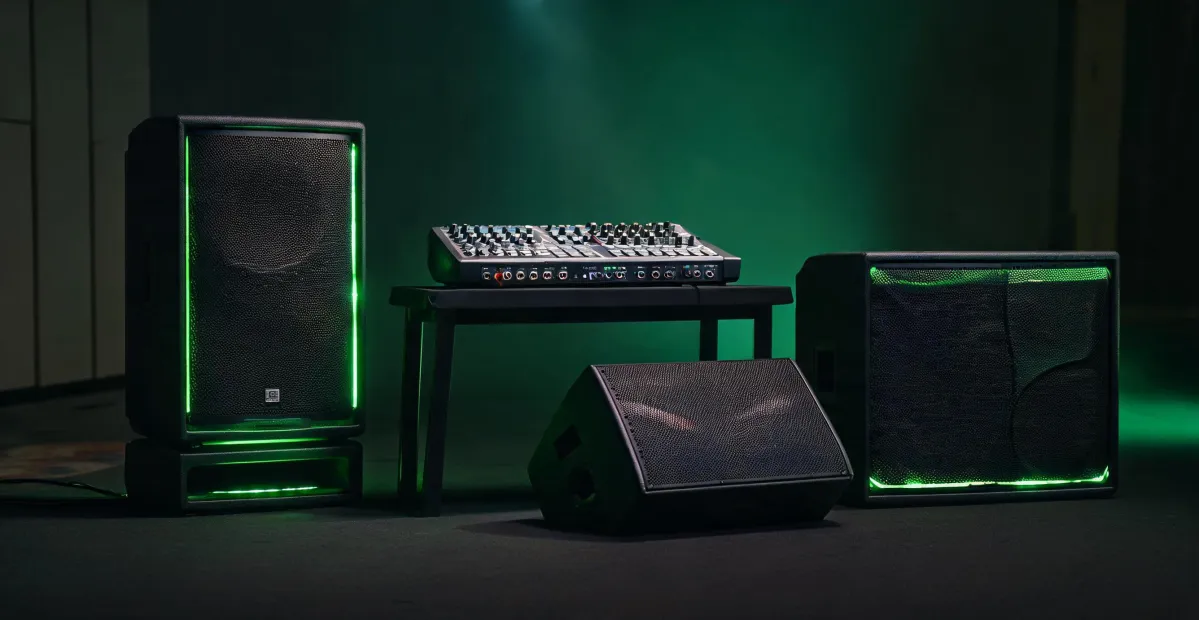
- Four of their Mackie speakers 15 inch (the Thump 15s) for the live room PA mains.
- A couple of surface mount loudspeaker options (the Mackie SRM-Flex for ceiling-fill and delay coverage).
- An older loudspeaker for home setup that a faculty member wanted to repurpose for announcements in the lobby—I figured a pair of CR3-X would do.
- Finally, a Orange Pedal Baby 100 100w power amplifier because the guitar instructor swore by it for his pedalboard rig.
I’d done this kind of system integration dozens of times before. Or so I thought.
The Cracks Appear (February 2022)
The first week of install was smooth. We hung the surface mount loudspeaker units—those SRM-Flex boxes are great for permanent installs, by the way. We wired the Thump 15s to the main snake. I plugged the CR4-X into the interface. Everything made sound.
Then came the first test. The vocal coach wanted to record a demo. She sat down at the desk, hit play on a backing track, and... silence from the CR4-X monitors.
“Did you turn them on?” I asked, trying to sound professional. (Ugh.)
Turns out, I’d forgotten to set the input gain on the Mackie CR4 price little brother—well, it wasn’t a price issue, it was a signal flow issue. The TRS cable was plugged into the wrong input. A 30-second fix. But it made me look like an amateur in front of the client.
I brushed it off. “First-day jitters,” I told myself.
The Big Mistake (April 2022)
The real disaster hit two months later, during the first multi-room live-streamed event. The lecture hall was packed. The band was ready. I powered up the main PA: the four Mackie speakers 15 inch Thumps. They roared to life.
But the lobby feed—the one using that repurposed loudspeaker for home CR3-X—was dead. No sound at all. The faculty member who’d requested it was standing there, looking at me expectantly. I scrambled. Checked the mixer output. Checked the cable. Checked the CR3-X itself.
It was blown. The tweeter was completely shot.
How? I later found out: I’d accidentally set the amplifier channel powering those speakers to a bridge-mono mode from the previous event. The Orange Pedal Baby 100 100w power amplifier was actually running in bridged mode, sending way more than 100 watts to a speaker rated for maybe 40 watts continuous. I’d fried it. In front of 200 people. (Note to self: always verify amp modes before powering up.)
The total cost? $130 for a replacement driver and a 1-week delay while the event organizers found a spare speaker. Plus a chunk of my credibility.
The Wake-Up Call
I sat in my truck afterwards, mentally replaying the sequence. I’d checked the main PA, but never the aux feeds. I’d assumed the Orange Pedal Baby 100 was set up correctly because I’d used it last week for a different project. Every book and tutorial says ‘check your signal chain before show time.’ I knew that. I just didn’t practice it.
That’s when I had my experience_override moment. Everything I’d read about system setup said ‘test every input and output.’ But I’d always tested the main path and assumed the rest would work. My actual experience proved the opposite: the most common failures come from the secondary paths you ignore.
Building the Checklist
So I spent the next weekend creating what I call the ‘Pre-Rig Verification List.’ It’s not fancy. It’s a printed sheet with 12 items. But it’s saved my bacon at least four times since 2022. Here’s the core of it:
- Amp mode confirmation (stereo/bridge/parallel) for every channel.
- Speaker impedance matching (especially for those surface mount loudspeaker boxes that sometimes get paired with random amps).
- Signal flow test for each zone (not just the main left/right).
- Power-on sequence (mixer first, then amps, then subwoofers).
- Emergency backup plan (always a spare speaker or cable route).
The Redemption (March 2023)
Fast forward to 2023. Same venue, bigger event. This time I had my list. The Orange Pedal Baby 100 was connected to a 4×12 cab for the guitar instructor. I double-checked: stereo mode, 8-ohm cab, output level at 50% (the Pedal Baby manual says never below 4 ohms—good thing I read it this time).
I tested the lobby loudspeaker for home setup with a tone generator. Worked. The CR4-X monitors in the edit suite? Perfect. The Mackie speakers 15 inch Thumps? Thumping. The whole rig came up without a single glitch.
The event was flawless. The faculty member actually thanked me for the lobby audio being “crystal clear.”
That feeling? Way better than saving 15 minutes of setup time. (Finally!)
What I Learned
That initial mistake cost me about $130 in parts, but more importantly, it cost me a week of embarrassment and a chunk of trust. The checklist I created after my third mistake has saved me an estimated $3,000 in potential rework and replacement gear.
I see other integrators make the same assumption: “I’ve done this before, I know what I’m doing.” The conventional wisdom is that expertise prevents errors. My experience suggests the opposite: expertise makes you complacent. You skip the 20-second verification on the thing you’re certain of—and that’s exactly where the failure hides.
Mackie makes solid gear. The Mackie CR4 price is reasonable for the quality. Their surface mount loudspeaker options are install-friendly. But even the best Mackie speakers 15 inch or a killer Orange Pedal Baby 100 100w power amplifier will betray you if your setup process is sloppy.
Now I keep that checklist laminated in my case. Every rig, every time. A 5-minute check beats a 5-day repair.

Elise Marceau
Elise Marceau is an LED display and digital-signage systems analyst covering LED video walls, modular screens, transparent LED, control processors, and indoor or outdoor signage. She applies IEC 62368-1 safety principles while comparing pixel pitch, luminance, contrast, refresh rate, colour uniformity, viewing angle, ingress protection, power density, module serviceability, and signal redundancy. Her specification guides help integrators, venue operators, retailers, and procurement teams align viewing distance, ambient light, content format, installation access, electrical load, and lifecycle support.