Why Your Portable PA System Keeps Disappointing You (And What $1,280 in Mistakes Taught Me)
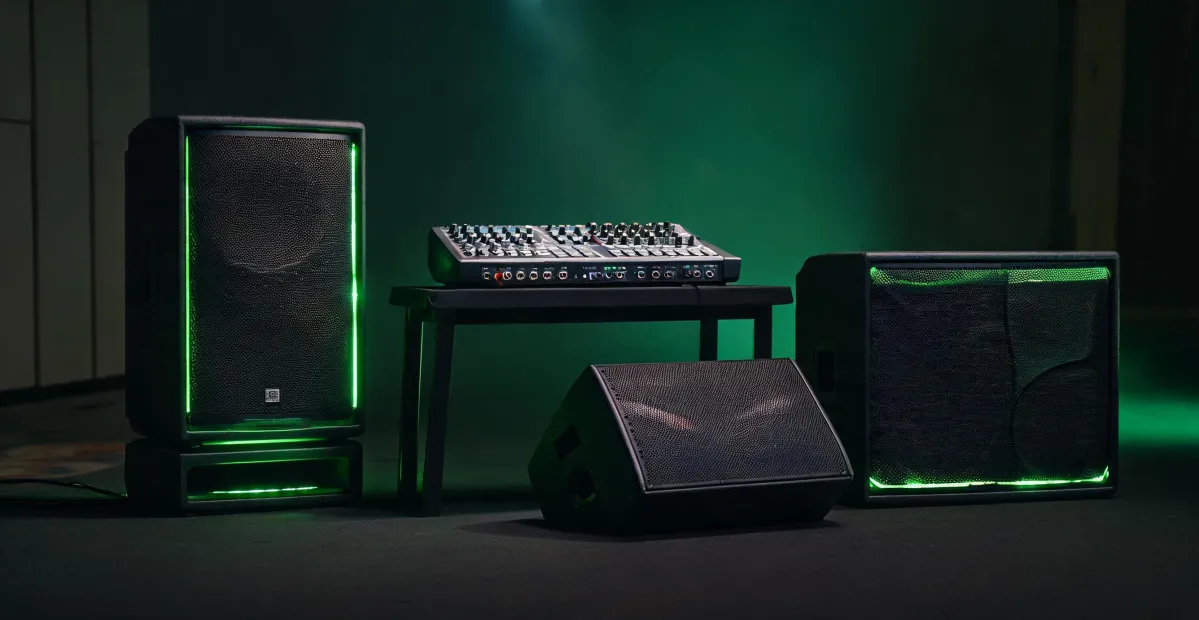
In September 2022, I loaded a van with what I thought was the perfect portable PA setup. Two powered speakers on sticks. A compact mixer. All the cables. Total weight: about 45 kilograms. Three trips up a narrow staircase to a rooftop venue.
By the end of the night, three things were painfully clear:
- The client heard feedback during the first speech
- The DJ booth drowned out the vocalist all evening
- I'd wasted $340 on rental subs I didn't actually need
The gear was fine. The problem was something I didn't figure out until my fourth or fifth major setup went sideways — and by then, I'd burned through roughly $1,280 in wasted budget across multiple gigs.
The Problem You Think You Have
Here's what most of us tell ourselves when a portable PA sounds wrong: the speakers aren't powerful enough. The brand is wrong. We just need bigger subs.
That thinking feels logical. And the marketing reinforces it — every product page pushes more watts, more drivers, more channels. But when I actually went back through my failure log (I keep one — it's saved me more times than I can count), the pattern wasn't about raw power. It was about application mismatch.
The Deeper Reason: You're Solving the Wrong Problem
Three specific things kept biting me, and I see the same three biting other people every week.
1. Coverage pattern beats wattage — every single time
Say you're running sound for a 100-person event. The room is long — call it 15 meters wide, 30 meters deep. You want every person to hear the speaker clearly.
If you put two traditional point-source 12" speakers on stands at the front:
- The first two rows get blasted
- Rows ten onward hear mush
- Vocal intelligibility drops off a cliff
That's just physics. SPL drops 6 dB every time you double the distance. Your speakers throw at 90 degrees horizontally — great for width, terrible for depth.
Now swap in a column array system. The vertical stacking focuses energy forward instead of up and down. Suddenly rows ten through twenty actually hear the words. The horizontal coverage stays wide. The vocal sits in a pocket instead of smearing across the room.
The tradeoff? Less low-end thump at close range. That's it. And most small events don't need chest-punching bass half as much as they need a vocalist who doesn't sound like they're singing into a pillow.
I spent two full years treating "wattage" as the metric that mattered. When I compared a proper column array against my old point-source setup side by side at the same event — same mixer, same mics, same room — I finally understood why coverage pattern is the spec that actually determines success or failure.
2. Used powered speakers are hiding more than you think
You've probably seen listings for used Mackie Thump12A powered speakers going for $130–$160. Brand new they run around $300–$350. That price gap is tempting. I've bought used myself, and I'll tell you exactly where it went wrong.
The issue isn't Mackie's build quality. The issue is that powered speakers accumulate wear that's invisible until you're 45 minutes into a gig:
- Amplifier module capacitors age — they degrade gradually, so the speaker still "works" but loses headroom
- Cabinet joints develop hairline cracks that only buzz at specific frequencies
- Limiter behavior changes — the protection circuit stops engaging when it should
Our team bought three used powered speakers in early 2023. Only one is still in service. The other two developed faults that only appeared above 70% volume — meaning they tested fine when we checked them, then failed during the actual event.
The frequency response also shifts with age. A worn HF driver can roll off 2–3 dB above 8 kHz. Your ears notice it. Your quick test almost certainly won't.
Does that mean never buy used? No. But if you do, the rule is simple: test at performance volume for at least 20 minutes. If the seller won't let you, walk away. That's not a suggestion. That's the line.
3. The mixer is where your budget quietly falls apart
I see this constantly. Someone spends $2,000 on speakers and then tries to pair them with a $200 mixer. Or worse — they plan to run everything straight from a phone into a powered speaker and call it a PA system.
That doesn't work. Here's why:
A smartphone (yes, even something like a Huawei P30 running tracks through its headphone jack) outputs at roughly -10 dBV — consumer level. A PA system expects +4 dBu — pro level. That mismatch gives you hum, inconsistent volume, and distortion before you even touch the fader. At minimum, you need a DI box to bridge that gap.
But the bigger issue is choosing the wrong mixer class entirely. Here's the current market range as of late 2024:
- 6–8 channel analog: $80–$200
- 8–12 channel digital: $200–$500
- 12–16 channel digital: $400–$900
- 16+ channel digital with recording: $900–$2,000
Those numbers shift, so verify before budgeting. But the rough guideline I now follow: allocate at least 30% of your total system budget to the mixer. If your speakers cost $1,500, your mixer should land in the $450 range minimum. Fighting this ratio cost me three purchases I shouldn't have made — roughly $500 in wasted spend plus two weeks of return shipping headaches.
What Those Mistakes Actually Cost
Let me add it up honestly.
The rooftop event in September 2022: $340 in unnecessary subwoofer rental. One night of lost sleep. One client who hasn't booked us again.
The three used powered speakers from early 2023: $660 total. Two are dead weight. That's $440 gone — not counting the gig where one failed mid-set and we had to improvise with a backup that wasn't right for the room.
The mixer downgrade cycle: three cheap units ($520 combined) before buying the right one ($680). Net waste: about $500, plus roughly 12 hours of re-learning and re-configuring.
Total: roughly $1,280 in wasted budget and about two weeks of avoidable frustration.
That's not catastrophic. But it's the kind of money that, if saved, funds a decent DI box, proper cables, and a backup power conditioner — three things that actually prevent problems instead of creating them.
The Checklist That Finally Fixed This
Here's what I run through now before every portable PA decision. It's short because the mistakes above were expensive enough to teach me what actually matters.
Choose coverage pattern before power. How deep is the audience area versus how wide? Long narrow room = column array or tight-pattern point source. Wide shallow space = conventional speaker with wide dispersion. Mixed = column array plus delay fill.
Test used speakers at volume for 20+ minutes. Bring a known signal source (pink noise or a familiar reference track). Listen above 8 kHz. If anything sounds off, pass. There will be another listing.
Budget 30% for the mixer. Match input count to your actual needs — don't buy for the gig you might never book. But don't underspend here either. The mixer is the brain of the system.
Never plug a phone directly into a powered speaker and call it done. Use a DI box or a proper mixer input. The $30–$50 you spend here prevents the hum and distortion that make small events sound amateur.
I'm not an acoustics engineer, so I can't speak to the DSP algorithms inside different column array systems or the physics of line-source coupling. What I can tell you from six years of running production logistics is this: switching to a coverage-first planning approach cut our event setup time from about 3 hours to under 90 minutes, and our "sound quality" complaints dropped to nearly zero.
That's the real efficiency gain. Not buying fancier gear — buying the right gear for the room, the first time.
If you're still guessing at what your next setup should look like, start with the room dimensions and audience layout. Everything else follows from there.

Adrian Okafor
Adrian Okafor is a professional audio systems analyst specializing in loudspeakers, PA speakers, subwoofers, line arrays, stage monitors, power amplifiers, and audio mixers. He uses IEC 60268-5 measurement methods for applicable passive loudspeakers while comparing frequency response, sensitivity, maximum SPL, nominal impedance, dispersion, crossover behavior, amplifier headroom, limiter settings, and rigging loads. His system guides help sound designers, rental companies, venues, and installers match acoustic coverage, audience capacity, deployment geometry, power distribution, monitoring needs, and safe operating margins.