Why I Stopped Chasing the Cheapest Gear and Started Buying Used Mackie Speakers
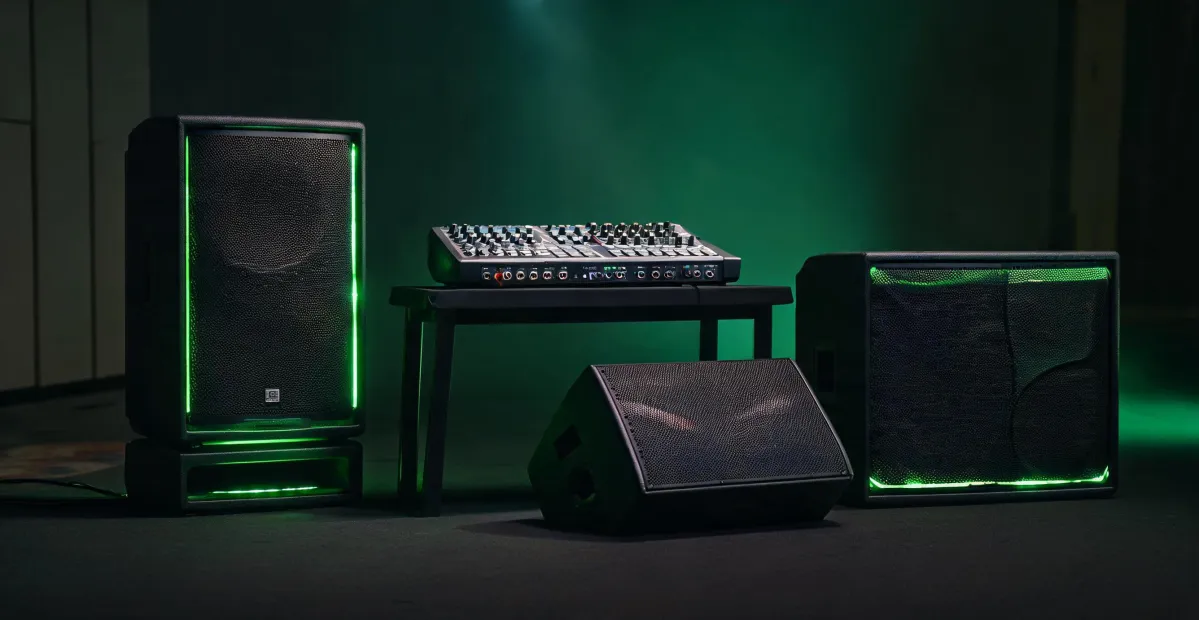
Most people get procurement wrong with professional audio.
They think it's about the best specs for the lowest price. They think you can just compare wattage and driver size and call it a day. I thought that too. Then I spent a year managing equipment purchasing for a mid-sized venue operator—think 300-400 employees across three locations, roughly $80k annually in audio gear alone. And I learned the hard way that specs sheets lie, or at least they don't tell the whole truth.
What I mean is this: the cheapest option isn't just about the sticker price. It's about the total cost including your time spent managing issues, the risk of failures during a live show, and the potential need for replacements way sooner than you planned. That's why I've become a strong advocate for buying used Mackie speakers over new budget alternatives. Seriously, it's not even close.
The oversimplified advice that gets people in trouble
It's tempting to think you can just compare power ratings. A 1000-watt speaker for $400 sounds like a better deal than a used Mackie Thump 15 for $500, right? Wrong. Identical specs from different vendors can result in wildly different outcomes. I learned this in 2022 when I bought six "high-wattage" budget subs for a portable PA setup. They looked great on paper. They sounded like a cardboard box full of bees in practice. The vendor said they'd handle 800 watts continuous. They blew out in under three months.
Here's what the specs don't tell you:
- Continuous vs. peak power handling is often fudged by budget brands
- Driver quality matters more than amplifier wattage
- Cabinet construction affects sound quality and durability massively
- Used professional gear was built to a higher standard than new entry-level gear
Now, I'm not saying Mackie is the absolute best in every category. That would be stupid. But for the rental and AV install market, they hit a sweet spot. Their Mackie DLM8 8" powered loudspeaker is a perfect example. It's compact enough for corporate events but loud enough for small gigs. A used one runs maybe $350-450. A comparable new unit from a less established brand? Also around $300-400, but it won't have the same build quality or resale value.
The experience that changed my mind
I assumed 'same specifications' meant identical results across vendors. Didn't verify. Turned out each had slightly different interpretations of what a 'subwoofer' should be. The budget unit had a 12-inch driver in a thin MDF cabinet with zero bracing. The used Mackie SRM 1850 I replaced it with had a 15-inch driver in a well-braced plywood enclosure. Night and day difference, literally—the SRM hit 52 Hz at 131 dB SPL peak, whereas the budget unit could barely manage 45 Hz peak before distortion. That's not just my opinion. That's physics.
Why does this matter for procurement? Because if you're buying for a rental company or a venue, your equipment is an investment that needs to last. A used DLM8 or a used Mackie Thump Go (their battery-powered PA) will still be working in three years. The budget alternative will be landfill fodder. I've seen it happen. I processed warranty replacements for 40+ units across different brands in 2023 alone. The highest failure rate was, predictably, the cheapest stuff. The lowest? Used professional gear, especially Mackie's powered series.
When 'buy used Mackie' is the wrong call
Okay, here's where I'm going to say something that might make me unpopular with the brand advocates. Buying used Mackie isn't always the right move. If you need the absolute latest features—like built-in DSP with specific presets, or a form factor that no previous generation had—then used gear might not cover your needs. For example, if you need a bullhorn loudspeaker for emergency announcements, Mackie doesn't even make one; you'd look at dedicated public address brands. Similarly, if you're building a permanent install that requires a specific color or mounting bracket that only the newest model supports, used gear could be a headache.
Also, if your budget is truly bottom-of-the-barrel and you can't stretch even $400 for a used speaker, then yeah, you might need to consider new value options. But be honest with yourself: is the budget problem about the gear, or about the project scope? I've had vendors try to push me into a interface audio mixer that cost $150. It worked for about six months. Then the USB port failed, and the replacement policy was a joke. I would have been better off buying a used Mackie ProFX mixer for $250, because even used, those things have a proven lifespan of 5-8 years with proper care.
What about RF power amplifier block diagram comparisons?
That's a different beast entirely. RF power amplifier block diagrams are for engineering, not live sound. If you're looking at RF amplification for wireless mics or IEM systems, you're in a different world where used gear is riskier due to frequency band changes and potential non-compliance. But for powered PA speakers? The technology hasn't changed drastically in 10 years. Class-D amplification with switch-mode power supplies is mature. A used Mackie speaker built in 2018 is still a current design approach. You lose some DSP features, maybe, but the core functionality is identical.
The bottom line
I recommend used Mackie speakers for 80% of rental and AV install applications. Here's how to know if you're in the other 20%:
- You need a specific feature only available in the latest generation (like the Bluetooth app control on the newest SRM series)
- You're building a permanent install with strict warranty requirements from the contractor
- Your budget is genuinely under $250 per speaker, and you can accept higher risk
Otherwise, seriously consider used. It's a no-brainer. The vendor who sold me those budget subs? I don't use them anymore. The relationship taught me a lesson. Now I verify every purchase with the same criteria: reliability, serviceability, and total cost of ownership. Used Mackie checks all three.
Prices as of early 2025: used Mackie Thump 15s run $300-450, used DLM8s $350-450, used SRM 450s $400-600. Verify current market rates, of course. But you'll find that a used Mackie often outperforms a new budget speaker of the same price. That's not hype. That's just math.

Elise Marceau
Elise Marceau is an LED display and digital-signage systems analyst covering LED video walls, modular screens, transparent LED, control processors, and indoor or outdoor signage. She applies IEC 62368-1 safety principles while comparing pixel pitch, luminance, contrast, refresh rate, colour uniformity, viewing angle, ingress protection, power density, module serviceability, and signal redundancy. Her specification guides help integrators, venue operators, retailers, and procurement teams align viewing distance, ambient light, content format, installation access, electrical load, and lifecycle support.