Why I Stopped Searching for Mackie Speakers 2000 Watt and Started Measuring Systems
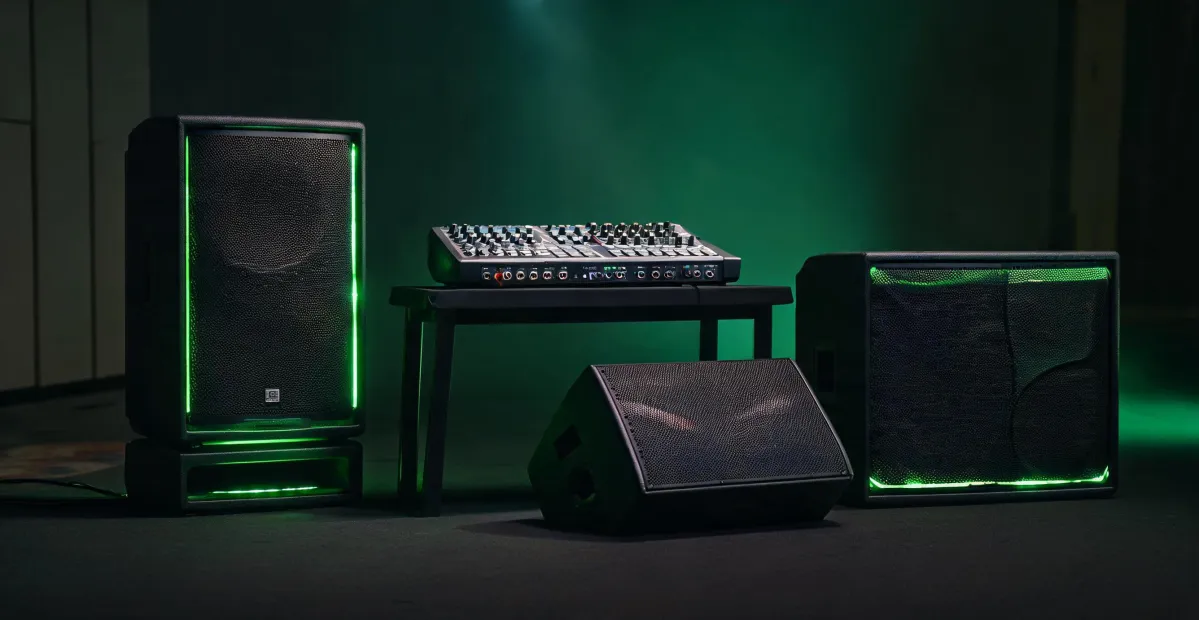
If you have ever typed mackie speakers 2000 watt into a search box at 10:30 PM, I know exactly why. You need more volume, you need it to stay clean, and you need it to stay inside a number your accountant will accept. I did the same thing in 2017. And because I was also a bargain hunter, I found a listing for mackie 808s for sale that looked too good to ignore.
I ignored my own intuition. That was mistake number one.
I am a systems technician handling rental and installation orders for 8 years. I have personally made and documented 14 significant mistakes, totaling roughly $28,000 in wasted budget. That number does not include the apologies or the nights spent re-tuning after a buyer's decision went wrong. Now I maintain our team's pre-purchase checklist. It started as a way to keep me from repeating my worst calls.
The Surface Problem: A Search Box and a Number
The first time I searched for high-power Mackie speakers, I thought I was solving headroom. The venue was a long room, the talker had a weak microphone technique, and the band wanted to feel the kick drum. More watts seemed like the obvious answer. What I did not understand was that the answer was in the coverage, not just the cone area.
When someone searches for mackie speakers 2000 watt, they are usually doing the same thing I did. They are looking for a single spec they can compare. That spec is useful, but only if you know what it does not tell you. It does not tell you sensitivity. It does not tell you directivity. It does not tell you how the limiter behaves. It does not tell you what happens when the cabinet is on a pole three meters in the air.
Here is something vendors will not always spell out: the wattage printed on a powered speaker is often a peak marketing number. A continuous rating may be half that, and the measurement conditions matter even more. As of Q1 2025, the references I use are AES2-2012 for loudspeaker power handling and CEA-2006-B for amplifier ratings. They define the test signal, the duration, and the load. A 2000-watt peak speaker can have a continuous AES rating of 1000 watts or lower, depending on the design. Neither number tells you how even the sound is across the room.
The Deeper Problem: Wattage Is Not a Sound Field
The turning point came when I started measuring systems with a simple SPL meter and a pink-noise file. Looking at the numbers made me ashamed. A speaker rated at 1400 watts peak could be louder at the mixing position than a heavier 2000-watt cabinet, because the lighter cabinet had better sensitivity and a tighter pattern. The wattage rating alone was almost useless.
This is where loudspeaker beamforming enters the conversation. A traditional point source, even a powerful one, radiates energy in a wide pattern. In a reflective room, the front row gets blasted and the back row gets mud. A beamforming array uses multiple drivers and DSP to steer the vertical coverage, so the level at the back of the room can match the level at the front. It does this with less amplifier power in many cases. That is a hard idea for a person who was taught that bigger watts always win.
I am not an acoustician. I cannot model every balcony shadow or parallel wall. What I can tell you from a rental-system perspective is that coverage consistency is the spec that actually shows up in client complaints. The event report does not say that the amplifier failed. It says that the left side was quiet and the back row could not understand anything.
What It Costs When You Buy the Number
Let me give you the ugly math. The used Mackie 808s cost $480. The repair bill for one cooked voice coil was $240. The rental replacement after the system shut down during a wedding toast was another $420 for one weekend. The client asked for a discount because the embarrassment was real. That is a $1,500 problem on an order that should have generated maybe $700 in profit. The cheapest purchase turned into the most expensive rental event in my records.
My view is simple: the purchase price is not the total cost. Total cost includes repair bills, rental replacements, hours of troubleshooting, and the trust you lose with a client. A system chosen purely on wattage and price will usually create more work for people like me. I know because I made that work happen.
When I compared two systems side by side one year, one rated 2000 watts peak and one rated 800 watts continuous, the lower-rated system was the one that worked better in the room. Seeing the SPL measurement at the back wall made me realize that coverage beats power in most real venues.
The Checklist I Use Now
Here is what I check before I buy or recommend any loudspeaker package now.
- Continuous rating first. For loudspeakers, I look for an AES continuous power number. For amplifiers, I check RMS per channel into the actual load impedance I plan to use.
- SPL prediction at the farthest listener. If a vendor will not share a dispersion model, I find a way to measure it or I rent the system first.
- DSP and limiter quality. The Crown Audio DCi 4|600DA 4-channel power amplifier is a good example of modern hardware: it combines amplification, DSP, and output flexibility. It is not just a box that adds watts; it lets you set limiters and tune the system to the loudspeaker.
- Coverage behavior. For long or reflective rooms, I now look for beamforming-capable columns or arrays. The goal is an SPL curve that does not punish the listener in the back row.
- Subwoofer integration. For small events, I ignored the iLoud subwoofer for years because it looked too small. When I finally measured one at a podium setup, it delivered clean low end without taking up half the truck. The spec sheet did not tell me that. The measurement did.
The last item is not about a brand. It is about the habit of looking beyond the rating. A subwoofer that is small, DSP-corrected, and easy to place can be more useful than a larger box with a bigger paper rating. The same logic applies to amplifiers, speakers, and entire PA systems.
Conclusion: Buy Coverage, Not Just Watts
Searching for mackie speakers 2000 watt is not embarrassing. It is how most of us start. The mistake is stopping at the number. That is how I ended up with a set of used Mackie 808s in my trailer, and how I learned to look at the whole system.
It took me six years and about 200 system orders to understand that wattage is not a value metric. It is a voltage, a sensitivity, a coverage angle, and a DSP algorithm working together. The people who save real money are the ones who measure first and buy second.
This approach worked for us in a market dominated by speech events, panels, acoustic acts, and outdoor receptions. If you are doing loud metal tours, your numbers will be different. My advice is the same: rent first, measure second, buy third. Trust me on this one. I have the checklist, the receipts, and the $28,000 of mistakes to prove it.

Elise Marceau
Elise Marceau is an LED display and digital-signage systems analyst covering LED video walls, modular screens, transparent LED, control processors, and indoor or outdoor signage. She applies IEC 62368-1 safety principles while comparing pixel pitch, luminance, contrast, refresh rate, colour uniformity, viewing angle, ingress protection, power density, module serviceability, and signal redundancy. Her specification guides help integrators, venue operators, retailers, and procurement teams align viewing distance, ambient light, content format, installation access, electrical load, and lifecycle support.