Why I Didn’t Buy That Mackie D8B for Sale (and What the SRS1500 Subwoofer Taught Me)
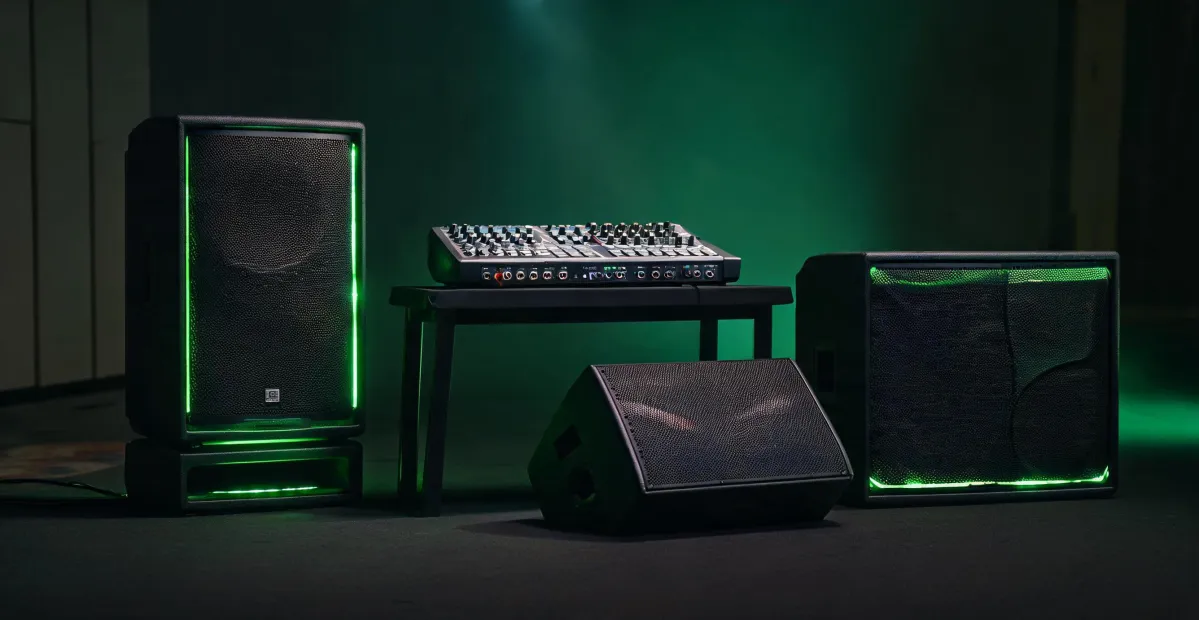
The Listing That Almost Got Me
In March 2024, I stared at a listing for a Mackie D8B for sale and almost sent the money. The price was $1,100, which seemed fair for a digital mixer that once sold for thousands. The seller described it as a 'classic studio desk.' Then I kept reading: 'One fader noisy. Needs a little love.'
I've been handling PA and installation orders for about eight years. I've made my share of expensive mistakes. In 2022, I approved a $3,200 order without checking amplifier impedance against the speaker load. It worked in my head, but not in the venue. That mistake cost $890 in rework plus a week of delays. Now I document what goes wrong, and I share those notes with the younger engineers on my team.
'Needs a little love' is one of those phrases that should make you walk away. A little love in a used digital mixer is often a $300 fader assembly, a weekend of soldering, and a firmware issue nobody can identify. I do not mean every old digital mixer is a bad buy. I mean you have to ask better questions before you commit.
The Mackie SRS1500 Subwoofer That Made Me Pause
Two weeks later, I saw a Mackie SRS1500 subwoofer for $450. That's a solid powered sub for a small live room, and the listing made it sound even better: 'Works great, just needs a speaker cable.' I almost believed it.
'Works great, just needs a speaker cable.'
Why does that phrase bother me? Because if all it needed was a cable, the seller could have plugged one in and shown the amp light coming on. The SRS1500 has a built-in amplifier. That amp module is the soul of the sub. If the amp board is gone, the 'subwoofer' is just a heavy cabinet that will cost more to ship than to repair. I asked the seller for a short video of the power light and a low tone. No response. That was my answer.
It's tempting to think you can compare used PA gear the same way you compare new spec sheets. But the 'if it's cheap, buy it' advice ignores the fact that old physical gear has hidden life. Capacitors age. Input jacks get wobbly. Faders collect dust. You're not buying a product; you're buying the seller's honesty and the condition underneath the paint.
The IP PA Speaker Question (and a Macom Mistake)
A friend who designs network installs asked why we didn't just use an IP PA speaker for the same gig. It's a fair question. For paging and background music, an IP PA speaker with Power over Ethernet is a genuinely clean option: one cable, app control, zone scheduling. But this client needed live vocals and a DJ. That's not what a paging speaker is for. That's a job for a real PA system with an audio mixer for speakers.
While we're on the topic of searches and specs, let me save you a rabbit hole. I once typed 'Macom power amplifier' when I meant to look up a Mackie amplifier module. Macom is a company that makes RF power amplifiers for telecom and defense—not PA amplifiers for sound reinforcement. They're not interchangeable. If you're shopping for a PA amplifier, search for the exact brand and product line, and double-check the specs before you buy. A cheap RF amp won't drive a subwoofer.
Choosing an audio mixer for speakers is another place where people overcomplicate it. You don't need 32 channels for a venue that loads 12. You need clean inputs, a reliable master section, and outputs that match your powered speakers. A compact mixer with a simple layout usually beats a massive channel count you'll never use.
The Real Lesson: Transparent Pricing
Here's the part that's cost me the most over the years: the price on a listing is not the price. The D8B was $1,100, but it would've needed a $300 fader assembly, a $120 bench fee to inspect, and $80 in packing materials and freight before I knew if the digital board was even stable. Suddenly the 'deal' was no deal at all.
I've learned to ask 'what's NOT included?' before I ask 'what's the price?' The seller who lists every fee upfront—even when the total looks higher—usually costs less in the end. The same principle applies to new gear. If a vendor can't give you a complete breakdown of product, shipping, and tax, you're not comparing apples to apples. You're comparing a low number to a real number.
This is why FTC advertising guidelines are worth keeping in mind. Per FTC rules (ftc.gov), claims have to be truthful and substantiated. A listing that says 'works perfect' is a claim. When I ask for proof and the seller disappears, that's useful information. It's not about being paranoid. It's about checking whether words are backed by evidence.
I went back and forth between the old D8B and a new compact mixer for two weeks. The D8B had that nostalgic appeal and plenty of faders, but the new mixer had a warranty and a noise floor I already knew. My gut said a client's rehearsal studio doesn't need a restoration project. I chose the reliable mixer. No regrets.
What I'd Tell Someone Starting a PA Project
If you're looking at a Mackie D8B for sale or a Mackie SRS1500 subwoofer, take a breath and run through four questions:
Can the seller prove it works with a short video of the actual unit? Are replacement parts still available for that specific model? What does shipping and insurance really cost? And if something is wrong, is there a return path?
If the answer to any of those questions is a maybe, walk away. There will be another listing. I know that now. The best purchase I ever made wasn't the one with the lowest price tag. It was the one where every cost was visible from the start. That's the transparency that builds trust—and it's the only deal that still looks good five years later.

Elise Marceau
Elise Marceau is an LED display and digital-signage systems analyst covering LED video walls, modular screens, transparent LED, control processors, and indoor or outdoor signage. She applies IEC 62368-1 safety principles while comparing pixel pitch, luminance, contrast, refresh rate, colour uniformity, viewing angle, ingress protection, power density, module serviceability, and signal redundancy. Her specification guides help integrators, venue operators, retailers, and procurement teams align viewing distance, ambient light, content format, installation access, electrical load, and lifecycle support.