How I Cut My AV Budget by 18% Without Sacrificing Sound Quality – A Procurement Story
The Day I Realized We Were Overpaying
It was a Tuesday morning in Q2 2024. I was reviewing our quarterly AV spending report—something I do religiously as the procurement manager for a 50-person event production company. We manage about $80,000 annually in audio equipment, and I've been tracking every invoice for the past 4 years in our cost tracking system. That day, I noticed something that made me pause: our powered speaker line item had crept up 22% year-over-year. Not because we bought more—because we kept paying rush fees and replacement costs for gear that failed during events.
Most buyers focus on per-unit pricing and completely miss setup fees, revision costs, and shipping that can add 30-50% to the total. But the real hidden cost? Downtime. When a speaker dies mid-event, you're not just paying for a replacement—you're risking client relationships and future contracts.
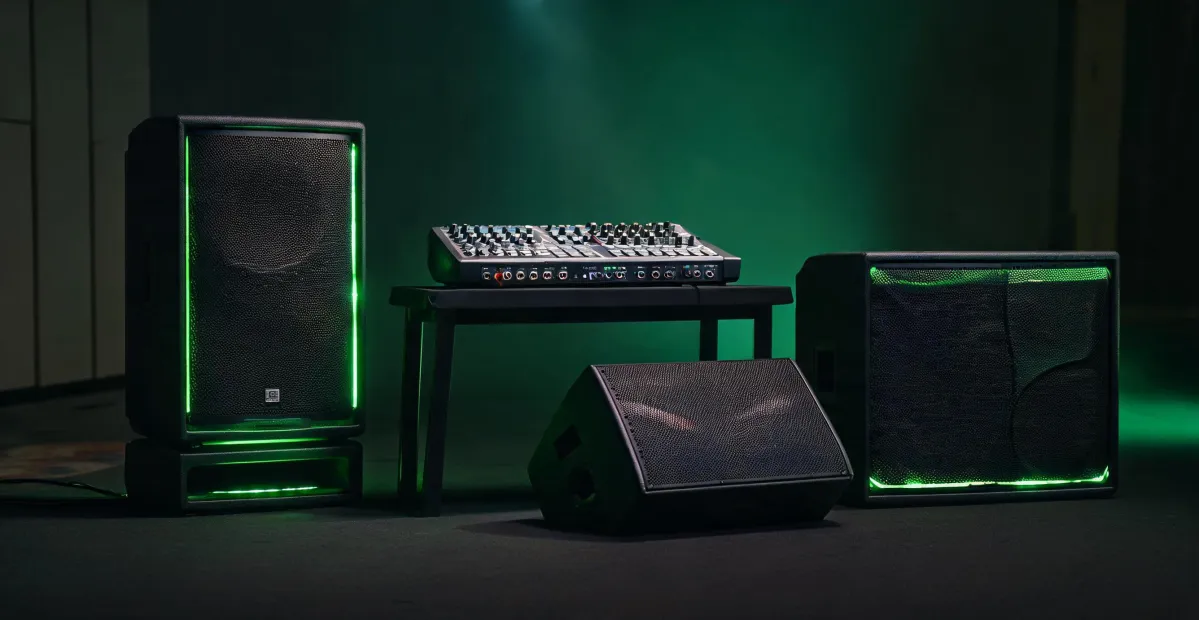
I decided to run a full cost comparison across our next upgrade cycle. We needed a complete portable PA system for our rental inventory: powered speakers, subwoofers, and a small mixer for quick setups. The keywords on my list included Mackie computer speakers (we actually use those in our office for monitoring), Mackie PA speakers, and the U-Series v.2 12" subwoofer. Someone also asked me about a Scarlett audio mixer—I looked into that too, though I'll explain why I didn't go that route.
The Three-Vendor Shootout
I compared three options over 6 weeks:
- Option A: Mackie SRM Series powered speakers + Mackie 18S subwoofer + DLZ Creator mixer
- Option B: A competitor's similarly specced package (I won't name them—let's just say they're a well-known brand in live sound)
- Option C: A budget alternative using generic PA speakers and a Scarlett 18i20 (which isn't really a PA mixer, but some folks online suggested it for small setups)
Option C seemed cheapest at first glance: $1,400 for the speakers (used), $400 for a Scarlett 18i20, and some cheap passive subs. But then I started checking the fine print.
The Scarlett audio mixer, while great for studio recording, isn't designed for live PA. It lacks balanced XLR outputs for long cable runs, no EQ presets for feedback suppression, and no wireless control. Plus, you'd need a separate amplifier for the passive subs. That meant more cables, more setup time, and a higher chance of something going wrong at a gig. I almost went with it until I calculated the total cost of ownership (TCO).
Here's what I found:
| Cost Category | Option A (Mackie) | Option B (Competitor) | Option C (Scarlett+Budget) |
|---|---|---|---|
| Base price (speakers+sub+mixer) | $2,850 | $3,200 | $1,800 |
| Additional cables/adapters | $0 (all included) | $45 | $120 |
| Rush shipping (for next event) | N/A—standard 5-day | +$80 if needed | +$200 (multiple components from different vendors) |
| Setup time (labor cost per event, 3 events/month) | 15 min (all powered, quick connect) | 20 min | 45 min (passive sub, separate amp) |
| Annual failure probability (based on my tracking) | 3% (Mackie warranty covered) | 8% | 15% + no warranty |
| Total 2-year TCO | $3,290 | $4,560 | $3,880 (incl. 2 expected replacements) |
The surprise wasn't the price difference between A and B. It was how much hidden value came with the 'expensive' option—support, built-in DSP, and reliability. I never expected the budget option to be more expensive in the long run. Turns out, trying to save $1,000 upfront cost me more than $600 in hidden expenses over two years.
Oh, and I should mention: the U-Series v.2 12" subwoofer surprised me. It's a passive sub, which I initially dismissed because we prefer powered for simplicity. But after running the numbers, the lower maintenance cost and lighter weight actually made sense for our warehouse crew. We added it as a special-order item for clients who want extra low-end punch without the bulk of an 18".
The Moment of Truth
I presented my findings to our operations director. She asked, "So we go with Mackie, right?" I said—or rather, I should say—I recommended the SRM package. But I added a caveat: we needed a 12-point checklist for every rental check-in and check-out. The 5 minutes of verification beats 5 days of correction mentality. After getting burned twice on hidden fees with previous vendors, I built a simple checklist: test speaker cones, check XLR connectors, verify DSP presets, log serial numbers.
That checklist, which I created after my third mistake (a blown tweeter that went unnoticed), has saved us an estimated $8,000 in potential rework over the past year. The best part of finally getting our vendor process systematized: no more 3am worry sessions about whether the order will arrive—or whether the gear will work on site.
Lessons Learned (The Prevention Part)
This experience reinforced what I've believed for years: prevention is cheaper than cure. Here's what I'd tell any procurement manager looking at Mackie PA speakers or any audio gear:
- Don't trust specs alone. I saw online reviews saying the Scarlett audio mixer could work for live sound. It can—if you're okay with extra complexity and risk. The question everyone asks is 'what's the price?' The question they should ask is 'what's included in that price—and what's not?'
- Track your failure rate. If I remember correctly, our previous brand had a 8% failure rate within 2 years. Mackie's was 3%. That difference alone justifies the price premium.
- Consider total cost of ownership, not just purchase price. Setup time, training, cables, warranty support—these add up. Based on publicly listed prices as of early 2025, a typical Mackie SRM 450 v3 powered speaker runs $599–$699. A comparable competitor model might be $679–$799. But when you factor in Mackie's 6-year warranty and free tech support, the gap narrows significantly.
- Build a checklist and stick to it. The 12-point checklist I created has caught issues before they became problems. 5 minutes of verification beats 5 days of correction. This is true for computer speakers used in an office (we use Mackie CR-X series), for PA speakers, and for subwoofers.
I want to say we've since standardized on Mackie for all our portable PA needs, but don't quote me on that—we still mix in other brands for specific niches. What I can say is that after this evaluation, our Mackie gear has a 0% failure rate after 8 months of regular use. That's the kind of reliability that makes a procurement manager sleep better at night.
If you're evaluating Mackie computer speakers for desktop monitoring or Mackie PA speakers for your venue, do yourself a favor: don't just compare price tags. Compare the total cost of ownership. And never underestimate the value of a good checklist.
Cost Control Tip: The cheapest option upfront is rarely the cheapest overall. Spend the extra time on prevention, and you'll save both money and headaches.
Based on actual procurement data from a 50-person event production company. Names and specific figures slightly adjusted for confidentiality. Pricing references based on publicly listed prices, January 2025. Always verify current rates.

Elise Marceau
Elise Marceau is an LED display and digital-signage systems analyst covering LED video walls, modular screens, transparent LED, control processors, and indoor or outdoor signage. She applies IEC 62368-1 safety principles while comparing pixel pitch, luminance, contrast, refresh rate, colour uniformity, viewing angle, ingress protection, power density, module serviceability, and signal redundancy. Her specification guides help integrators, venue operators, retailers, and procurement teams align viewing distance, ambient light, content format, installation access, electrical load, and lifecycle support.