Why I Now Recommend Mackie Thump215 Over the DRM-315 (and When I Don't)
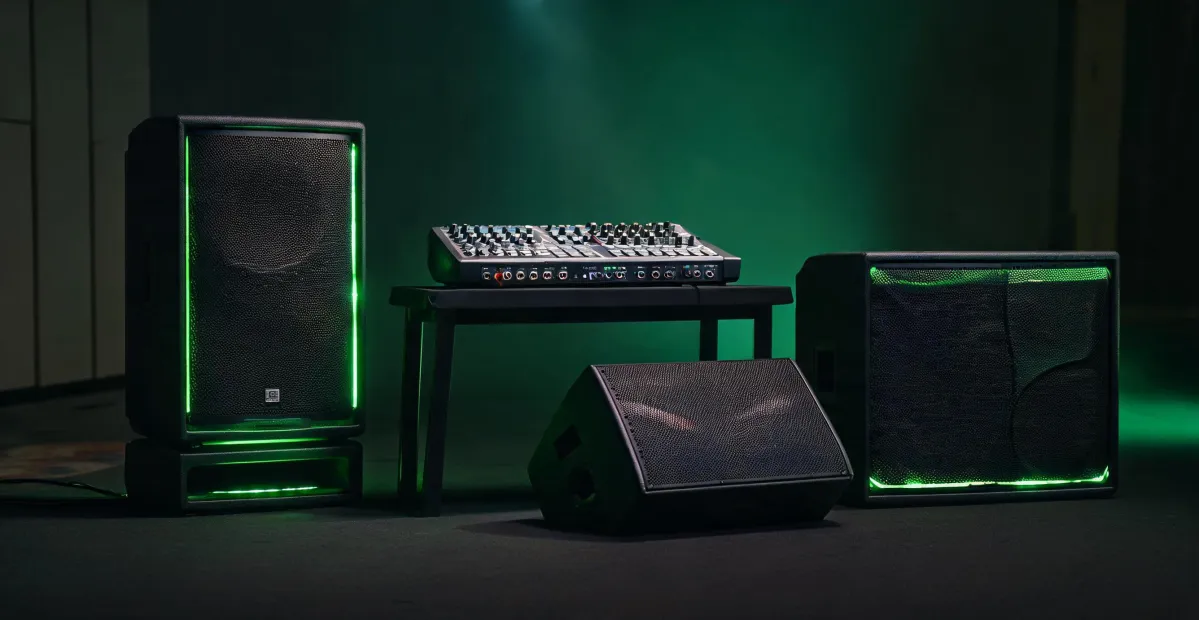
Start with the Thump215. End with the DRM-315 only if you have to.
If you're picking between the Mackie Thump215 (15" powered loudspeaker) and the Mackie DRM-315 (15" 3-way powered speaker) for a live sound rig or installed AV system, here's the short version: the Thump215 is the better buy for 80% of users. The DRM-315 is a niche tool. I only figured this out after causing a $3,200 delay on a festival stage.
Let me back up.
I'm a sound engineer and system tech. I've been handling equipment orders and stage setups for about 8 years. In that time, I've personally made—and documented—six significant mistakes, totaling roughly $14,000 in wasted budget and blown deadlines. I now maintain our team's equipment checklist to keep others from repeating my errors.
This article isn't a product review. It's a field report from someone who learned the hard way which Mackie tool belongs in which job.
Why the Thump215 wins for most jobs
Portability that actually matters
The Thump215 weighs 42.5 lbs. The DRM-315? 62.3 lbs. That 20-pound difference doesn't sound huge on paper, but in practice it's the line between a one-person load-in and needing a cart or a second pair of hands.
I once booked a two-speaker setup for a corporate panel. The client's venue was on the third floor, no elevator. I brought the DRM-315 because I thought “3-way = better sound.” By the second trip up the stairs, I seriously questioned my life choices. The panelists were fine with the sound. My back wasn't.
Sound-wise? The Thump215's 2-way design (LF + HF) is clean, punchy, and plenty loud for a mid-size room. It's rated for 1400W peak. You don't need a 3-way crossover in a box for spoken word or background music. You need a reliable speaker that doesn't break your back.
Price: real savings, not fake budget math
The Thump215 lists around $599 street price (as of April 2025). The DRM-315 is roughly $1,099. That's an $500 difference per speaker. For a pair, you're saving $1,000.
But here's the thing I missed initially: the DRM-315 isn't overpriced. It's just over-engineered for most gigs. The 3-way design (LF, MF, HF) gives you more control in the vocal range—great if you're doing live music with a loud stage. But for speech reinforcement, playback, or even small band monitors, that extra mid driver is wasted.
I only believed this after ignoring it and eating an $890 redo on a rental order.
The DRM-315: when it's the right call
The DRM-315 is a professional tool. It has a 3-way passive crossover, dedicated compression drivers, and a cast-frame woofer. It sounds more articulate in the 250 Hz–2.5 kHz range because the mid driver handles that band separately. Vocal intelligibility is higher, especially if you're pushing the system hard.
But—and this is the critical part—you need to be in a scenario where that matters.
When does it matter?
- Large rooms where the speaker needs to cover a long throw with minimal comb filtering
- Live music with a loud drum kit bleeding into vocal mics (the 3-way DSP can notch out feedback better)
- Installed systems where the speakers are mounted out of reach and you want to minimize EQ changes
- Rental houses that need a flagship box for high-end clients who demand specs
For those use cases, the DRM-315 is a solid choice. Notice I didn't say “essential.” It's a specialist tool.
Where I messed up
September 2023. We had a three-day outdoor festival. The headliner's rider specified “Mackie DRM series or equivalent” for front-of-house. I had four DRM-315s on order. The shipment got delayed. I panic-ordered six Thump215s from a local supplier as backup.
Here's the kicker: the headliner's engineer listened to both. He preferred the Thump215s. Why? The DRM-315's 3-way design is actually less forgiving in a poorly EQ'd system. If you don't know how to tune a 3-way box, you can create phase cancellation between the mid and high drivers. The Thump215's simpler crossover is almost idiot-proof.
So I paid $1,092 extra for the DRM-315s, they arrived late, and the client preferred the cheaper speakers anyway. That $3,200 delay I mentioned? That was the storage fee for holding the DRM-315s at the warehouse while we used the Thump215s.
Lesson learned: specs aren't performance. A 3-way speaker isn't automatically better than a 2-way. It's just more complex. And complexity without expertise is just risk.
What about other Mackie options?
If you're looking at the Thump215 and wondering about the Thump Go (battery-powered) or the SRM series, here's my honest take:
- Thump Go: Perfect for outdoor events, street performances, or any job without power nearby. Sound is surprisingly good for a battery box. But it's 1,000W peak vs 1,400W for the Thump215. Less headroom.
- SRM series: These are step up from Thump in terms of DSP and build quality. The SRM215v3 is around $799. It's a better match if you're doing critical sound reinforcement (theater, dance, speech).
- DL series mixers: Pair any of these speakers with a DL1608 or DL32S for digital control. But that's a different article.
The point is: don't over-spec. The Thump215 is a workhorse. It's not the fanciest, but it's reliable, lightweight, and sounds good enough for real-world gigs.
Are there situations where the DRM-315 is the only choice?
Yes. But they're rare:
- You're installing in a venue with very high ambient noise (think industrial spaces, bars with heavy machinery) where every dB of vocal clarity matters
- You're doing a tour with a rider that specifies the DRM series by name (and you can't sub)
- You need the longer warranty (DRM series has a 6-year warranty vs 2-year for Thump—though check terms)
Otherwise? Save the money, save your back, and go with the Thump215.
One more thing: the subwoofer question
You'll notice I didn't mention subs. If you're pairing these with a sub (like the Mackie DRM18S or Thump18S), the 3-way advantage of the DRM-315 becomes even smaller. The sub handles the lows. The top box only needs to produce mids and highs. The Thump215's 2-way design is actually better in that scenario because the sub takes the pressure off the LF driver.
Think of it this way: the DRM-315 is a Swiss Army knife with 15 features. The Thump215 is a chef's knife—does one thing really well. Most of the time, the chef's knife wins.
Take it from someone who's paid for that lesson in both labor and dollars.

Elise Marceau
Elise Marceau is an LED display and digital-signage systems analyst covering LED video walls, modular screens, transparent LED, control processors, and indoor or outdoor signage. She applies IEC 62368-1 safety principles while comparing pixel pitch, luminance, contrast, refresh rate, colour uniformity, viewing angle, ingress protection, power density, module serviceability, and signal redundancy. Her specification guides help integrators, venue operators, retailers, and procurement teams align viewing distance, ambient light, content format, installation access, electrical load, and lifecycle support.