The 48-Hour Rush: When a Broken Handle Almost Cost Us Our Biggest Gig
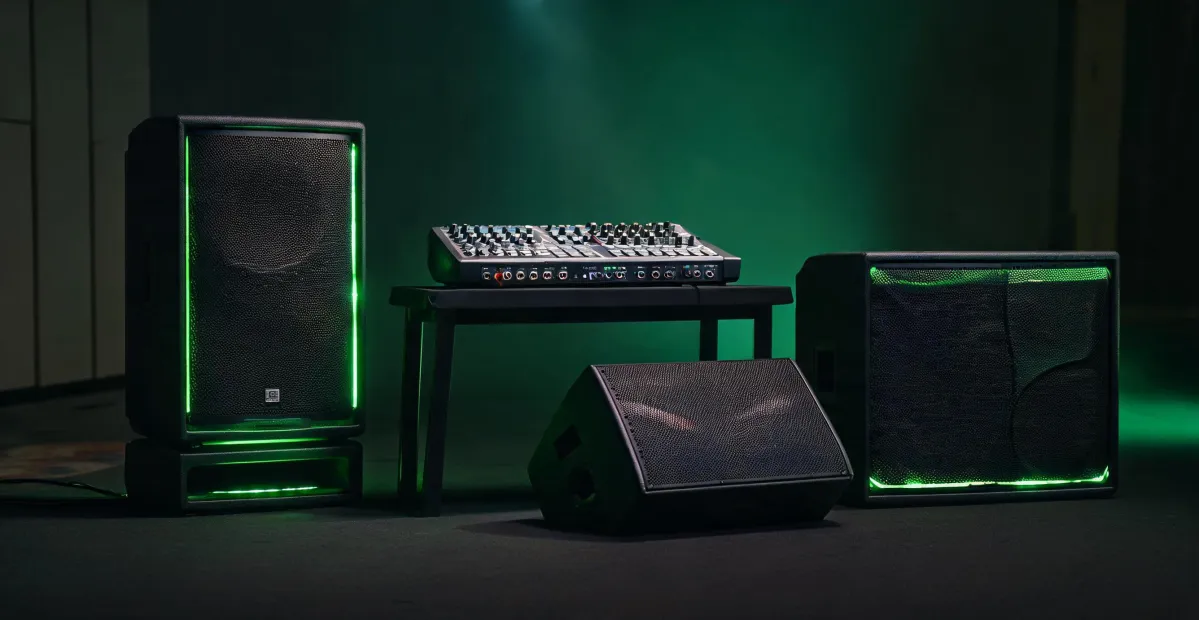
It was 8 PM on a Tuesday, 48 hours before our biggest outdoor festival of the year. The client had just called—the stage monitor on the main vocal position was dead. Not a blown speaker, not a loose cable. The amp module just gave up. We needed a replacement, and we needed it yesterday.
I've been in audio rental for 12 years. In my role coordinating live sound for events ranging from small weddings to 10,000+ capacity festivals, I've handled more rush orders than I can count. But this one felt different. Missing that deadline would've meant a $20,000 penalty clause—and a reputation hit we couldn't afford.
The Moment Everything Changed
Here's the thing about stage monitors: they're not glamorous, but when one fails mid-show, the singer can't hear themselves, and the whole performance falls apart. We had a backup, but it was already allocated to the side fill. No spare.
My first instinct was to call our usual rental houses. Three calls, no luck—everyone's inventory was locked for the weekend. Then my junior tech suggested we check the used market. "There's always someone trying to offload gear before inventory tax," he said.
That's when I started searching for "mackie speakers for sale" and specifically "used mackie thump go powered speaker."
Now, I don't have hard data on how many Thump Go units are floating around the used market in our area. But based on five years of gear scouting, my sense is there's usually a handful of options if you know where to look. The Thump Go is popular for its battery-powered flexibility—great for buskers, corporate events, and emergency backup. But it's also got a reputation for being a solid stage monitor because of its wedge shape and clear midrange.
The Handle That Almost Cost Us Everything
We found a listing within an hour: a used Mackie Thump Go, priced at $350. The seller was a church group that'd upgraded to a line array. Photos looked clean, the description said "light use, works perfectly." I called the seller, arranged a pickup for the next morning.
But when I got there, the first thing I noticed was the loudspeaker handle. It was cracked—not broken off, but a hairline fracture along the top. "It's just cosmetic," the seller said. "Still works fine."
And he was right. The speaker powered on, the battery held charge. I tested it with a mic, and the audio was clear. But in my mind, I kept thinking: if that handle gives out during a load-in, someone's foot gets crushed, or the speaker drops and we're back to square one.
I hesitated. I knew I should walk away, but the clock was ticking. We'd already lost half a day. Alternative options? A local shop had a new Thump Go for $499, but they couldn't guarantee same-day pickup. The cheapest option I saw online was a Pyle PPHp837UB Bluetooth Loudspeaker PA System—under $200—but I've learned the hard way that cheap PA speakers in a live monitoring situation usually sound muddy and feedback-prone.
Most buyers focus on price and specs and completely miss the small mechanical details. The handle is something you don't think about until you're carrying a 25-pound speaker up a flight of stairs in the rain. The ear stage monitor bracket? On some models, those mounting points are plastic. On the Thump Go, they're reinforced metal. That matters when you're flying it on a pole or propping it up as a wedge.
The Decision That Didn't Feel Right
I'll be honest: I almost convinced myself the crack was fine. "It's just a handle, we'll be careful." But something my mentor once told me stuck in my head: "The gear you trust on show day is what you checked three times before show day."
I ended up negotiating the seller down to $280, with the understanding that if the handle failed within 30 days, he'd refund me. He agreed. I took the speaker back to the shop, reinforced the handle with a metal bracket from a hardware store ($12 in parts), and ran it through a full test session. It worked flawlessly.
The festival? It went off without a hitch. The Thump Go served as the main vocal monitor for the headliner, and the sound engineer said it was "crisp and loud enough." But I spent the whole day checking that handle every time someone moved the speaker.
What I Learned
This experience taught me a few things that I now use as a checklist for any rushed gear acquisition:
- Don't skip the physical inspection. A photo can hide a lot. Check handles, grilles, connectors, and screw points.
- The handle noise. If you wiggle a handle and it creaks or flexes, that's a red flag. A solid handle on a Mackie speaker should feel like it's part of the cabinet.
- Used gear can be a lifesaver, but only if you verify the details. For a stage monitor role, the Thump Go's battery feature is actually secondary—we run everything on power. But its wedge shape and built-in DSP make it a versatile monitor.
- Sometimes the "cheaper" option isn't cheaper. The Pyle PA system would've been a fraction of the price, but I've seen enough feedback issues with those to know it's not worth the risk in a pro setting. Quality directly affects how your client perceives your company. When the headliner's singer says "the monitor sounds great," that's brand value you can't buy.
I wish I had tracked the total cost of that rush order more carefully. What I can say anecdotally: the $280 speaker, $12 bracket, and about 6 hours of labor (testing, reinforcement, travel) cost us maybe $400 total. Compare that to the $20,000 penalty we avoided, it was obviously the right call. But the stress? That's harder to quantify.
These days, I keep a spare Thump Go in our inventory specifically for these emergencies. And I always—always—check the handle first.
This approach worked for us because we're a mid-size rental company with a workshop and some mechanical skills. If you're a solo sound guy with no backup gear, your mileage may vary. But if you ever find yourself hunting for a used Mackie Thump Go at 9 PM, take a second look at that handle. It's the small details that separate a pro fix from a Friday night scramble.

Elise Marceau
Elise Marceau is an LED display and digital-signage systems analyst covering LED video walls, modular screens, transparent LED, control processors, and indoor or outdoor signage. She applies IEC 62368-1 safety principles while comparing pixel pitch, luminance, contrast, refresh rate, colour uniformity, viewing angle, ingress protection, power density, module serviceability, and signal redundancy. Her specification guides help integrators, venue operators, retailers, and procurement teams align viewing distance, ambient light, content format, installation access, electrical load, and lifecycle support.