Why a Mackie Thump15 and a 12-Inch Sub Can Still Sound Bad (And What a Cost-Cutter Checks First)
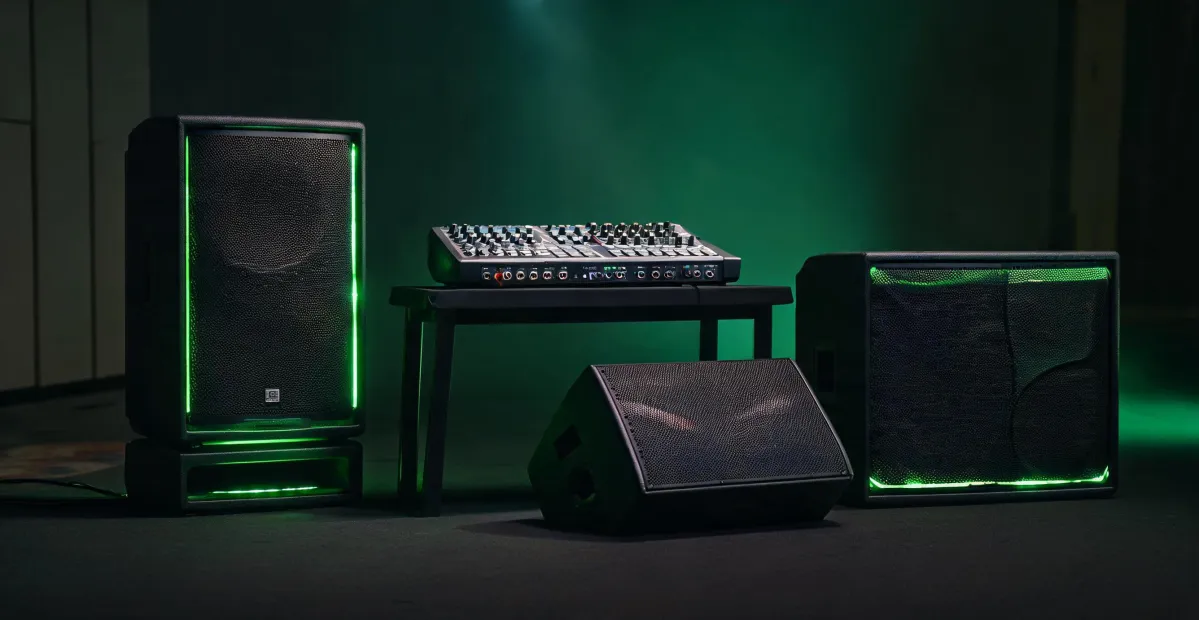
About eighteen months ago, I stopped trusting spec sheets. Not because they're dishonest, but because they answer a different question than the one we were asking. We kept buying gear that looked right on paper and then failed in rooms. The setup is still common: two Mackie Thump15 powered loudspeakers, one Mackie subwoofer 12, a small mixer, and at least one ear stage monitor system. On paper, that rig should be fine. In practice, it often isn't.
I manage procurement for a 45-person production company. I've tracked every audio invoice for six years, and my annual budget runs around $120,000. I don't carry an oscilloscope, and I can't hear 18kHz anymore. But I've learned to tell the difference between 'this gear is bad' and 'this system was never set up to succeed.'
If you've ever stood at soundcheck while a client says 'it sounded better at the wedding last week,' you know the feeling. Trust me on this one.
The Setup That Keeps Showing Up on Our Invoices
Most of our problem jobs start with the same order. A client asks for 'a PA' and the first choices are predictable: a pair of Mackie Thump15 powered loudspeakers for mains, one Mackie subwoofer 12 for low end, and some kind of monitor solution. Sometimes it's wedges. More often now it's an ear stage monitor system, because the band wants a quiet stage. Then there's the mixer. And once in a while, someone spec'ing wireless asks for an RF medium power amplifier (note to self: ask how they tested it). That's when my spreadsheet starts to hurt.
At this point, the total project cost is usually more than just the speakers. But no one sees it until the invoices pile up. I also get searches from people looking for a HyperX audio mixer. I don't review gaming audio gear, but I know that query is usually a product name someone typed before they understood their signal flow. It's not a Mackie problem, but it's the same problem: looking for a box instead of a plan.
What I Thought We Were Buying
When I look at a Mackie Thump15 powered loudspeaker, I don't see a speaker. I see the cost per working gig. Same with the Mackie subwoofer 12. I've compared quotes from eight vendors, read repair threads, and calculated total cost of ownership. That part is important. But TCO doesn't fix a system designed wrong.
Last year, the price spread for two Thump15s plus a 12-inch sub was $310 across eight vendors. The cheapest quote had a restocking fee, a shorter warranty claim window, and slower replacement shipping. I didn't choose it. That's the kind of decision I can make with a spreadsheet.
The mistake I can't catch with a spreadsheet is assuming that a better speaker will fix a bad gain structure.
The Real Problem Is System Gain, Not Speaker Specs
Here's the deeper reason the rig sounds bad: feedback, mud, and singer complaints are usually not speaker defects. They're system design issues. When you put a sub near a stage, you get low-frequency buildup. When you put a 15-inch main behind a vocal mic, you create a feedback path. When stage wedges are loud, the vocalist pushes, the mic opens up, and the whole thing becomes a fight.
People think you solve coverage problems by buying more wattage. Actually, the causation runs the other way. A system that is set up well will sound louder at lower output. A system that is set up badly will sound worse no matter how much power you have.
An ear stage monitor can reduce stage volume, but only if the mix is actually usable. That means clean sends from the mixer, a wireless link with good RF coordination, and a monitor mix that doesn't need to be at +12 to hear. A unit labeled RF medium power amplifier can help in a distributed antenna system, but it won't fix intermodulation distortion. Same logic as the speaker: add the right part, not just more part.
Look at what the spec sheet doesn't say. According to Mackie's published specifications (accessed April 2025), the Thump15 powered loudspeaker is rated at 1300 watts peak and 126 dB max SPL. Those are on-axis, free-space measurements with a defined input. They don't tell you how the speaker will behave in a reflective room with a singer standing three feet from the vocal mic. That's not a Mackie flaw. That's a misuse of numbers.
The surprise wasn't that budget gear failed. It was how often we didn't catch the problem until the client's soundcheck. The failure wasn't in the box; it was in our process.
What a Bad Small-Rig Design Actually Costs
Let me put a dollar figure on this. In 2024, we had a gig where the band turned up with no input list, no stage plot, and a wireless system they 'tested at home.' The mains were fine. The Mackie subwoofer 12 was fine. The ear stage monitor packs kept dropping because the antenna was behind a soft wall and hidden behind a rack. The repair was a trip to the venue, a frequency scan, and a cable change. Total emergency service cost: $615. The fix took 25 minutes.
I've seen the same pattern with a small mixer. If the sends are clipping, no amount of EQ will make the monitors stable. If the RF medium power amplifier is part of a badly placed antenna system, it can actually make the signal worse. The cost isn't the component. It's the callback.
The most frustrating part is that this is predictable. You'd think a system with a 15-inch main and a 12-inch sub would be more than enough for a 100-person room. But if the sub isn't crossed over correctly and the main is run full-range, you get phase cancellation around the crossover region. The vocals sound thin. The singer turns up. The main gets louder. The feedback starts. Then someone blames the speaker.
Over a season, those callbacks add up. Our cost tracking shows about 14 percent of rental quibbles came from systems we'd technically 'checked' but not actually listened to with a vocal mic at performance level. That's a budgeting problem.
The Fix Is Boring and Cheap
Here's what we do now, and it's not exciting. Before we buy, we draw the signal flow. After we load in, we do a 25-minute system check with a vocal mic at the actual stage position. This has caught more problems than a $2,000 speaker upgrade. Our 12-point checklist has saved us an estimated $8,000 in emergency service and replacements.
- High-pass the mains when the sub is doing low end. If your Mackie subwoofer 12 happens to have a crossover output, use it. Don't let the 15-inch main work as a cheap subwoofer.
- Put the mains in front of the microphones. It seems obvious, but I've seen Thump15s parked behind a vocal mic at least six times.
- Build an ear stage monitor mix from the actual stage volume. That means a clean mixer send, maybe a limiter, and real radio coordination if it's wireless.
- Treat wireless like a system. Antenna placement, cable length, connector quality, and an RF medium power amplifier only help if the entire signal chain is stable.
- Check gain structure before you touch EQ. If the mixer input is clipping, you're polishing a distorted signal.
None of this is as fun as unboxing a new driver. But it's cheaper.
The Last Line in the Spreadsheet
People think buying a 'better' brand is the answer. Actually, the people who get good sound are the ones with a repeatable process. It's less exciting than swapping a Mackie Thump15 powered loudspeaker for a more expensive 15-inch box. But it's cheaper. As a cost controller, I'll take that every time.
If you're piecing together a small PA, start with the problem, not the product. A Mackie Thump15 and a Mackie subwoofer 12 can be a legitimate workhorse rig. So can a dozen other brands. What makes it work is how the mixer, monitors, wireless, and placement fit together. That's the part that shows up on the invoice.

Elise Marceau
Elise Marceau is an LED display and digital-signage systems analyst covering LED video walls, modular screens, transparent LED, control processors, and indoor or outdoor signage. She applies IEC 62368-1 safety principles while comparing pixel pitch, luminance, contrast, refresh rate, colour uniformity, viewing angle, ingress protection, power density, module serviceability, and signal redundancy. Her specification guides help integrators, venue operators, retailers, and procurement teams align viewing distance, ambient light, content format, installation access, electrical load, and lifecycle support.