The Cheapest Audio Gear Costs More: Mackie, CR3-XBT Price, and the Real Cost of Sound
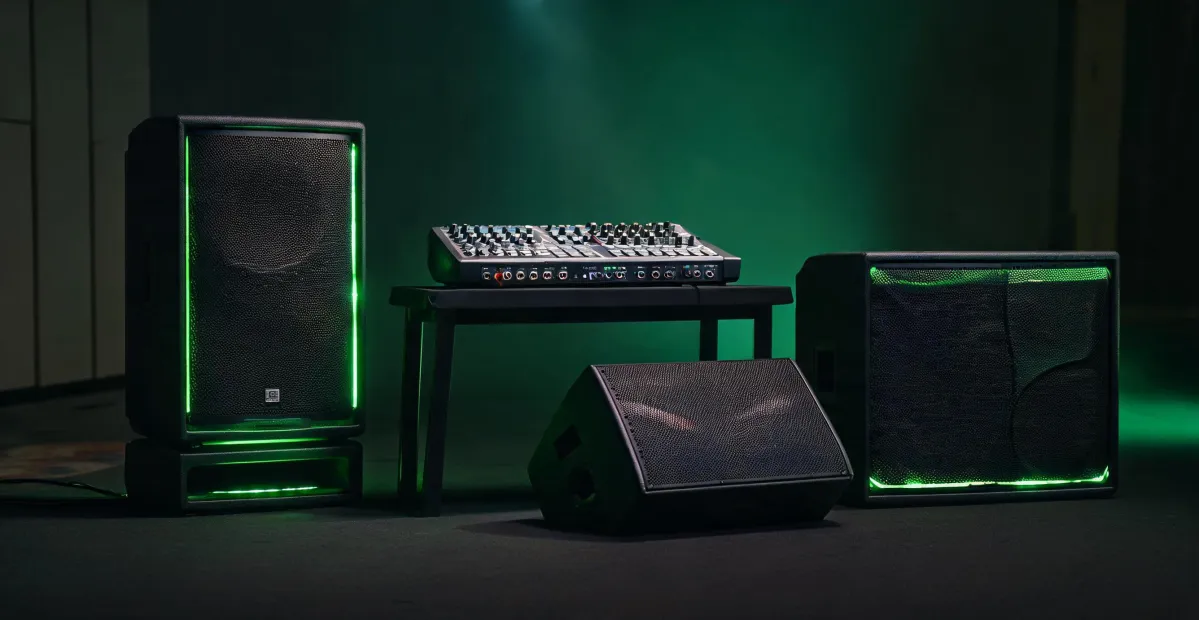
Here's an opinion that gets me funny looks from procurement: the cheapest audio quote is almost always the most expensive one in the end. I say that as the office administrator who has handled AV and audio purchases for a 200-person company since 2020. That's roughly 60-80 orders a year across eight or nine vendors, and I report to operations and finance, so I feel every dollar twice. It took one bad subwoofer install in March 2023 to change how I think about every purchase since.
The Trigger Event
A $180 powered speaker died six weeks after installation. We paid $85 in labor to unmount it, returned it under warranty, and got a replacement that rattled. The vendor refunded us, but the room was dead for a month. Every meeting moved to another floor. The scheduling scramble cost way more than the speaker. Here's the thing: the price on the invoice is only the beginning.
Why I Keep Coming Back to Mackie Active Speakers
When I spec a Mackie active speaker for a conference room, I'm not paying for the logo. I'm paying for predictable behavior. A Mackie active speaker with moderate power and a sensible limiter will sit in a room for years and just work. Seriously, a no-name box with a giant wattage number will surprise you, and not in a good way.
Take the Mackie CR3-XBT. The Mackie CR3-XBT price I last saw was around $150 a pair (April 2025). That's not the cheapest desktop monitor you can find. But I have a pair from 2021 that has survived three office moves, one coffee spill, and a firmware update that made the Bluetooth pairing menu annoying. They still track clearly for calls and video reviews. A $90 monitor that dies in 18 months is not a bargain; it's a future headache. Trust me on this one: time spent troubleshooting 'why is the room losing audio' is time I don't have.
The Math That Changed My Mind
Here's the formula I use now, and it has nothing to do with brand loyalty:
Total cost = quoted price + installation + troubleshooting + downtime + replacement frequency.
When you include those, the math shifts fast. A $150 Mackie active speaker that runs for years is cheaper than a $99 speaker that needs a warranty claim after six weeks. The $51 difference disappears the first time you have to schedule a technician for a second visit.
This is also why I stopped chasing the lowest quote. In 2020, a new vendor underbid our regular supplier by $200 on a small mixer order. They couldn't send a proper invoice—just a handwritten receipt. Finance rejected the expense, and the money came out of my department budget. Now I verify invoicing capability before I check the price.
During our 2024 vendor consolidation project, I kept two audio suppliers even though one was cheaper. My operations manager asked why. I pointed to the month the cheaper supplier couldn't get drivers in stock. The backup kept our event on schedule. That's what 'value' looks like on a calendar.
Subwoofers Are Where the Fantasy Dies
Subwoofers make this even clearer. A few years ago, someone on the rental side suggested a Sundown Z8 subwoofer for a lounge build-out. Look, the Sundown Z8 subwoofer is a serious piece of car-audio hardware. It can dig deep in a small sealed enclosure and impress the hell out of you in a car. But it's not designed for continuous PA duty in a public lounge. The moment you push it for a 40-person event, you're asking it to do a job it was never built for.
Meanwhile, the Yamaha NS-SW050 subwoofer is the one I see on every budget office wishlist, and it's super tempting on paper: low price, recognized name, compact footprint. For a small office and modest music playback, it's fine. The problem is when someone expects it to behave like a much larger sub. A single 8-inch sub in an open-plan room will not give you cinema bass across 2,000 square feet. That's not a defect—it's a spec match.
The point isn't that these are bad products. The point is that the cheapest option only works if you understand exactly where it stops working.
The Mobile Phone Loudspeaker Distraction
Let's talk about a trend that makes me uneasy: the mobile phone loudspeaker market trends. All the announcements are about tiny speakers getting louder through clever DSP and exotic materials. It's impressive physics. But it also feeds the myth that 'loud' means 'good enough' in a room.
A phone has to be loud from two inches away. A conference room needs even coverage from a speaker mounted six feet away. Those are totally different engineering problems. The question isn't 'can it get loud?' It's 'can it stay clean when someone actually speaks?' When I see a PA speaker with a tiny driver and a huge claimed number, I know someone is borrowing phone-speaker logic for a job it can't handle.
The 'loud' number has become a headline feature in every category, from phones to PA speakers. But in a room, coverage and headroom matter more than the number.
Watch the Claims, Not Just the Price
Why does wattage matter? Because, per FTC advertising guidelines (ftc.gov), claims need to be truthful and substantiated. But the FTC doesn't dictate how a brand measures wattage. So '1000W' could be peak, program, or pure marketing. Plus, I've put a Mackie active speaker rated at 1000W peak next to a product with a wilder number on the spec sheet. The Mackie won because its limiter didn't collapse the audio every time someone spoke loudly. That's the stuff you can't see in a product photo.
A Quick Caveat
I'm not saying budget gear is always bad. I'm saying that price-first thinking is a risk management failure. If you have a small budget, the answer isn't to buy the cheapest version of everything. It's to buy fewer, better pieces. Get one Mackie active speaker this quarter. Add the second one next quarter. That path gives you a system that works, not a graveyard of broken toys.
And if you're looking at a Yamaha NS-SW050, make sure you know what you need it to do. For a quiet office, it may be perfect. For a room where someone will push it, keep looking.
Bottom Line
The Mackie CR3-XBT price gets the clicks. 'Mackie active speaker' gets the search volume. The Sundown Z8 subwoofer and the Yamaha NS-SW050 subwoofer get the forum arguments. But the real reason I keep buying quality audio for our offices is that it makes my phone stop ringing. There's something satisfying about a room that just works. When the AV just works, no one notices. That's exactly what I want.

Elise Marceau
Elise Marceau is an LED display and digital-signage systems analyst covering LED video walls, modular screens, transparent LED, control processors, and indoor or outdoor signage. She applies IEC 62368-1 safety principles while comparing pixel pitch, luminance, contrast, refresh rate, colour uniformity, viewing angle, ingress protection, power density, module serviceability, and signal redundancy. Her specification guides help integrators, venue operators, retailers, and procurement teams align viewing distance, ambient light, content format, installation access, electrical load, and lifecycle support.