What PA System Should You Buy? It Depends on Your Scenario
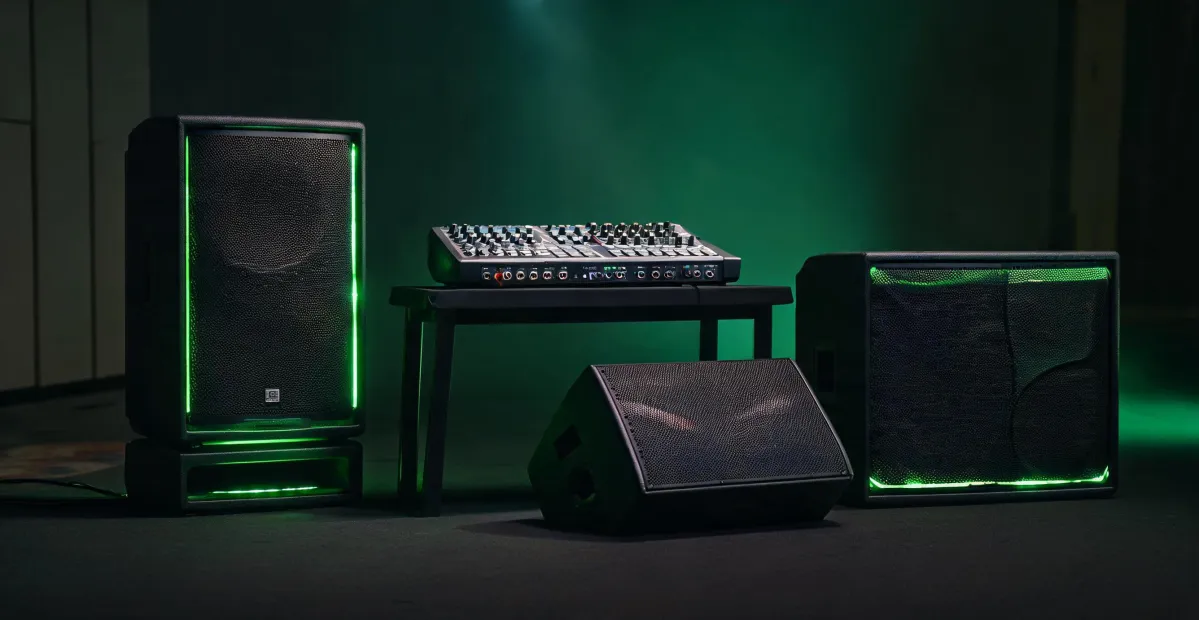
What PA System Should You Buy? It Depends on Your Scenario
I'm a quality and brand compliance manager at Mackie, the pro audio manufacturer. I review every speaker, subwoofer, and mixer that leaves our facility — roughly 400 units a month. Over four years of that routine, I've watched enough gear come back for service to know one thing: PA systems fail when the equipment was never matched to how it's actually used.
It's rarely the components. It's the expectations.
There is no universal "best" PA — there's only the right PA for your situation. A system that's perfect for a solo acoustic duo is the wrong choice for a venue hosting four bands a week, and a repair job demands a different mindset than a new purchase. If someone tells you "just buy this one model," they're ignoring your context.
Before you spend a dollar, figure out which of these three scenarios you're in:
- Scenario A: You need sound that one person can set up in fifteen minutes.
- Scenario B: You're equipping a venue or rental inventory that runs for hours, week after week.
- Scenario C: You're repairing or upgrading passive loudspeakers you already own.
Scenario A: You're a performer who needs fast setup and easy transport
You gig regularly, pack and unpack your own gear, and run sound from the stage. Your lower back has filed a complaint about the passive cabinets and amp rack you've been dragging from car to rehearsal room to venue.
For you, portability beats raw SPL, every time. I'll say something that goes against the grain in this industry: you don't need the loudest box in the store. You need a system that gets you from parking lot to playing in minutes. Do you really want to wire an amp rack before every four-hour bar gig? No, you don't.
This is where the Mackie Thump PA system — the product line I've logged the most hours reviewing — earns its keep. The amps are built into the speaker cabinets, and the top box has a mixer section right on it. No amp rack to haul. No separate processor. No impedance math. Plug in a mic and a guitar, and you're done.
What about volume? Here's a ballpark from my notes: for an audience of 100–150 in a typical bar or function room, you don't need more than roughly 110 dB SPL at 1 meter on peaks. A Thump-class speaker gets there without breaking a sweat. If you're mixing for open-air events with 400 people, that's a different purchase entirely — and honestly, that's closer to Scenario B territory, or a reason to rent extra gear for the big days.
"But it's not the most powerful PA for the money."
True. It isn't. And that's the point. You're paying for faster setup, fewer cables, fewer failure points — not for the top three decibels you'd never use in a small venue. When I spec gear for this use case, I start with weight, dimensions, and setup steps, not wattage. If you can't carry it by yourself, it's a red flag. It'll end up in your garage, and your next gig will be back to borrowing the house system.
Scenario B: You're building a venue or rental inventory that has to survive
Now everything changes. The gear doesn't move every night — but when it does, it needs to take abuse. It's operated by a rotating cast of touring engineers, volunteers, and venue staff. It has to sound the same on Thursday as it did on Tuesday. Predictability is the feature.
The most common failure pattern I see here is a weak low end. Someone spec'd main speakers carefully and then skipped the sub, or picked one that's too small. The mains strain to reproduce kick drum and bass, the protection limiters start working overtime, and the whole system sounds like it's running out of breath — until one of the drivers stops breathing entirely.
That's why I keep saying: choose the foundation first. The Mackie SRS1500 active subwoofer (full disclosure: we keep one in our QC reference rack) has the amplifier and crossover engineered for the driver inside it. You don't have to wonder whether the amp is big enough — the designers already did that calculation, and their own warranty depends on it. All you have to decide is whether the venue needs one sub or two.
When we qualify a speaker for venue duty, we test more than frequency response. We log power draw, thermal rise, and limiter behavior over a two-hour soak test. The products that pass make it onto our recommended list; the ones that don't get fixed or get dropped. That's the difference between a spec sheet and a track record.
Here's where the prevention-over-cure mindset matters. When buyers size a system by the peak power number on a spec sheet, they're reading the wrong number. Under the CEA-426-B loudspeaker power-rating standard, the figure that matters for continuous playback is the continuous (RMS) rating, not the peak. Peak means milliseconds. RMS means hour four of a wedding reception. Design for RMS, then add a little margin. An underpowered sub driven into distortion is the most common cause of premature speaker failure I see in the service department — a $400 mistake that turns into a $600 voice coil replacement, plus a cancelled event when the system goes down mid-show.
Scenario C: You're repairing or upgrading passive speakers
Maybe you already own an amplifier and a pair of passive cabinets. It's an older rig — say, a compact Yamaha 101M power amplifier driving two full-range speakers. One of the drivers just blew, and you're looking at replacement options online.
Stop. Read the label on the driver you're pulling out.
Take a common example: a loudspeaker driver rated 4 ohms and 8 watts. It looks like a modest part, but it's doing a specific job inside that cabinet. The replacement parts you'll find online are often 8 ohms and 15 watts. On paper, that looks like an upgrade, right? It's not. And the reason tells you everything about why matching specs is the core of audio quality.
First, impedance. An amplifier's output stage is designed to deliver its rated power into a specific load. Switch a 4-ohm driver for an 8-ohm one, and the amp delivers less current at the same gain setting. The whole speaker gets quieter. The natural reaction is to crank the volume to compensate — but now you're pushing the amplifier into a working range where it runs hotter while delivering more voltage than the system was designed for. Heat follows. So do blown output stages.
Second, power handling. A 15 W mark isn't a badge of "better"; it's the thermal limit of the voice coil, measured under controlled conditions. The original 8 W driver was chosen by the cabinet designer because its excursion, resonance, and efficiency fit the cabinet volume and the crossover components. Drop in a different driver, and you've re-engineered the cabinet by accident — the frequency response shifts, the crossover misbehaves, and the speaker sounds worse even though the number on the box is higher.
It's tempting to think a speaker is a speaker. It isn't. That "it's close enough" mentality is the most expensive decision you can make in audio — because the damage doesn't show up until the amp dies too.
One upgrade that sometimes legitimately works: replacing a conventional two-way arrangement with a coaxial loudspeaker driver, where the high-frequency driver mounts at the center of the low-frequency cone. The acoustic logic is sound — a single point source eliminates the comb-filtering artifacts you get when the HF and LF drivers are physically separated on the baffle. But the same matching rules apply: impedance has to line up with the amplifier, and the driver's power handling has to align with the amplifier's continuous output at performance levels.
Let me tell you about a near miss from our own verification bench. A customer had swapped a failed 4-ohm driver for an 8-ohm unit because it was the only one in stock. On paper it looked fine: same size, same connector, roughly similar power. It wasn't. The amplifier was delivering half its intended power into the wrong load, and the customer had been cranking the input to compensate. The amp was one long rehearsal away from thermal failure.
Looking back, I should have flagged the impedance mismatch the moment the driver arrived. At the time, I was looking at wattage and mounting depth. It took an overheated output stage and a bench test failure to teach me the protocol I now follow on every review: impedance first, power rating second, thermal behavior third.
Now every replacement driver that comes through the door gets checked against three numbers before it receives a test tone: impedance, continuous power, and sensitivity. Doesn't matter if it's a 4-ohm, 8-watt driver or a full 18-inch subwoofer. The discipline is the same.
So glad that unit came through our verification before it went back into service. We installed the correct 4-ohm driver, and the system has been running clean for eight months. Dodged a bullet — and the customer dodged the cost of a new amplifier.
How to tell which scenario you're in
If you're still on the fence, answer these three questions with total honesty:
- Does the system move more than once a week? If yes, you're closest to Scenario A. Prioritize portability and self-contained powered designs. Don't chase max SPL; chase setup time.
- Will it run for hours at a time, operated by people who don't own it? If yes, you're in Scenario B. Build the foundation first — subs and mains sized by RMS — and let reliability lead the decision.
- Are you working with gear you already own, repairing or upgrading it? If yes, you're in Scenario C. Read every label. Match impedance. Never assume a higher-rated replacement is a better one.
You might recognize yourself in more than one scenario — a mobile DJ who also repairs old cabinets lives in both A and C. That's fine. The label isn't the point. The point is that each scenario has its own priorities, and mixing them up is how good money buys the wrong gear.
One more thing: don't ignore the cost of changing your mind later. I've watched customers buy twice because they chose the portable option once, then landed more events than they expected. The upside of a bigger system was flexibility; the risk was budget. Both are real. Just don't pretend you won't have to face that trade-off in six months.
Here's my bottom line after four years of reviewing audio products: the most expensive PA will disappoint you if it doesn't fit how you actually work, and the most modest one will serve you well if its specifications match the job. Whether you need a portable powered rig, an active subwoofer foundation for a venue, or just a correctly matched replacement driver for a passive cabinet, the decision process is the same.
That's why the 12-point checklist I built after my first big mistake is still taped to my monitor. It's saved our customers an estimated $8,000 in potential rework over the past year. Five minutes of verification beats five days of correction. Every time.

Elise Marceau
Elise Marceau is an LED display and digital-signage systems analyst covering LED video walls, modular screens, transparent LED, control processors, and indoor or outdoor signage. She applies IEC 62368-1 safety principles while comparing pixel pitch, luminance, contrast, refresh rate, colour uniformity, viewing angle, ingress protection, power density, module serviceability, and signal redundancy. Her specification guides help integrators, venue operators, retailers, and procurement teams align viewing distance, ambient light, content format, installation access, electrical load, and lifecycle support.