Mackie Thump212 Price, Mackie 18-Inch Subwoofer, and the Loudspeaker and Amplifier Question: A Cost Controller's Comparison
-
What I compared: powered Mackie rig vs. separate loudspeaker and amplifier
-
Dimension 1: Upfront price, or why the Mackie Thump212 price surprised me
-
Dimension 2: Setup and tear-down labor
-
Dimension 3: Sound consistency and client perception
-
Dimension 4: Total cost over three years
-
What about the Sony SA-SW5 and Yamaha NS-SW100?
-
So which should you buy?
I'm the procurement manager at a 14-person event production company. I've handled our equipment budget (about $160,000 a year) for six years, and I've kept a spreadsheet of every audio invoice since 2019. When our old passive loudspeaker and amplifier rig finally started acting up, I had to make a call: replace it with powered Mackie gear or buy a new passive system. If you've been Googling Mackie Thump212 price or Mackie subwoofer 18, you're probably facing the same decision.
This is the comparison I wish someone had walked me through before I ran the numbers.
What I compared: powered Mackie rig vs. separate loudspeaker and amplifier
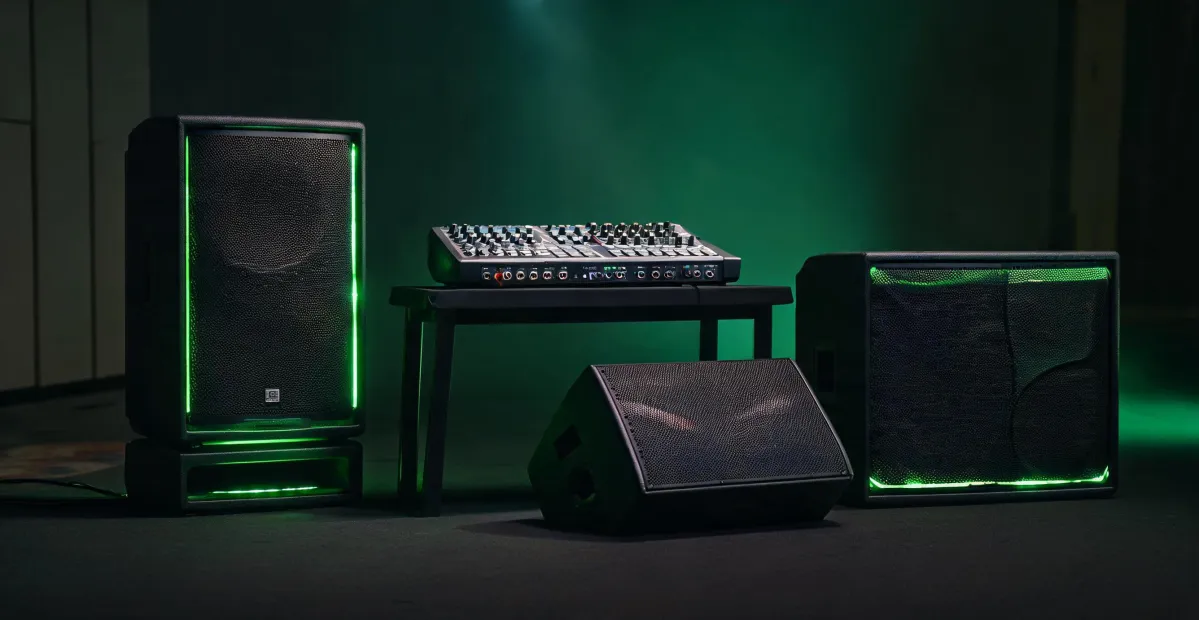
Option A was a pair of Mackie Thump212 powered speakers and one Mackie 18-inch powered subwoofer (the Thump18S). Option B was a pair of passive 12-inch tops, an 18-inch passive sub, a separate power amplifier, a crossover, and all the cables. Both are meant to cover the same small-to-medium live gigs: corporate events, outdoor stages, school functions.
I compared four things: upfront price, setup labor, sound consistency, and something I call 'client perception cost.' The last one doesn't show up on an invoice, but it shows up in repeat bookings.
Before I continue: if you're reading about the Sony SA-SW5 subwoofer or checking Yamaha NS-SW100 subwoofer reviews because someone said you 'need a sub,' stop. Those are home theater subs. They're built for a living room, not a stage. A crowd of 150 people will eat a compact home sub for lunch. I'll get back to that at the end.
Dimension 1: Upfront price, or why the Mackie Thump212 price surprised me
The first surprise was the invoice. In March 2025, I got quotes from two U.S. distributors for the Mackie gear. The Mackie Thump212 price was about $500 per speaker, and the 18-inch sub was about $700. That put the whole powered system at about $1,700. A comparable passive rig from a regional distributor came in at $2,850 once I added the amplifier, crossover, and speaker cables. That's before tax.
People assume the separate loudspeaker and amplifier route costs less because the speakers themselves look cheaper. From the outside, a powered speaker seems more expensive because every cabinet has an amp built in. The reality is you're not paying extra for the amp; you're moving that cost from the amp rack into the speaker. The passive quote looked fine until the amplifier and crossover showed up.
This was true fifteen years ago when powered speakers had weak amps and noisy fans. The 'you need a separate amplifier' thinking comes from that era. Today, Class-D amplifiers changed the game. The Mackie Thump212's spec sheet lists a 1,400-watt peak Class-D amp, and it doesn't weigh twice as much as a passive speaker. That's a big deal when you move gear on Tuesday, Thursday, and Saturday. The amp is built around the speaker driver, not bolted into a rack at the back of the van. The system just works.
Also, don't forget the extra van space. The passive rig needed a bigger amp rack. The powered Mackie setup fit in the same footprint as our old passive tops. That's a small thing until you're playing Tetris with gear inside a Sprinter.
Dimension 2: Setup and tear-down labor
This is the dimension most buyers ignore, and it's the one that made the biggest difference in our budget. Our crew rate is $50 an hour. If a powered rig takes 20 minutes less to set up and tear down than a passive rig, that's about $17 per gig. We do around 60 gigs a year. That's roughly $1,000 a year, or $3,000 over three years.
The passive setup means an amp rack, more cables, crossover tuning, and more places where something can go wrong. The Mackie rig is literally: speaker on a pole, power cable, XLR cable, done. On paper, 20 minutes doesn't sound like much. When it's after midnight and the crew has to be back at 8 a.m., it's a lot. (Which, honestly, is the kind of savings that never shows up as a line item.)
Dimension 3: Sound consistency and client perception
I'm not going to tell you the Thump212 sounds like a $3,000 line array. It doesn't. But with an 18-inch sub handling the low end, the Thump212 tops stay focused and clear. The combination gives you the familiar 12-inch-top/18-inch-sub PA sound that clients recognize as professional.
The passive rig I tested had slightly more output at 1 kHz, but it also had a 3 dB bump at 63 Hz that a band's engineer called 'boomy.' More importantly, the powered rig sounded the same at every show. No forgotten amp settings, no gain staging surprises. That consistency matters more than any spec sheet.
Clients don't know what amplifier you used. They know whether the kick drum hits them in the chest or sounds like a laptop speaker. The Mackie 18-inch sub made that difference obvious on the first gig.
After I approved the purchase order, I kept second-guessing. What if a client asked for a loudspeaker and amplifier system by name? The first three events were stressful. Then the front-of-house engineer for a band asked what sub we were using because the low end 'felt bigger than expected.' That's when I relaxed.
Dimension 4: Total cost over three years
Let me make the math concrete. The Mackie powered rig cost about $1,700 upfront. The passive rig cost about $2,850 upfront. If the powered rig saves 20 minutes per gig at $50 per hour, that's another $3,000 in labor savings over three years. The passive rig effectively costs $5,850 before any repair. The Mackie rig costs $1,700 and has fewer parts to fail.
Yes, I'm leaving out maintenance. That's the point. A separate loudspeaker and amplifier setup has more points of failure: the amp, the crossover, the speakON cables, the rack wiring. Powered speakers have their own amp, but there's no separate amp to haul around or knock out of a rack. For our use, the total cost of ownership math was clear.
Now, I'm not a sound engineer. I'm the person who signs checks. But after six years, I've learned that the cheapest quote is rarely the least expensive decision.
What about the Sony SA-SW5 and Yamaha NS-SW100?
Let's talk about those home theater subs. The Sony SA-SW5 and the Yamaha NS-SW100 both have decent reviews—for what they are. The Sony is a wireless home theater sub. The Yamaha is a compact 10-inch unit. Neither is built for the demands of live sound: no pole mount, no line-level XLR in and out, no output to feed your tops. You'll spend more on adapters and repairs than you saved on the purchase. If you're building a home theater, go ahead and read those reviews. Just don't put one on a stage and expect it to survive.
So which should you buy?
If you're starting from zero, moving gear regularly, and need your system to sound good to clients, the Mackie Thump212 pair plus a Mackie 18-inch sub is the better buy. It's faster, more consistent, and cheaper over three years. The quality of that low end affects how clients perceive your whole company. That's not a marketing theory; it's what happens when a band's engineer asks what sub you're running.
Perception cost is real. If a client associates your company with thin, weak sound, they don't call you back. The 18-inch sub is not just about low frequencies; it's about being perceived as a professional operation.
If you already own a loudspeaker and amplifier setup, or you're building a fixed installation where rack space doesn't matter, passive gear still has a place. I'm not going to say powered is always better. I will say that for our rental-focused business, the powered rig won on total cost, setup speed, and client-facing sound.
And if you're shopping for a home theater sub, the Sony SA-SW5 and Yamaha NS-SW100 are worth a look. Just keep them in the living room where they belong.

Elise Marceau
Elise Marceau is an LED display and digital-signage systems analyst covering LED video walls, modular screens, transparent LED, control processors, and indoor or outdoor signage. She applies IEC 62368-1 safety principles while comparing pixel pitch, luminance, contrast, refresh rate, colour uniformity, viewing angle, ingress protection, power density, module serviceability, and signal redundancy. Her specification guides help integrators, venue operators, retailers, and procurement teams align viewing distance, ambient light, content format, installation access, electrical load, and lifecycle support.