Mackie Subwoofer SRM1801 vs Thump118S: Which Powered Sub to Buy for Corporate AV
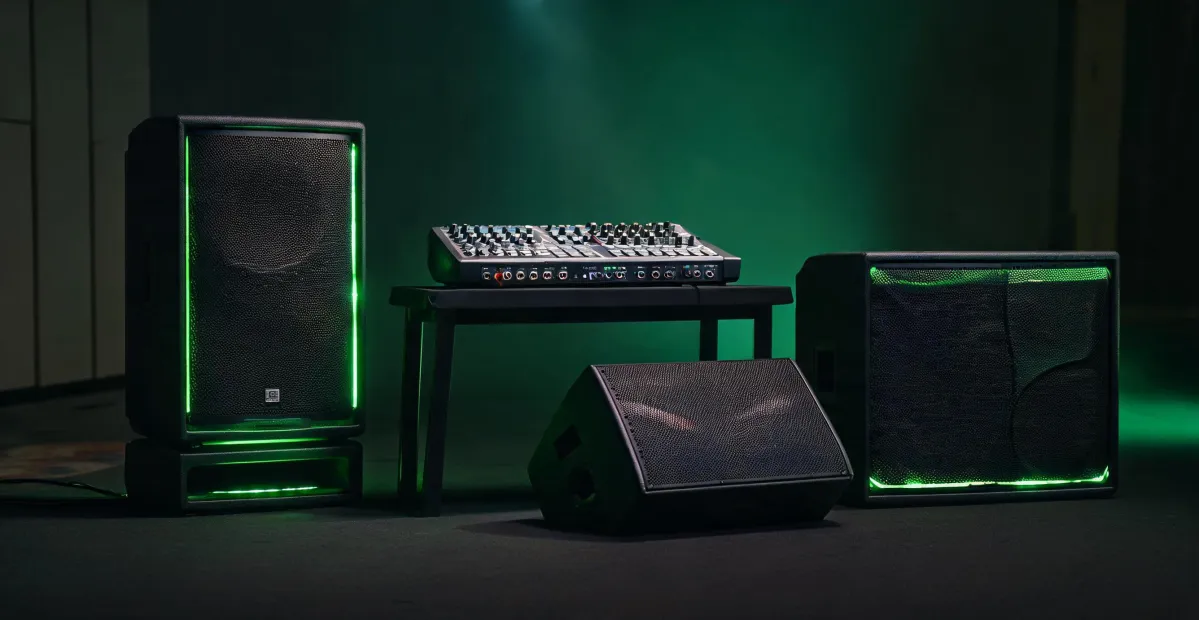
Buy the Mackie subwoofer SRM1801 for your main event space. Buy the Mackie Thump118S powered subwoofer for smaller rooms and roving setups. That's the short version. Mackie's published specs, accessed April 2025, list the SRM1801 around 135 dB max SPL and the Thump118S around 130 dB max SPL. Those are peak numbers, not continuous, but the relative difference holds: about 5 dB. That 5 dB is the difference between a system that rumbles the windows and one that fills a conference room without complaints.
I'm the office administrator who manages purchasing for a 450-person company. That means I handle 60-80 orders a year across 8 vendors, and I report to both operations and finance. I do not mix bands on the weekend. I buy equipment for internal customers who need it to work the first time they plug it in. When I took over purchasing in 2020, our AV closets were a mix of leftover event rentals and mystery cables. By 2024, we had consolidated the vendor list and replaced the conference-room sound systems.
The counterintuitive part: the more expensive SRM1801 is not always the better purchase. It's heavier, and it's overkill for a 40-person meeting room. If you're rolling a cart between offices, the Thump118S is easier to live with and more than enough. But for our 400-person all-hands room, the SRM1801 earns the extra cost. The difference is not just loudness. It's headroom. The SRM1801 doesn't strain when the room is full and the presenter pushes the system.
What I actually check before ordering a Mackie subwoofer
After a few mistakes, I made a short spec sheet. The third time we ordered the wrong sub, I finally put it in writing. Now I check four things:
- Weight and handles. A subwoofer that's too heavy to carry gets left in the storage room, and then the whole system sounds thin.
- Inputs and outputs. I need XLR in and out, not just speaker wire terminals. That lets me daisy-chain the sub with the tops and keeps the signal chain consistent.
- Amplifier type. Both of these are powered subs, so no external amp is needed. That saves us rack space and a separate line item.
- Published dimensions. We fit a Thump118S into a rolling cart that the SRM1801 wouldn't fit in. Measure before you buy.
The most frustrating part of buying AV gear is that specs alone don't tell you how it sounds in your room. Every spreadsheet analysis pointed to a lighter, cheaper sub for the town hall space. My gut said it would sound strained. Turns out my gut was right: the room is 80 feet long with low ceilings, and the cheaper sub had no headroom at the 60-person mark. I came back with the SRM1801 and the complaints stopped.
Where the Thump118S makes sense
If your application is a conference room, huddle space, or small breakroom with occasional music, the Mackie Thump118S powered subwoofer is probably enough. It's a real 18-inch sub with a class-D amp, not a toy. It won't keep up with a live band in a large hall, but it will make the quarterly town hall in a 30-by-30-foot room feel full without driving the speakers to distortion.
I also recommend the Thump118S if you have multiple locations and need the same simple system in each one. We bought two for satellite offices and one SRM1801 for the main building. That mix covered our needs without running up the AV budget.
Pair it with a mixer with audio interface USB
Before you buy a second sub, buy a mixer with audio interface USB. For us, the Mackie ProFX6v3 does both jobs. It runs the live mix for presentations and, when the meeting is hybrid, it sends the room audio into a laptop for the remote employees. That replaced a separate USB capture box and made the whole setup easier for non-technical staff. The ProFX6v3 is not the only option, but it's the one I keep ordering.
What I won't recommend
I need to be honest about the limits of these boxes. If you're a solo DJ who loads in and out alone, the SRM1801's weight will get old fast. The Thump118S is lighter and easier to manage. And if you're doing a permanent install, a contractor-grade subwoofer with a separate amplifier might fit the space better than either powered model. There's no single perfect product. There's only the one that matches the room, the schedule, and the people who have to move it.
Also, if someone asks me about a Pioneer TS-WX130EA subwoofer as a cheaper alternative, I stop the conversation. That's a powered car subwoofer. It's built to fit under a car seat, not to reinforce a PA system. It doesn't have the PA-style inputs, and it won't handle the event-duty cycle. If you need bass in a vehicle, it might be fine. If you need it in a conference room, it's the wrong tool.
Same with a loudspeaker siren. If the actual requirement is an emergency alert or public-warning tone, a music subwoofer is not the right device. Sirens need continuous high-output tones for long stretches, and a PA subwoofer is designed for program material with a variable duty cycle. I'm not the fire marshal, but I'm the person who has to order the right thing. Ordering a sub to cover a siren spec is the kind of mistake that ends with me explaining an invoice to finance.
Remember the 5 dB
When you're comparing these two Mackie subs, the 5 dB difference is more important than the price difference, because it's about whether the system has enough headroom for your actual room. The price gap is a one-time event. The headroom gap is every meeting, every week.
Before I place an order, I send the vendor a written spec sheet. Last year, I asked a vendor for a subwoofer for the all-hands event. They heard 'a passive sub and an amplifier' because that's what their installation guys prefer. We discovered the mismatch when the amp rack showed up with no open channel. Looking back, I should have sent the model number on the quote request. The financial lesson was annoying, but the follow-up policy has saved us more than once.
Bottom line: if I had to pick one for a typical corporate event space, I'd spend the extra money on the SRM1801. For satellite offices, small rooms, or systems that have to move, I'd choose the Thump118S and call it a day. And I'd also add a mixer with audio interface USB before adding a second sub. That's not the flashiest advice, but it's what works after five years of buying this stuff.

Elise Marceau
Elise Marceau is an LED display and digital-signage systems analyst covering LED video walls, modular screens, transparent LED, control processors, and indoor or outdoor signage. She applies IEC 62368-1 safety principles while comparing pixel pitch, luminance, contrast, refresh rate, colour uniformity, viewing angle, ingress protection, power density, module serviceability, and signal redundancy. Her specification guides help integrators, venue operators, retailers, and procurement teams align viewing distance, ambient light, content format, installation access, electrical load, and lifecycle support.