Used Mackie Thump12A Speaker in an Emergency? Read This Before You Buy
-
The Surface Problem: Used Mackie Thump12A Deals Look Better Than They Are
-
The Deeper Problem: You're Not Buying a Speaker, You're Buying Testing Time
-
The Amp Confusion That Costs People Money
-
The Stand Problem Nobody Puts in the Search Box
-
What I'd Actually Do With 24 Hours to Go
-
Honest Limits of This Advice
“Can we make this work with two used Mackie Thump12A powered speakers? The seller says they work perfectly.”
I get a version of that message about once a month. Someone has a wedding, a corporate event, or a late-night show, and the original audio gear fell through. They search Mackie speakers reviews, find a decent-sounding used Mackie Thump12A, and suddenly the whole PA plan depends on a Facebook Marketplace purchase with 36 hours to go.
I'm a logistics coordinator at a regional AV rental company. In the last seven years, I've handled more than 200 rush orders. Some were same-day turnarounds. A few were genuinely impossible. And a surprising number involved a used Mackie Thump12A powered speaker as the so-called solution.
This is not a warning against used gear. Some of the most reliable speakers we own were bought used. But there's a pattern to how emergency purchases fail, and it's rarely what people expect.
The Surface Problem: Used Mackie Thump12A Deals Look Better Than They Are
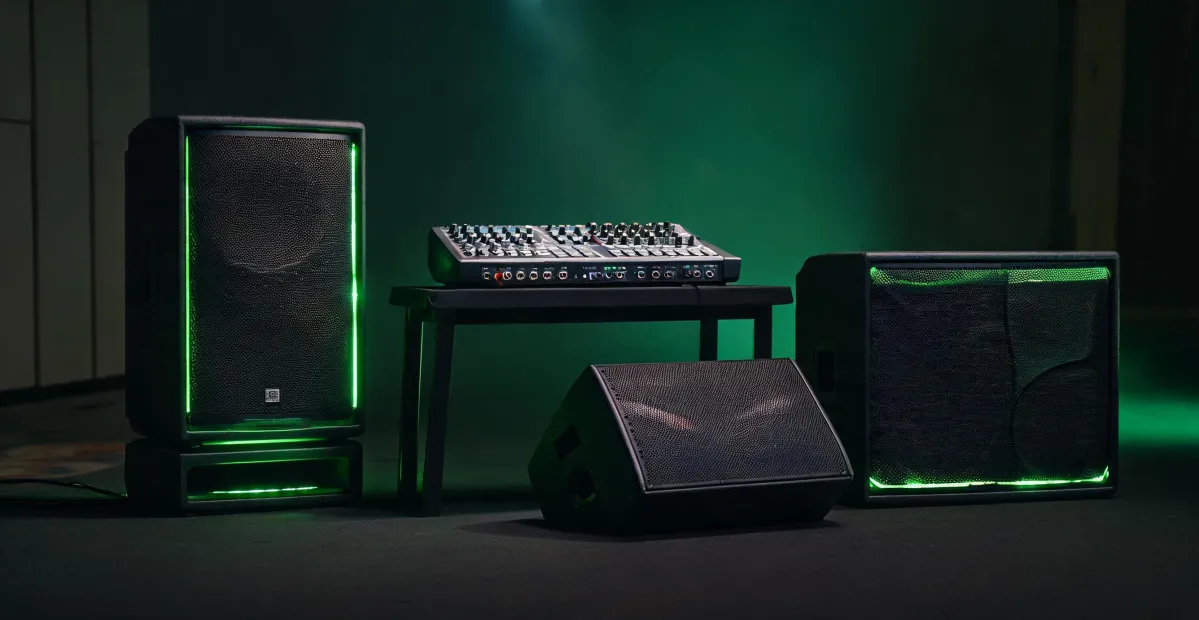
On paper, a Thump12A is a sensible emergency buy. It's loud enough for small and mid-size rooms. It has a built-in amplifier, so you don't need to match an external power amp. It's reasonably portable. And the used price often sits far below what a rental company would charge you per day.
Most Mackie speakers reviews mention those strengths. They'll tell you the Thump12A can get loud, that it has EQ presets, and that it's a solid value for a powered PA speaker. What they often don't mention is what happens when a speaker has lived a hard life in someone's garage before it reaches your venue.
In March 2024, a client called at 2 PM. They had a charity event at 7 PM. Their sound guy had tested positive for something and couldn't make it. They found two used Mackie Thump12A powered speaker cabinets online. The seller said both were “barely used.”
I asked the client to send a voice memo of both speakers playing. That extra step probably saved them from a very bad evening.
The Deeper Problem: You're Not Buying a Speaker, You're Buying Testing Time
Here's the thing most last-minute buyers miss: a used powered speaker is only as good as the thirty minutes you're willing to spend checking it. In an emergency, you don't have that luxury.
I've seen used Mackie Thump12A units fail three ways:
- They overheat after twenty minutes because the amp module's cooling fins are clogged with dust and pet hair.
- They make a scratchy noise in the woofer when you push them hard, which usually means the speaker was clipped constantly by the previous owner.
- The limiter kicks in way too early because someone disabled the protection circuit or installed a replacement amp module that doesn't match the original specs.
The last one is nasty. A Thump12A that's been repaired with a generic amp module can sound okay in a quiet room, then fall apart in the middle of a live event. You don't want to discover that during a toast.
When I'm triaging a rush order, the first question I ask is never “Is this speaker good?” It's always “How much time do we have to verify it?” If the answer is less than one day, a used speaker becomes a much riskier bet.
The Amp Confusion That Costs People Money
Another thing I see in last-minute planning is the phrase “array power amplifier.” Someone will search for a bigger sound system, see that line arrays use separate amplification, and assume they need an array power amplifier to make their Mackie speakers work.
That's a wrong turn.
The Mackie Thump12A is a powered speaker. It has a built-in class-D amplifier. You don't pair it with an external array power amplifier. In fact, connecting an external amplifier output to the Thump12A's input can damage the speaker. I've had to explain this to more than one panicking event organizer.
If your system truly needs an array power amplifier, then a used Thump12A isn't the right foundation in the first place. That doesn't mean the Thump12A is bad. It means it's a different category of speaker. This is the part where I have to be direct: I'm not going to tell you to use a powered 12-inch cabinet as a substitute for a properly designed line array. It won't do what you need, and pretending otherwise is how events end with 50 people in the back row unable to hear a word.
The Stand Problem Nobody Puts in the Search Box
But let's say the venue is small enough for two Thump12A speakers on poles. The speakers are tested. The mixer is staged. Everyone feels relieved.
Then someone asks: “What are we putting them on?”
This is where emergencies get memorable. The used listing didn't include poles. The venue only has a cheap, tilted table stand meant for a small audio mixer. Somebody throws the Thump12A on a folding chair. Ten minutes before doors open, a single bump knocks the pole loose, and the speaker drops face-down onto a wooden floor.
That happened to a friend of mine in 2022. It wasn't a Mackie speaker, but it didn't need to be. The speaker survived with bruised corners. The event staff did not.
Please, if you're buying a used Mackie Thump12A powered speaker, budget for an audio mixer table stand and speaker pole setup that's rated for the load. A good table stand won't make headlines, but it will prevent one.
What I'd Actually Do With 24 Hours to Go
I'm not going to give you a checklist with fourteen items, because that's not how it works in a real emergency. You need three things.
First, test the used speaker the right way. Bring a microphone and a known mixer. Listen to the high frequencies. Push the output until the limiter flashes. Then let it play for twenty minutes at moderate volume and touch the back panel. If it's too hot to keep your hand on, walk away.
Second, buy the right input and output gear. If someone on your team is already comfortable with a digital console, a smart mixer audio setup can make a rushed sound check much easier. Built-in EQ, presets, and automatic feedback detection have saved me more than once. The Mackie DLZ Creator is a decent example of that category, though I'd say the same about any serious smart mixer audio product. But the mixer won't help if the speakers can't hold up.
Third, have a Plan B. Real talk: the last few times I've seen a used Mackie Thump12A fail, the backup plan wasn't another used speaker. It was a rental from a company that tests every cabinet before it leaves the warehouse.
If you have no time and no backup, then cancel the gig. That sounds dramatic, but I've learned to say it early. A one-cabinet failure at hour two is worse than the awkward phone call you make 24 hours before the event.
Honest Limits of This Advice
This was accurate as of early 2025. The used market changes fast, and Mackie's product lineup may shift. Verify current specs, prices, and available models before you commit to a purchase.
I also want to be clear about what I don't do. I don't repair amp modules. I don't pretend to know exactly what a random seller has done to a speaker. And I don't believe any single brand is right for every room. That's the professional boundary that keeps me from giving you bad advice.
So here's my final take: a used Mackie Thump12A powered speaker can be a genuinely solid purchase if you have time to test it, the price is right, and you're not trying to make it fill a venue that actually needs an array power amplifier. But in a true emergency, the smartest audio equipment decision you can make is usually the boring one.
Rent the tested gear. Pay for the proper stand. Keep a spare speaker in the van.
Because the worst thing I hear after a disaster isn't “we should have bought a more expensive mixer.” It's “we had thirty-six hours to prevent this.”

Elise Marceau
Elise Marceau is an LED display and digital-signage systems analyst covering LED video walls, modular screens, transparent LED, control processors, and indoor or outdoor signage. She applies IEC 62368-1 safety principles while comparing pixel pitch, luminance, contrast, refresh rate, colour uniformity, viewing angle, ingress protection, power density, module serviceability, and signal redundancy. Her specification guides help integrators, venue operators, retailers, and procurement teams align viewing distance, ambient light, content format, installation access, electrical load, and lifecycle support.