The Mackie Rig That Taught Me to Respect the Highs
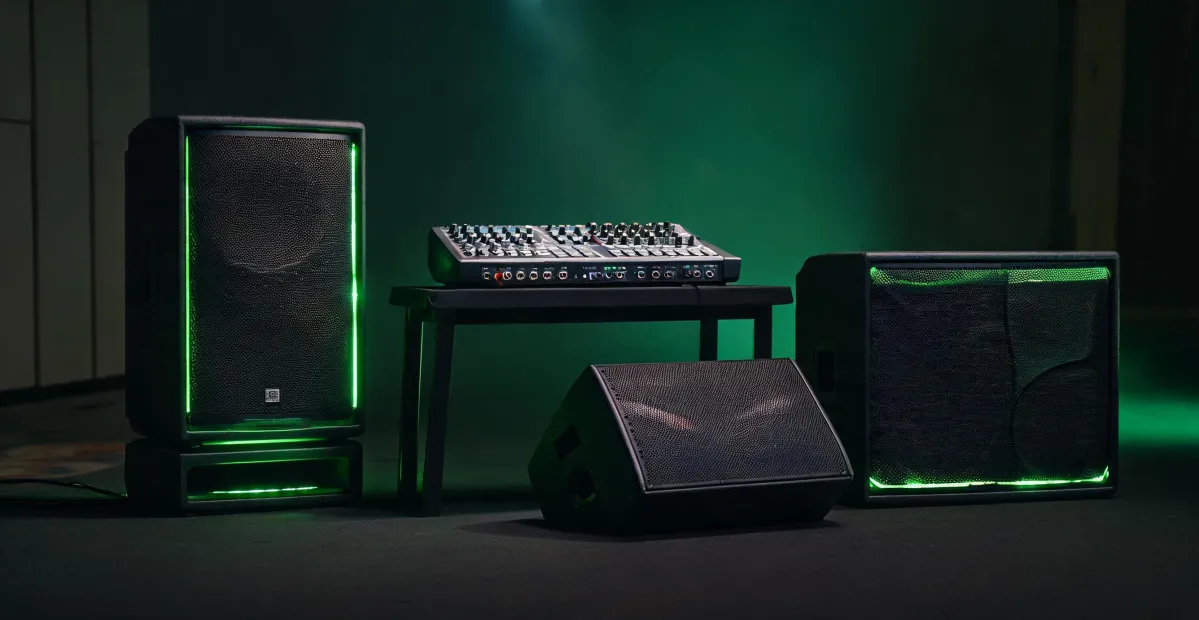
Saturday, June 17, 2023. An outdoor company picnic, 250 people, one live band, and a system that should have handled the job without me sweating through my shirt. We had two Mackie powered tops locked onto proper Mackie speaker stands. Under the center of the stage, a used Mackie dual 18 subwoofer sat where I could see it from FOH and feel proud. By 6:15 p.m., that pride was gone.
For context, I run a small production company. Not a rental giant. I've owned most of this inventory long enough to know its quirks. And after seven years in this business, I've made enough expensive mistakes to know the safest thing I own is a checklist. The problem that day was that I didn't use it.
Earlier that spring, I had upgraded our low end. I found the dual-18 at a warehouse sale, made an offer, and convinced a friend with a pickup truck to help me collect it. I spent the next month telling anyone who would listen that we were officially a dual-18 company now. It is an honest piece of equipment, and it worked exactly as intended all night. I can't blame one driver or one cabinet for what happened.
At the mix position, I was using a G3 audio mixer that has lived in my rack for years, one of the old Mackie 1402-VLZ3 desks. It's not the newest console ever made, but it sounds good and the channel layout makes sense. If anything, the simplicity should have kept me honest. It didn't.
The mistake was my EQ curve
Outdoor gigs don't give you reflections to help the vocals. With the Mackie dual 18 subwoofer running the low end strong, the bottom was huge. So my ears did the classic thing and searched for more top end to match it. I should have looked at the high-pass filter first. Instead, I boosted the high EQ on the vocal channels and pushed the monitor sends up. If you've ever mixed on a G3 audio mixer, you know those EQ knobs are honest. I gave the vocals a brittle edge that was never in the original source. Then I left an open microphone directly in front of a wedge and dared it to ring.
During the second song, it happened. The feedback was short, maybe a second. I told myself we dodged it. The right top speaker did not agree. It sounded like gravel rolling around in a tin can, and then the high end disappeared. Inside that cabinet is a compression driver, which is the proper term for the tweeters in a professional speaker system. It is not a soft dome from a home audio speaker. It is built to take a lot, but feedback is not a test of endurance. It is a fast way to send a driver into the grave. That night I typed tweeters speaker professional replacement into a search box and realized how little I knew about the part I had just killed.
The cost of one short squeal
The replacement driver cost more than I expected. I also spent forty minutes at 10 p.m. in a parking lot because I was too stubborn to cancel the event the next morning. We ran the first set with one top while I drove a borrowed van back to the storage unit. It wasn't Mackie's fault. The microphone position and my equalizer were the fault.
I don't have hard data on how many drivers fail from feedback versus clipping. What I can say anecdotally is that every driver I have killed can be traced to a gain staging or placement error, not to a speaker sitting there minding its own business.
Before ordering the next driver, I looked up the Mackie product documentation on mackie.com. It didn't tell me how to mix. It did give me the part identifier. Here is something parts vendors won't tell you: replacement drivers can share the same screw pattern and mounting depth and still have a different impedance curve or sensitivity. The first replacement I bought looked identical. It fit. It sounded harsh. I shelved it and ordered the right one.
Big subs and the guy who asked about his car
After the event, a guest saw me loading the sub and told me he had a 20 inch subwoofer car enclosure in his hatchback that would hit harder. I almost laughed. Then I stopped, because he was right about the only thing that mattered: both of us had bought a lot of low end for the same ego-driven reason. But the tools are not interchangeable. A 20 inch subwoofer car build is designed to pressurize one small cabin with resonant boom. A Mackie dual 18 subwoofer is designed to pressurize an open event space and integrate with top boxes. One is not automatically better than the other. They are built for completely different jobs.
I still reach for the dual 18 on bigger outdoor shows. It is a great tool when the top end has enough headroom to match it. The mistake I made was trying to create that headroom with EQ instead of adequate gain staging. A sub can make you feel powerful. It doesn't make the vocal mic behave any better. Actually, if the bottom is too loud, you will probably reach for more highs and create feedback. I did exactly that.
The boring maintenance that matters
Once the new high-frequency driver arrived, I went through the entire speaker stand inventory. I checked the locking collars on every Mackie speaker stand and pulled aside two third-party poles that had started to bind. None of that would have prevented the feedback, but it reminded me that reliability comes from maintenance, not from impressive gear.
Here is the short version of what I do now:
- Set gain structure first, EQ second. If the vocal sounds dull, check mic placement and the high-pass filter before adding treble.
- Walk to the stage and listen to the monitor wedges from the singer's position. If you can hear a ring starting, fix the microphone angle before touching the EQ.
- Keep one spare compression driver and one known-good XLR cable in the truck. The spare costs less than the rental cancellation.
- Don't trust the biggest speaker in the room to solve a coverage or clarity problem. Big low end only makes you reach for more highs, and that is how feedback starts.
That list sounds simple. It is simple. The hard part is following it when the band arrives in eight minutes.
We now treat soundcheck as a repeatable process instead of a vibe. Switching from guess-and-turn to an actual workflow cut our average soundcheck time and made it easier to hear problems before clients do. On the day of the picnic, I had the process. I just didn't run it. That lesson cost me one driver and a chunk of pride.
Bottom line
The same Mackie gear is still in the inventory. The Mackie speaker stands still lock solidly. The Mackie dual 18 subwoofer still makes people grin when the first kick drum hits. The G3 audio mixer still has one scratchy channel that comes back every time it rains. But I'm not the same person who showed up to that picnic in 2023. I don't trust my ears to catch every problem anymore. I trust the process.
And if you're wondering about the 20 inch subwoofer car question, I still get that question. Now I have a better answer. That sub is built for a car. The dual 18 is built for a crowd. Both can be fun. Both will cost you if you don't understand where their limits are. Take it from someone who paid.

Elise Marceau
Elise Marceau is an LED display and digital-signage systems analyst covering LED video walls, modular screens, transparent LED, control processors, and indoor or outdoor signage. She applies IEC 62368-1 safety principles while comparing pixel pitch, luminance, contrast, refresh rate, colour uniformity, viewing angle, ingress protection, power density, module serviceability, and signal redundancy. Her specification guides help integrators, venue operators, retailers, and procurement teams align viewing distance, ambient light, content format, installation access, electrical load, and lifecycle support.