The Used Mackie DRM 18S That Taught Me to Stop Chasing the Cheapest Price
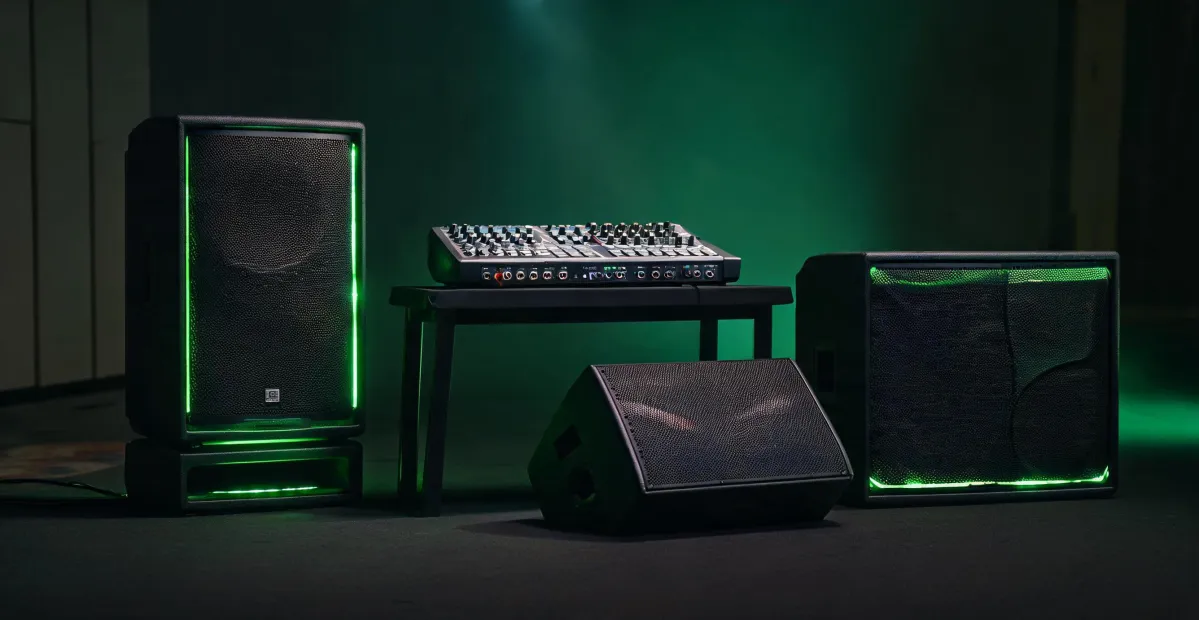
Back in 2017, I started a small PA rental company with a partner I'd met doing weekend sound gigs. We've handled maybe 200 events since then. Maybe 180, I'd have to check the spreadsheet. But I remember the one that rewired how I think about buying gear. It was an August 2022 corporate activation, and it started with a spec sheet that included a PA speaker system with wireless microphone for the stage, a wireless monitor stage setup for the presenters, and a problem we didn't predict: we needed a powered 18" subwoofer because the old passive unit we'd been using had just cooked its voice coil.
The Choice That Kept Me Up for Three Nights
We had nine days. The client had already paid a $3,200 deposit for three days on site, and cancelling was not an option. Our usual rental house quoted a used Mackie DRM 18S powered subwoofer at $1,250. A newer dealer we'd never used quoted $690 for an 18" powered sub from a brand I'm still not going to name. On paper, that cheap sub looked almost identical: 2,000 watts peak, 35 Hz response, built-in DSP limiter. It was new, it was half the price, and it had a one-year warranty.
I went back and forth between the two for around a week. The used Mackie DRM 18S had scuffs, and it had spent two years on a rental shelf. But it was a Mackie, and I knew the DRM series had a solid reputation in the rental world. The cheap one was an unknown brand with unknown support. The numbers said save the $560. My gut said the opposite.
That was the first time I noticed the pattern: the cheaper option always looks better in the moment. The people warning you about quality sound like they're just being precious. But nobody warns you about what happens after you save the money and the product underdelivers.
Specs Don't Tell You How It Sounds
I asked the rental house if I could A/B the two subs in their demo room. When I compared them side by side, I finally understood why "spec sheet" and "real world" are different categories. The budget unit was okay at low volume. Push it to the level you'd actually run at an outdoor activation, and it started to strain—not even on heavy sub content, just on regular program material with a bass line. The DRM 18S stayed composed. It wasn't just louder; it was cleaner. You felt the low end in your chest, but it wasn't mushy or boomy.
I told my partner we were going with the used Mackie DRM 18S.
"You're paying almost double for a logo," he said.I told him I was paying for the confidence that the logo generally brings, and that I'd give him a full report after the event.
To be fair, the cheap sub might have been completely fine. I have no evidence it would have failed. But here's the thing I've learned since: the cost of being wrong was far bigger than the price of being right. If that sub had failed mid-event, we're not just talking about the $560 I saved. We're talking about a $3,200 contract that goes sideways, the rebooking cost of future work, and a client who tells everyone in their network that we're the company that ruined their event. None of that appears on an invoice.
The Drone With Loudspeaker Tangent That Taught Me Something Else
I'm adding this because it's part of the same lesson. Three weeks after the August event, the same client asked if we could provide a drone with loudspeaker to fly overhead and make announcements at their lakeside evening event. I laughed in an email. "You can't just fly a PA around," I wrote. Then they sent me a link to a working product page. That stuff exists. We didn't get the job because we don't own one, and the rental lead time was too short. I'm guessing that segment is probably going to grow as battery tech improves, not because the demand isn't already there.
I've never fully understood why some requests feel absurd just because they're unfamiliar. But that exchange taught me the same thing the subwoofer decision did: my mental categories were too narrow. Same with the wireless monitor stage setup we'd already done—I'd always run XLR cables across a stage, but the client asked for wireless and it turned out to be better in almost every way: faster setup, cleaner stage, no cable tripping hazards.
What I Learned From the Used Mackie DRM 18S
Three years later, that used DRM 18S is still in the trailer. It's worked maybe 60 days a year since then, and it has never failed. The rental house that sold it tells me the DRM series remains one of their most requested powered subwoofers. Used Mackie gear holds value, and that changes the math on the whole purchase.
When I eventually sell that cabinet, I'll get a meaningful chunk of the $1,250 back. That makes the real cost of owning it much lower than the sticker price. The $690 sub would have been worth zero after a failure, and even if it didn't fail, its resale value would be a fraction of what I paid. That's not a dig at budget brands generally—it's a comment on how I should have evaluated total cost instead of upfront price.
I'm not a data analyst. I run a two-van shop, and my "data" is a binder of invoices. But when I look back at the complaints we've had in three years, every single one traced back to gear I bought specifically to save money. Not one was about the Mackie gear. I do not say that to sound like a fanboy; it's just what the paperwork says.
I should add that I'm not telling everyone to run out and buy used Mackie subs sight unseen. Test everything yourself. And note that per FTC business guidance (ftc.gov), advertising claims have to be truthful and substantiated. That's about legality, though, not about whether a spec translates to your ears. The cheap sub's numbers looked fine on a PDF. Under real signal, at real stage volume, the DRM 18S was a different class of performance. Verify with your own ears before you trust a datasheet.
The Checklist That Started With This Purchase
Here's how I'd sum it up. Before the August 2022 job, I chose gear based on price. After it, I changed the way I look at every major purchase:
- Value isn't the same as a low quote. It's the sum of performance, reliability, resale value, and the confidence you have when you set it up at 7 AM.
- Ask how much it costs when it fails. A $560 saving on the front end is meaningless if a failure costs you a contract, your reputation, or a whole weekend.
- Pay attention to how you're treated before the sale. The "cheap" dealer took four days to answer two emails. The guy selling the used Mackie DRM 18S replied in an hour, sent a video of it running a sine sweep, and let me pick it up in person. That communication is a preview of what support will feel like.
I went back and forth for a week on that subwoofer decision, and part of me still thinks about the $560 I didn't save. But then I look at the checklist we've been running for the last 18 months—the same checklist this mistake started—and I count the 47 potential problems we've caught with it. Not all of them were gear failures. Some were missing cable quantities and wrong adapter types. But the pattern holds: thinking in terms of total value instead of upfront price prevents the kind of mistake that costs you a client.
I can only speak to my own situation. We're a small rental operation with predictable job types. If you're a national AV integrator with service contracts and backup warehouses, your math will be different. That's fine. But if you're a small operator like me, staring at a spec sheet and wondering whether the cheap option will hold up, I'll tell you what I wish someone had told me in 2022: cheap looks better on the invoice, but trust feels better on a Saturday night.
I chose the used Mackie 18 powered subwoofer with the scuffed cabinet. I'd make the same call tomorrow. And if you're staring at the same decision with a tight budget, I hope this gives you permission to trust the gear that gives you confidence, not just the one that costs less.

Elise Marceau
Elise Marceau is an LED display and digital-signage systems analyst covering LED video walls, modular screens, transparent LED, control processors, and indoor or outdoor signage. She applies IEC 62368-1 safety principles while comparing pixel pitch, luminance, contrast, refresh rate, colour uniformity, viewing angle, ingress protection, power density, module serviceability, and signal redundancy. Her specification guides help integrators, venue operators, retailers, and procurement teams align viewing distance, ambient light, content format, installation access, electrical load, and lifecycle support.