Mackie SRM1850 vs Mackie Thump Subwoofer: A Cost-Controlled Comparison
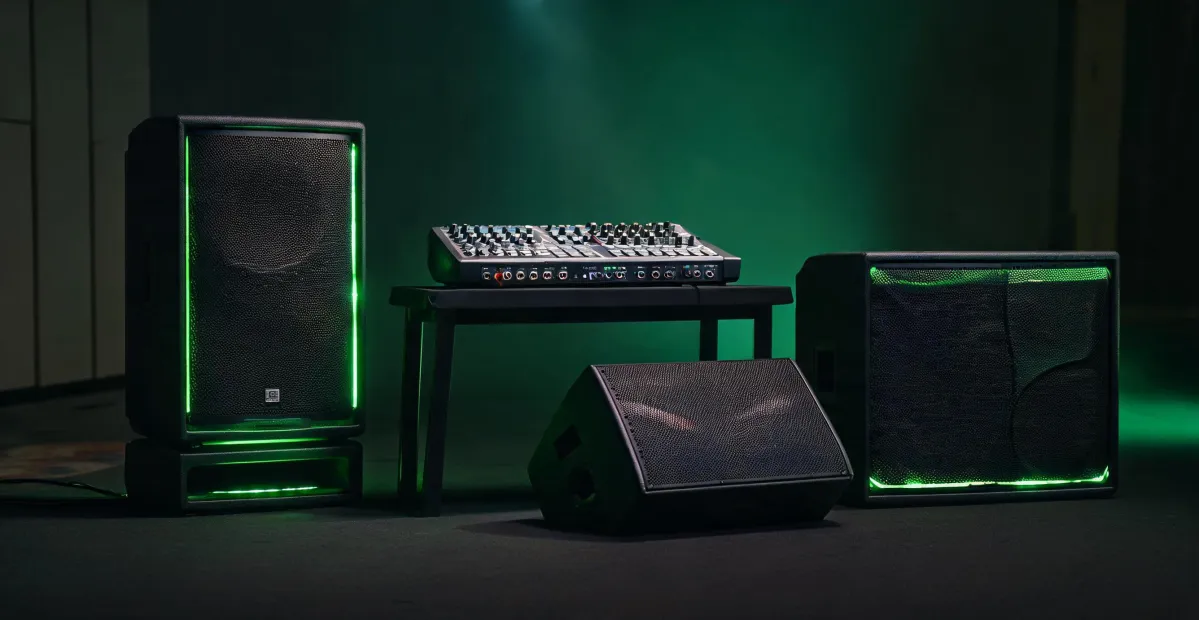
I'm the procurement manager at a 22-person audiovisual production company. I manage the audio gear budget, roughly $65,000 a year, and I've tracked every major order in our cost system for the past seven years. So when I compare the Mackie SRM1850 subwoofer and the Mackie Thump subwoofer, I'm not chasing a spec sheet win. I'm looking for the option that won't become next quarter's overrun report.
I'll also answer the question that shows up on quote requests every few months: what about a CT Sounds Tropo 12 inch car subwoofer? And if you're searching for a 12V PA speaker because you want battery portability, I'll explain why that's a different category. One standard before I start: according to FTC advertising guidance (ftc.gov), claims should be truthful and substantiated. I use the same standard in procurement. If I can't verify it or price it, I won't put it in the budget.
The comparison framework
The SRM1850 and the Thump subwoofer are both powered PA subs from Mackie, but they sit at different points in the lineup. The SRM1850 is the larger, heavier platform with more output headroom. The Thump subwoofer is the more budget-conscious option, and the current 18-inch version is called the Thump 18S. They are not the same cabinet with different paint.
I'm comparing them on four dimensions: output, portability, total cost of ownership, and whether the tool actually fits the event. I'm also including the two detours I see on real purchase orders: car audio subwoofers and battery powered PA speakers. Both have their place. Neither should be confused with a professional PA sub.
Dimension 1: output and low end headroom
The old 2020 assumption was that a budget friendly powered sub had to be weak. That has changed. Class-D amps and DSP have made the Thump sub and similarly priced subs capable of more than their predecessors. But the fundamentals haven't changed: cone area and cabinet volume move air, and when you need a lot of air moving in a large room, the bigger box wins.
The SRM1850 is that bigger box. For music-driven events, kick drums and electronic bass, the SRM1850 has the headroom to stay clean when the system is loud. The Thump subwoofer can handle a 100-person wedding, a corporate breakout, or a small DJ setup, but it will hit its limiter earlier in a big room. That's not a failure. It's a design tradeoff.
Conclusion: if output is the priority, choose the SRM1850. If the sub just needs to make vocals and background music feel grounded, the Thump subwoofer is enough.
Dimension 2: portability and hidden labor costs
Most buyers focus on the price tag and completely miss the cost of moving the sub. That's the blind spot. The SRM1850 is a serious cabinet. I know it's a two-person lift if there are stairs. I also know that the Thump sub is still heavy, but it's the easier load-in for a small crew. When I audited our 2023 spending, I found about $1,100 in helper labor and extra vehicle time tied to moving subwoofers. That's the kind of cost that usually doesn't show up on the vendor quote.
For a fixed install, none of this matters. The sub sits on a shelf and the labor cost disappears. For rental work, it's on every load-out. I built a simple TCO spreadsheet after a so-called cheap option cost us more in extra trips than it saved on the invoice. (note to self: I really should include that spreadsheet in every equipment request.)
Conclusion: for mobile work with a two-person crew, the Thump sub is the cost-smart choice. For an installed system, the portability penalty of the SRM1850 goes away.
Dimension 3: total cost of ownership
In Q2 2024, I compared two quotes for a sub order. The first quote had the Mackie Thump sub at a street price that looked great. The second had the SRM1850 at roughly 25 percent more. I almost went with the first one until I added freight, casters, a cover, and an extra hour of setup labor. The difference narrowed to about 12 percent. That still didn't make the SRM1850 the right buy. It made the decision honest.
If the Thump sub is enough for the actual room, the leftover budget can go into a better mixer or an extra cable kit. If the room is a 300-person ballroom with a live band, the SRM1850 is the safer place to put the money. Both are valid conclusions, but you only know which one you're looking at if you compare the full cost, not the sticker.
Another cost trap: buying a sub because the sales sheet says you need one. If the event is speech-heavy and the source is an audio clip mixer, an 18-inch sub will sit there and remind you that you bought a hammer for a job that needed a level. That's also a cost failure. (mental note: check the utilization rate on our sub rental line before we buy anything else.)
Conclusion: compare the total number, not the budget line. The cheaper sub is the right one if it does the job and moves easier. The expensive sub is the right one if it prevents an underpowered event. Neither is right by default.
Dimension 4: the CT Sounds Tropo 12 inch car subwoofer detour
Every few months, someone asks why not just get a CT Sounds Tropo 12 inch car subwoofer and build a box. I get the appeal. It has a familiar name in car audio, and the price can look tempting. But this comparison is broken from the start because a car sub is a component, not a system.
A powered PA sub like the SRM1850 or Thump subwoofer includes the driver, amplifier, DSP, crossover, limiter, enclosure, handles, grille, and in many cases a pole mount. The CT Sounds Tropo is just the driver. To use it in a PA cabinet, you need to build or buy an enclosure, add a separate amplifier, add a crossover, add a limiter, and then find someone who can tune it without cooking the voice coil. That's a project, not a shortcut.
I made this mistake once with a different car sub. I assumed a 12 inch sub is a 12 inch sub. It isn't. A car interior gives the driver acoustic gain. An open room doesn't. A car sub is designed for short bursts in a tiny cabin. A PA sub is designed for continuous output in a larger space with some degree of protection. Put a CT Sounds Tropo in a PA cabinet and you might get a few loud moments followed by a very quiet repair bill.
Here's the counterintuitive part: after you buy the box, amp, crossover, cables, and the time it takes to make it work, the CT Sounds Tropo setup can cost nearly as much as the Thump subwoofer, while offering less reliability and no integrated limiter. That's not a saving. That's a detour.
To be fair, CT Sounds makes car audio gear for people who build car audio systems. In a car, the Tropo may be perfectly fine. In a PA rack, it's the wrong category.
Conclusion: the CT Sounds Tropo 12 inch car subwoofer is not a substitute for a powered PA sub. If you need a PA sub, compare the Mackie options. If you're building a car audio system, go build that.
What about a 12V PA speaker?
If you've been searching 12V PA speaker, you're probably not looking for a subwoofer. You're looking for a portable all-in-one speaker that can run from a battery, take a microphone, and maybe play some audio clips. That's a separate category. I think the Mackie Thump Go is a good example: a battery powered speaker, not a subwoofer.
A 12V PA speaker is ideal for outdoor classes, announcements, and events where extension cords are a problem. It will not reproduce the low end of an 18-inch powered sub. That's physics, not brand preference. If your audience will be dancing, a 12V speaker is not the answer.
But if your events are mostly spoken word and background audio, a 12V PA speaker paired with an audio clip mixer can be a genuinely smart rig. The mixer gives you mic input and level control for clips, while the battery speaker keeps setup fast. In that scenario, skipping the sub is the right decision.
Conclusion: a 12V PA speaker is a tool for a different job. It is not a substitute for a subwoofer.
What I'd put in the budget
After comparing these dimensions, here's how I'd frame it for the next equipment review.
- Fixed install in a large music venue: SRM1850. The headroom matters and the moving cost doesn't.
- Mobile corporate, weddings, small stages: Thump subwoofer. It's the practical middle ground.
- Speech only events: skip the sub. Put the money into a quality PA speaker and an audio clip mixer.
- Battery only events: consider a 12V PA speaker and accept the low end limits.
- Car audio project: the CT Sounds Tropo 12 inch car subwoofer belongs in a car audio build, not in a PA cabinet.
What was best practice in 2020 may not apply in 2025. The industry has moved toward lighter, smarter powered gear, and the Thump sub proves that. But the fundamentals haven't changed: choose the sub that covers the quietest event that still has a kick drum, not the loudest one in your imagination. There's something satisfying about a budget that matches the gig.
Verify current specs and prices on Mackie's product pages before you cut a PO. My numbers come from our own orders and dealer quotes, and they move.

Elise Marceau
Elise Marceau is an LED display and digital-signage systems analyst covering LED video walls, modular screens, transparent LED, control processors, and indoor or outdoor signage. She applies IEC 62368-1 safety principles while comparing pixel pitch, luminance, contrast, refresh rate, colour uniformity, viewing angle, ingress protection, power density, module serviceability, and signal redundancy. Her specification guides help integrators, venue operators, retailers, and procurement teams align viewing distance, ambient light, content format, installation access, electrical load, and lifecycle support.