Mackie Speakers, SRM450, and the Real Cost of Cheap: A Procurement Manager's Take
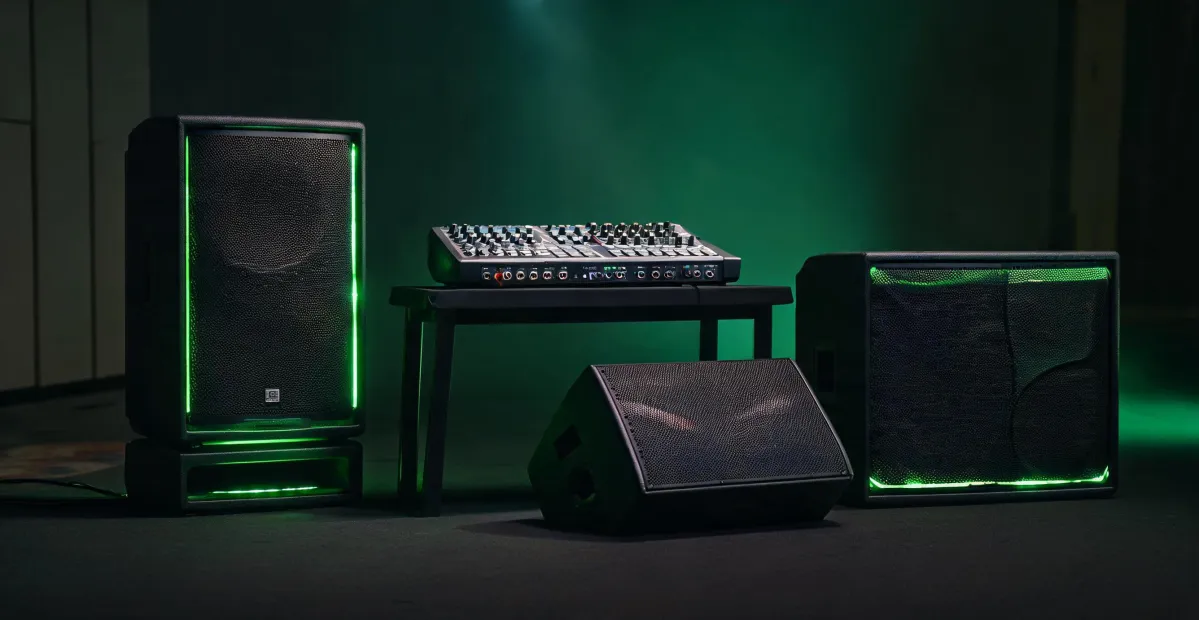
I almost made a $4,200 mistake last quarter. The quote was for Mackie powered speakers, and the vendor's unit price was the lowest I had seen in months. Then I ran the full numbers. The 'cheap' option would have cost us more than the original budget. Again.
I'm a procurement manager at a 40-person regional AV rental and installation company. I've managed our audio equipment budget for six years, negotiated with more vendors than I care to count, and kept every invoice in our cost tracking system. I'm not an audio engineer, so I can't talk about phase alignment or DSP tuning. What I can talk about is what a speaker actually costs over time.
The surface problem: everyone compares the wrong number
When a buyer searches for 'Mackie speakers,' they're usually looking for a price. The phrase 'SRM450 Mackie speakers' keeps showing up because the SRM450 has been a workhorse 12-inch powered cabinet for years. And 'Mackie CR3-X price pair 2025' shows up because people hear that Mackie makes a small desktop monitor and assume it's a cheap PA speaker.
Even the SRM450 name covers multiple versions by now. A used SRM450 can look like a bargain, but if it needs a driver, an amp module, or a factory service visit, that bargain disappears. That's not a comment on the speaker; it's a reminder that old gear carries new costs.
That assumption is the surface problem. The CR3-X is a 3-inch desktop monitor. The SRM450 is a PA cabinet. The Thump line is a portable powered PA. They all say Mackie on the front, but they do different jobs. Comparing their prices without comparing their applications is pointless. Not helpful. Worse than not helpful—it's how budget overruns start.
The deeper cause: price hides the specs that matter
Here's a real request from last year. A teacher asked for a 'teacher loudspeaker.' She wanted something she could wheel into a classroom for 30 kids, plug in, and use with a microphone. Someone on our staff started looking at desktop monitors because they were cheap. That's a category error.
A Philips loudspeaker can be a solid choice in a conference room. It's not a portable public address system. A desktop monitor without a microphone input is not going to serve a teacher. The right Mackie product for that room was probably a Thump or an SRM-class cabinet, not a compact CR3-X.
This is why the 'Mackie CR3-X price pair 2025' search only makes sense after you define the job. If you need desktop monitors for a studio desk, a CR3-X pair is a legitimate option. If you need a loudspeaker for a classroom, a gym, or a stage, the CR3-X is the wrong conversation. The price doesn't matter if the product class doesn't fit.
The cost of not seeing this
In 2023, I audited six years of our spending. I wanted to know why our audio budget kept overrunning even though we kept choosing lower-priced gear. The answer was not fun to read.
61% of our speaker replacements happened within 18 months of the original purchase. The common thread was not the brand—it was the selection process. We bought on sticker price, skipped the total cost calculation, and paid for it with labor, downtime, and second purchases.
Take the gymnasium speaker we bought because it was $250 cheaper than the Mackie equivalent. The unit itself was fine on paper. The installation wasn't. We needed a different bracket, an adapter for our existing cables, and an extra technician visit because the connectors didn't match our inventory. Eleven months later, the amplifier failed. The replacement cost, the labor, and the wasted bracket added up to roughly $1,200 more than the initial price gap. That's the real price.
Add to that the quieter costs: the angry phone call from a client, the time spent finding a spare, and the fact that the failure landed on a busy weekend. Those don't show up on an invoice, but they show up in the year's numbers.
A better way to compare loudspeakers
I don't build a 50-row spreadsheet for every order. I do use the same five questions every time.
First, what area does this speaker need to cover? A 12-inch SRM450 covers a completely different listening area than a 3-inch desktop monitor. If the coverage doesn't match the room, every other spec is irrelevant.
Second, what does the user actually need to plug into it? A mic input? Multiple inputs? Bluetooth? A teacher's loudspeaker needs different connectivity than a studio monitor.
Third, what does installation include? The lowest unit price can disappear when you add stands, brackets, adapters, or rigging. I learned this the hard way.
Fourth, what happens when it breaks? Our dealer handles warranty claims for Mackie products, and we have a repair path. The 'bargain' speaker we bought from a marketplace seller had a support chat as the only option. That's a red flag.
Fifth, what is the three-year cost? Unit price plus accessories plus labor plus expected lifespan equals the real number. If a $300 speaker dies in 12 months and a $600 speaker is still working in year five, the second one is the no-brainer. That's it.
The formula I keep coming back to is simple: TCO = unit price + accessories + installation labor + expected maintenance + downtime risk. It doesn't need to be fancy. It just needs to exist.
If you're asking about the Mackie CR3-X price pair 2025, the dealer quotes I tracked in early April 2025 were roughly $120 to $150 for the pair. That's a signal, not a contract price; verify current pricing with your own vendor. More importantly, check what the CR3-X is asked to do. Desk monitors belong on desks.
How do you market a professional speaker?
I hear that exact question from vendors and from our own team: 'How do you market a professional speaker?' Usually they mean, how do you sell a higher-priced product? The answer is not better adjectives.
You market a professional speaker by showing total cost per usable hour, service reliability, and failure rates. You show the comparison between a speaker that fails after one event and one that survives five years. You market it with the math, not the hype.
In the school and church market, the person approving the purchase often doesn't care about frequency response. They care about how many times they'll have to ask for money again. A louder woofer is not a good story. Five years without a service call is.
And if you're the person buying the speaker, you're also marketing the decision internally. I don't ask my leadership to approve a higher upfront price. I ask them to approve a lower long-term cost. I show the TCO line and let the number talk.
Bottom line: 'Mackie speakers' is not one category. 'SRM450 Mackie speakers' is a specific tool with a long track record. The 'Mackie CR3-X price pair 2025' is a specific number that depends on dealer stock. A 'teacher loudspeaker' is a use case. A 'Philips loudspeaker' is a different use case. When I started this job, I thought the lowest quote was the win. Three budget overruns later, I built a formal replacement-cost review because we didn't have one. The cheapest option stops being cheap after you've paid for it twice.

Elise Marceau
Elise Marceau is an LED display and digital-signage systems analyst covering LED video walls, modular screens, transparent LED, control processors, and indoor or outdoor signage. She applies IEC 62368-1 safety principles while comparing pixel pitch, luminance, contrast, refresh rate, colour uniformity, viewing angle, ingress protection, power density, module serviceability, and signal redundancy. Her specification guides help integrators, venue operators, retailers, and procurement teams align viewing distance, ambient light, content format, installation access, electrical load, and lifecycle support.