Mackie ProFX12v3 vs ProFX8v2: What the Price Difference Actually Buys You
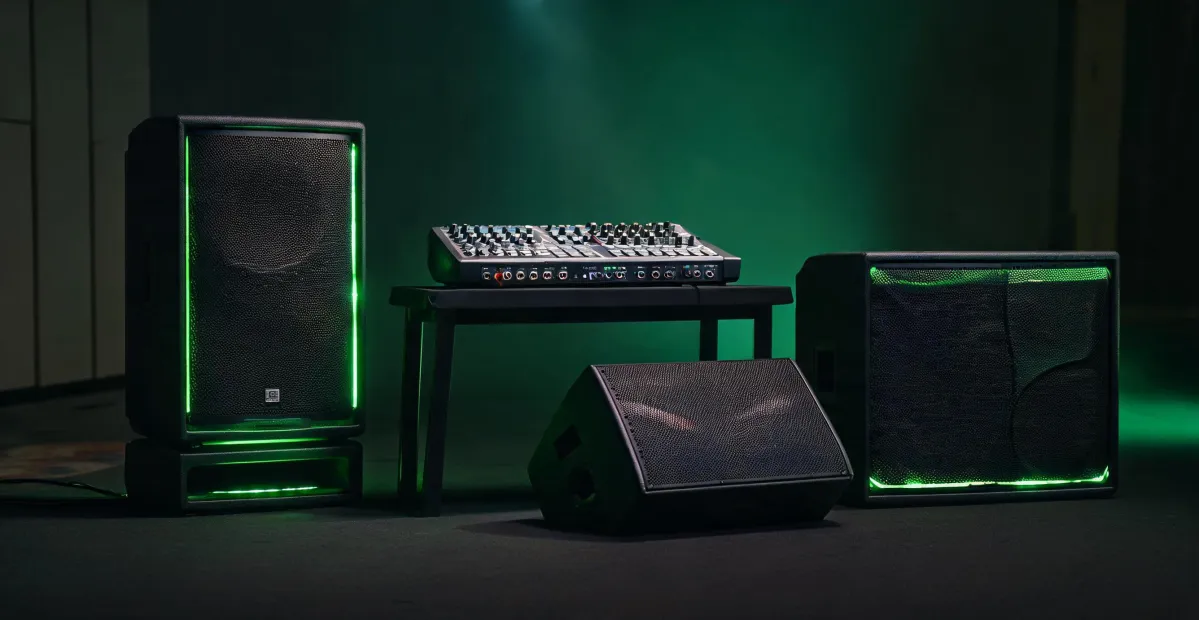
The short answer
Buy the Mackie ProFX12v3. If you typed "mackie profx12v3 price" into a search bar and you're comparing it against the ProFX8v2, here's the math: the 12v3 was street-pricing in the mid-$400s when I checked in early 2025, and the 8v2 was hovering around $300 at the same major online retailers. For roughly $130–150 more, you get four extra mic preamps, a noticeably better effects engine, and per-channel 3-band EQ. For any organization that expects more than a handful of inputs, the upgrade pays for itself by the second event. That's the honest verdict.
Why my perspective is worth a minute of your time
I'm an office administrator for a 220-person company. I manage AV, IT accessories, and facilities purchasing—roughly $45,000 a year across ten vendors, reporting to both operations and finance. I've been doing this since I took over purchasing in 2020, and I've processed somewhere around 60–80 orders a year since.
I'm not an audio engineer. I'm not claiming to be. But I'm the person who's bought more sound equipment than most of our actual operators have. That's a different kind of expertise, and it's the kind that matters when you're deciding where the company's money goes.
Why we almost bought the wrong one
We consolidated our AV vendor list in 2024 and replaced gear that had been bought piecemeal over five years. The old mixer—different brand, not going to name it—had persistent channel noise and an intermittent output jack. The events team said, "we just do talking events. Get something simple."
So I ordered the ProFX8v2 first. Two weeks later, I exchanged it for the ProFX12v3 after running a dry rehearsal of our quarterly town hall. The 8v2 ran out of mic channels at four. We needed five for the speaking lineup alone—podium mic, two panelists, a lav, and a spare for Q&A. And that didn't account for the band they occasionally hire for the holiday party.
That's the edge case that gets you. Simple events aren't simple. Prepare for the day you need one more channel, because it will happen.
What the extra $130 actually buys
Channel count and routing
The ProFX8v2 has four mic preamps. The ProFX12v3 has eight. If you only use two mics, fine—but you're not buying for this week's meeting, you're buying for the span of a budget cycle. The 12v3 also has a 3-band EQ per channel with a sweepable mid, versus the 8v2's 2-band EQ. If you've ever fought a room that makes voices sound muddy, you know why the third band matters.
Another thing I didn't expect to care about: mute switches per channel. On the 8v2, muting a channel feels awkward. On the 12v3, it's one tap. Small thing. But when someone starts speaking into a hot microphone while you're adjusting the next input, you'll feel the difference.
Effects engine
Here's the thing about effects: I can't explain reverb algorithms to you, but I can tell you that side-by-side, the v3's effects sound like they're in the same room as the microphone. The older effects on the v2 sound like they're bolted on from somewhere else. I had a musician friend listen blind, and he immediately noticed. That's not nothing.
USB audio implementation
Both boards work as USB interfaces. But the v3 gives the operator an independent headphone mix—the ability to hear something different from what's being streamed to the meeting platform. I assumed the v2 had this. It doesn't.
That assumption cost me an exchange, a freight charge, and a week of delay. I'll own that. Nobody reads the manual deeply enough when they're shopping at midnight. But that's exactly the lesson: dig through the PDFs before you order, not after.
The question everyone asks is "what's the price?" The better question is "what's the total cost if it doesn't fit the real use case?" That's the question that actually determines your budget.
The subwoofer detour (because it's always a bass conversation)
Once the mixer got sorted, the events team came back with the next thing: "The mains sound thin in the big room." So I fell down the subwoofer rabbit hole. I'll share what I found, because these products keep coming up in the same search results.
B-52 speakers subwoofers show up a lot in used listings. They're cheap, and some of them are in decent shape. But the specs are inconsistent across listings, which makes me nervous for commercial use. If you have a staff tech who can repair and service them, maybe. For a company without that capacity? I'd pass.
Yamaha DXS15XLF subwoofer is the box every local AV vendor recommended to us. 15-inch powered unit with genuine low-frequency output and a road-worthy reputation. Street price sits around $1,100–$1,200, and our finance department flinched. But I understand why the pros love it: reliability, output, and tuning presets you can actually use.
Dayton Audio CS1200 12" 200W powered subwoofer is a completely different category. It's a studio-grade sub for small rooms and nearfield listening. At its price, it's excellent for a bedroom studio. But it's not a PA sub, and it will not fill a 2,000-square-foot event space. Don't make that mistake.
What we actually did: rented subs from the local AV shop for our quarterly meetings instead of buying. The rental units happen to be Yamaha DXS15XLF. I've heard them in our room multiple times now. They absolutely solve the problem. But at $150 per event rental cost, buying a $2,200 pair doesn't make sense if we're only using them four times a year. Sometimes the rational procurement answer is boring.
What I'd tell someone shopping today
Most buyers focus on the obvious factor—front-panel channel count—and completely miss the stuff that costs you money later: USB behavior, effects quality, EQ flexibility, the ability to swap a dead channel without losing the whole show. Those are the things that actually determined our decision.
So, practical list:
- Buy for the edge case, not the typical case.
- Verify USB features on the exact model and generation you're buying. Don't assume.
- Check total cost, not just sticker price. Rent if usage is seasonal.
- Keep spec sheets and receipts together. Finance will ask.
- Get someone who knows acoustics to look at the room before blaming the gear. I chased a feedback issue for an afternoon that turned out to be speaker placement, not the mixer.
When the ProFX8v2 is still the right call
I don't want to leave you thinking the 8v2 is a bad mixer. It isn't. If your use case is a solo performer, a podcast studio, a small classroom, or a mobile rig that never exceeds three inputs, the 8v2 is a genuinely solid value at its price point.
The ProFX12v3 makes sense when you're buying for a shared venue where you don't control how many mics will show up. In my world, that's every single event. If you're in a similar position, the extra $130–150 is the cheapest insurance you'll buy all year.
One more boundary condition: the ProFX line is analog-first with USB as a bonus. If you need scene recall, automation, or remote control, look at a digital mixer instead—like the Mackie DL series or similar. Don't force an analog board into a digital workflow. And if your mains sound thin, don't reach for a subwoofer before having someone measure the system. A sub cures a symptom. The disease is often placement, EQ, or room treatment.
That's the stuff nobody puts in the brochure.

Elise Marceau
Elise Marceau is an LED display and digital-signage systems analyst covering LED video walls, modular screens, transparent LED, control processors, and indoor or outdoor signage. She applies IEC 62368-1 safety principles while comparing pixel pitch, luminance, contrast, refresh rate, colour uniformity, viewing angle, ingress protection, power density, module serviceability, and signal redundancy. Her specification guides help integrators, venue operators, retailers, and procurement teams align viewing distance, ambient light, content format, installation access, electrical load, and lifecycle support.