Mackie Powered Speakers 15 & Bass Speakers: A Live Sound Buying Checklist
-
The six-step checklist
-
Step 1: Match the Mackie powered speakers 15 to the venue, not to a price
-
Step 2: Figure out what 'Mackie bass speakers' means in your system
-
Step 3: Compare the specs you can trust, not the watts
-
Step 4: Separate audio power amplifiers from RF power amplifier talk
-
Step 5: Buy certainty for the delivery date, not just speed
-
Step 6: Plan for the gear failure that will happen at the worst time
-
Step 1: Match the Mackie powered speakers 15 to the venue, not to a price
- Mistakes I still kick myself for
-
Bottom line
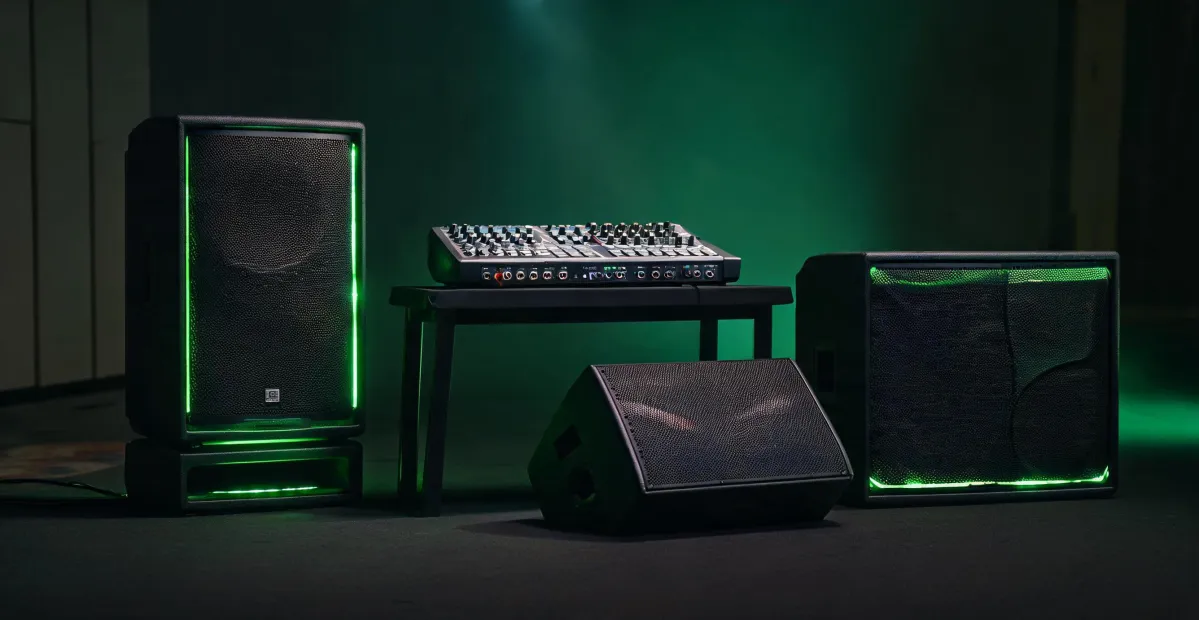
If you're an event tech in Singapore looking for Mackie powered speakers 15 cabinets, you don't need another gear review. You need a process. This is the checklist I use when we buy or rent PA equipment for events with hard deadlines. It's based on my own mistakes—about $8,000 worth—and it's caught 47 potential errors for our team in the past 18 months.
One clarification before the list: if you got here because you were searching for a space power amplifier or reading an RF power amplifier market analysis, this article is not going to help. Those are RF/aerospace products, not audio. I'm not going to pretend they're the same.
This article is for the 'professional speaker Singapore' search that actually means a PA loudspeaker, not a conference speaker or the person on stage.
The six-step checklist
There are six steps. If you only do three of them, make it steps 1, 5, and 6.
Step 1: Match the Mackie powered speakers 15 to the venue, not to a price
Start with the event, not the brand. A 15-inch powered speaker is a workhorse, but in a small concrete room it can produce more bass build-up and less clear mids than a 12-inch top with the right crossover. In Singapore, many venues are glass and concrete boxes. I do not buy speakers based on 'bigger driver, louder system.'
Write this down before looking at prices: audience count, room size, ceiling height, indoor/outdoor, music type, speech intelligibility, and the date the system must pass a soundcheck. If the event is mostly speech, a 15-inch top plus a modest sub is usually enough. If it's a DJ or a live band, plan to add at least one powered sub.
Checkpoint: If the venue holds 300 people and the music is bass-heavy, do not rely on 15-inch tops alone. You need subwoofers or a significantly bigger system.
Step 2: Figure out what 'Mackie bass speakers' means in your system
This is one of those terms that can send you down the wrong aisle. In live sound, the lows usually come from a dedicated subwoofer. So when people search for 'Mackie bass speakers,' they usually mean a powered subwoofer. The Mackie Thump15S is a common small-system sub; the SRM1850 is the larger 18-inch option for more output. Sorry, I do not mean a bass guitar amp. That's a different thing.
A full-range 15-inch speaker can reproduce bass, but it cannot replace a sub. I learned this the hard way in May 2019. We took a pair of Mackie 15-inch tops to a 400-person outdoor event, skipped the sub because '15 inches is enough,' and the kick drum sounded like a hit on a cardboard box. We spent $700 on a rental sub that afternoon.
Checkpoint: If your event needs chest-punch bass, budget for a sub. If you are a bass player looking for an instrument cab, keep looking—this checklist is for PA subwoofers.
Step 3: Compare the specs you can trust, not the watts
Everything I'd read about speaker shopping said wattage was the main number to compare. In practice, for our live-sound orders, wattage was one of the least useful numbers. A 1400W marketing peak can still sound weak at distance if the driver's sensitivity is low or the limiter is aggressive.
Use Mackie's published specs as a starting point: frequency range, max SPL, dispersion, weight, and amplifier power. But do not compare watts across different brands as if they mean the same thing. For subwoofers, the CTA-2010 measurement standard (the successor to CEA-2010) is a better guide than a single max SPL number, because it reports low-frequency output at distortion limits.
In September 2022, I approved a $3,200 order based on peak watts and speaker size. On the day of rehearsal, the system looked good on paper and sounded strained outdoors. The result was a last-minute $450 rental sub and a lot of embarrassment. That's one I still kick myself for.
Checkpoint: If you cannot test the speaker in person, compare max SPL, dispersion angle, frequency response, and weight. Be more careful with watts than the marketing page is.
Step 4: Separate audio power amplifiers from RF power amplifier talk
Searching 'power amplifier' will give you a mess. There are audio power amplifiers, RF power amplifiers, and even 'space power amplifier' modules for aerospace. They are not interchangeable.
If you're buying Mackie powered speakers 15, the amplifier is built in. You don't need a separate audio rack amp. If you're buying passive speakers, you need a professional audio power amplifier designed for loudspeaker loads.
An RF power amplifier is for radio-frequency signals, not for driving a 15-inch speaker cone. A colleague once spent three days reading what looked like power amp market analysis—it was an RF power amplifier market analysis—while the PA install waited. That's an easy mistake to make when the search results all say 'amplifier.'
Checkpoint: Know which of these you're buying: a powered speaker (amp inside), a passive speaker plus audio amp, or an RF amplifier. Only the first two belong in a PA setup.
Step 5: Buy certainty for the delivery date, not just speed
This is the step that has saved us the most money. For any event with a hard date, I pay more for a confirmed delivery date. In March 2024, we paid $400 extra for rush delivery on a mixer. The alternative was missing a $15,000 event. That $400 was not for speed—it was for certainty.
People think rush shipping costs more because it's harder for the courier. The reality is it costs more because it's unpredictable and disrupts planned workflows. If the gear arrives late, the whole schedule slips. A vendor who says 'should be there by Friday' is not the same as a vendor who says 'delivered by Wednesday 3pm or we cover the shipping fee.'
In Singapore, ask the authorized Mackie dealer to write the arrival date into the order. If they won't, ask why. Gray imports can save money, but the delivery promise can be up in the air. For a one-night event, that's a deal-breaker.
Checkpoint: Work backwards from load-in time. Add two days of buffer. If the vendor cannot commit to that date, keep looking.
Step 6: Plan for the gear failure that will happen at the worst time
This sounds obvious. It is not. On one six-piece PA order, every unit was new and none was tested before load-in. A speaker had a dead HF driver. The spare we thought was in the van did not exist. The store could not deliver until 9pm. The event started at 7:30 (ugh).
Now the rule is simple: every speaker and sub gets a test run with pink noise, a quick XLR sweep, and a phase check before it goes near the venue. We also carry spare IEC and XLR cables, and one spare speaker for any system that has to work first time. It's boring until it saves you.
Also check the power: Singapore runs on 230V / 50Hz with Type G sockets. A US-market speaker may be 120V only and needs a step-down transformer. We lost a mixer once because nobody checked the voltage label. That error cost $890 in repair plus a one-week delay.
Checkpoint: Is there a spare for the critical path? Is the local voltage correct? Has every unit been powered on and tested?
Mistakes I still kick myself for
1. Treating 15-inch tops as a subwoofer replacement
A 15-inch top is not a sub. It's tempting to think it is, because it has a large driver. But the cabinet design, tuning, and amplifier voicing are all different. I still kick myself for not learning that before the 2019 event.
2. Treating 'estimated delivery' as a date
An estimated date is a risk, not a commitment. The cheapest quote can become the most expensive when the gear doesn't arrive before load-in. That's why step 5 is non-negotiable for us now.
3. Buying based on the lowest quote without checking local support
We once bought from a non-approved import source to save money. When a speaker went down, the local repair center could not service it without a long wait. The warranty was a piece of paper, not a process. Now I check the local dealer and the repair path before I check the price.
Bottom line
The goal is not to buy the perfect Mackie system. The goal is to have the right system working on the right date. Start with the venue, clarify whether you need subwoofers, compare real specs, ignore the RF power amplifier market analysis noise, pay for delivery certainty, and test everything before the audience arrives. That's the whole point.
In an emergency, certainty is the product. The extra fee isn't only about speed; it's about knowing the gear will actually be there when you need it.

Elise Marceau
Elise Marceau is an LED display and digital-signage systems analyst covering LED video walls, modular screens, transparent LED, control processors, and indoor or outdoor signage. She applies IEC 62368-1 safety principles while comparing pixel pitch, luminance, contrast, refresh rate, colour uniformity, viewing angle, ingress protection, power density, module serviceability, and signal redundancy. Her specification guides help integrators, venue operators, retailers, and procurement teams align viewing distance, ambient light, content format, installation access, electrical load, and lifecycle support.