Mackie Mixer Audio Live: The TDA7498 Power Amplifier Trap
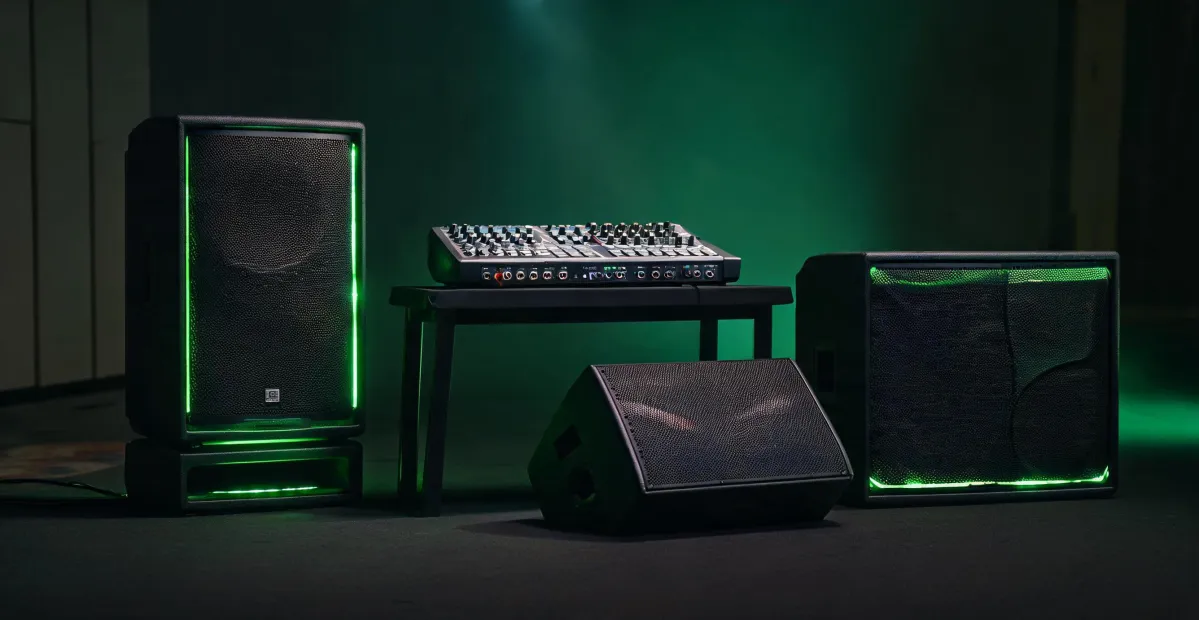
I'm a production manager at a regional AV rental company. In my role coordinating sound for conferences, weddings, and corporate events, I've handled maybe 200 rush orders—no, probably closer to 220 by now. And almost every emergency I've dealt with in the past two years traces back to one mistake: pulling in a small consumer amplifier to save a show.
The 36-hour call
In March 2024, I got a call from a producer. Thirty-six hours before a one-day conference, her client's sound person said the main powered speaker was dead. Fine, that happens. Then she asked if a spare power amplifier TDA7498 board and a passive speaker would work as a temporary PA.
I had to talk her out of it.
The board was advertised as a low power high fidelity notebook audio amplifier. It was still in the box. It would have made sound. What I mean is, it wouldn't have made enough clean SPL to cover a conference room with a CEO on stage.
We got a proper powered speaker delivered in time and paid $240 in rush shipping. The client's alternative was a room where half the audience couldn't understand the keynote.
The problem is not just wattage
The TDA7498 is a capable little Class-D chip. It can be a great choice for a desktop build or a DIY Bluetooth speaker. But there's a difference between making music at a desk and carrying an event.
What most people don't realize is that the power rating on those amplifier boards is often peak, not continuous. The included power supply is often a thin laptop brick. The chip might be rated for a hundred watts, but the power supply might only deliver sixty. And the input stage might not accept a professional +4 dBu signal without clipping.
Here's something vendors won't tell you: the advertised wattage assumes a bench power supply, not the cheap adapter in the box. With a low power high fidelity notebook audio amplifier, you are getting a product designed for near-field listening, not for a stage.
A Mackie mixer audio live setup usually gives you a professional line level around +4 dBu. A consumer board is often built for -10 dBV. That's a mismatch of roughly 12 dB. The result is either a weak signal or a clipped input. Neither will save your show.
The same logic applies to Mackie studio monitor speakers
I also get asked about Mackie studio monitor speakers. They sound great in a control room because the amplifier, crossover, and cabinet are matched. They are not designed to cover a banquet room. If a pair of Mackie studio monitor speakers is part of a desktop setup, leave them there. Don't turn a studio monitor into a public address system.
What a temporary amp really costs
Last quarter alone, we processed 47 rush orders with a 95% on-time rate. The only near-misses were jobs where someone had already tried a small amplifier before calling us.
In January, a client tried to get through a rehearsal with a low power high fidelity notebook audio amplifier and a small passive speaker. It worked for ten minutes at moderate volume. Then the bass dropped out, the amp started oscillating, and the driver smelled hot. That board cost them three hours of setup time and a dinner reception that started without sound.
Passive speaker drivers are not invincible. Distortion from clipping is one of the fastest ways to kill a tweeter or a compression driver. A bare TDA7498 board has no limiter, no crossover, and no DSP to protect the driver from a clipped signal. The first time a presenter speaks loudly into a microphone, the amp can hit a transient it cannot handle. That is how drivers die.
Looking back, I should have bought a dedicated backup powered speaker months earlier. At the time, the budget was tight and we already had spare amps and speakers. But the spare amps were the wrong category. We got the project done, but not without paying $800 in rush fees to a courier. The alternative was a $50,000 penalty clause in a client contract that I do not want to think about.
Even after we ordered the replacement, I kept second-guessing. What if the courier got stuck in traffic? The next four hours were stressful. The crew now has a simple rule: no unknown amplifiers in the signal chain, ever.
What to do instead
If a powered speaker fails, replace it with a powered speaker. That is the short answer.
If you are in a bind and the only available speaker is passive, use an amplifier with a known continuous power rating, an input sensitivity that matches your Mackie mixer audio live output, and a limiter. Test the whole chain at performance volume before the audience arrives.
If you want a portable emergency PA, get one. A battery-powered speaker like the Mackie Thump GO is designed to be a complete system. A bare TDA7498 board with a laptop brick is not.
Five minutes of verification beats five days of correction. Check the chain, test the backup, and do not let a $25 board become the reason a $12,000 event goes wrong.

Elise Marceau
Elise Marceau is an LED display and digital-signage systems analyst covering LED video walls, modular screens, transparent LED, control processors, and indoor or outdoor signage. She applies IEC 62368-1 safety principles while comparing pixel pitch, luminance, contrast, refresh rate, colour uniformity, viewing angle, ingress protection, power density, module serviceability, and signal redundancy. Her specification guides help integrators, venue operators, retailers, and procurement teams align viewing distance, ambient light, content format, installation access, electrical load, and lifecycle support.