Mackie Buying Guide: Used SRM Flex, ProFX16v3 Price, and Loudspeaker Sensitivity
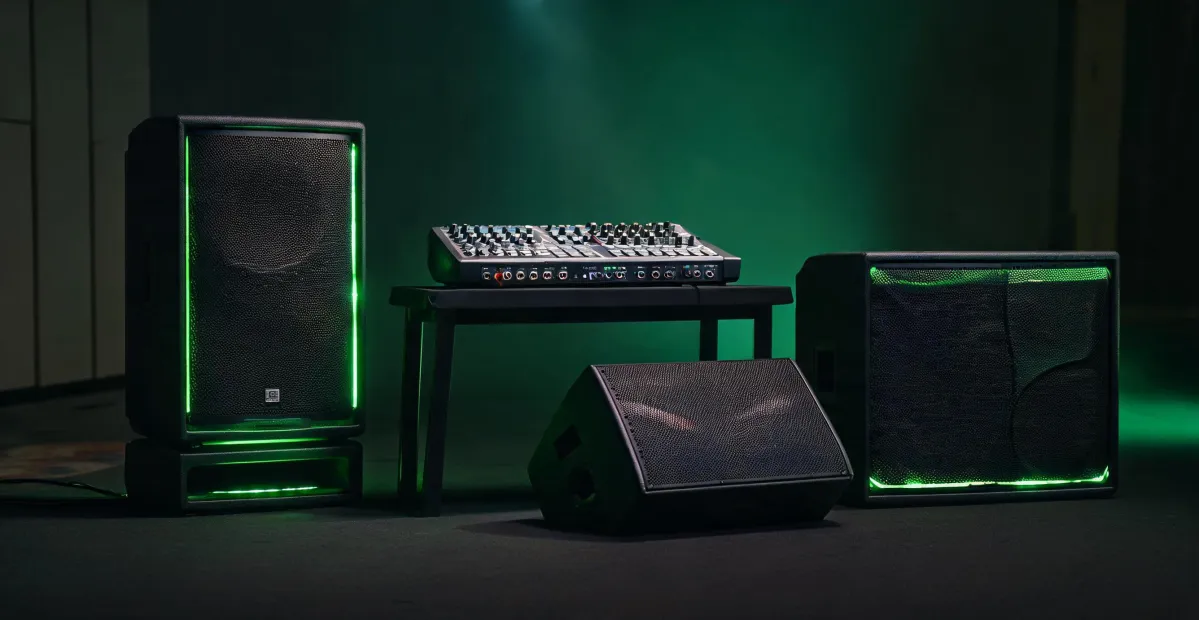
If you've ever had a client call on a Thursday night with a Saturday load-in, you know the feeling: the next few hours decide whether the event sounds like a professional production or like someone's cousin with a Bluetooth speaker. I coordinate gear for a live-sound rental company, and I've lost sleep over exactly three things: time, feasibility, and what happens if the cheap choice fails.
This article isn't going to tell you there's one perfect Mackie setup. There isn't. The right move depends on your deadline, your operator, and how much damage a failure would do. So let's walk through the scenarios I actually see in the field.
Scenario 1: You found a used Mackie SRM Flex powered speaker
Used gear can be a no-brainer if you're on a budget. It can also be a $400 mistake. I've bought plenty of used PA boxes over the years, and I've also watched a rental company lose a wedding contract because a 'mint' powered speaker showed up with a blown tweeter.
(Should mention: I'm talking about the powered SRM Flex family, not passive boxes. The Flex's built-in mixing and DSP make it a popular seller, so you'll see a lot of listings on the used market. The battery-powered versions are especially tempting for outdoor events; they're also the ones people sell after using them hard in direct sun.)
Here's where I land: if you have at least an hour to test it before handing over cash, used is a solid play. Run pink noise through every input, check the Bluetooth pairing, and listen for buzzes at high volume. If the seller can't arrange a test, I'd treat it as a red flag.
But if you need the speaker for a paying gig in less than 48 hours, buy new or rent. The rush fee you pay to get a used one shipped overnight is usually not worth the risk. Last March, 36 hours before a corporate event, a client's original sound company bailed. We found a used SRM Flex at a dealer two cities away, paid $80 extra in courier fees, and I tested it in a parking lot. It worked. But the reason it worked is that we had time to test it. If we'd only had one hour, I would have said no.
I've learned that output quality is the brand. A dented used speaker on stage tells a client you're the cheap option, even if it sounds amazing. That's why I now factor condition into the price. The difference between a $600 used speaker and a $900 new one is sometimes just a few weeks of not feeling like an amateur.
Scenario 2: You're asking about the Mackie ProFX16v3 price
The ProFX16v3 is a 16-channel analog mixer with USB, three-band EQ, and Mackie's effects. It's not new, but it's still a workhorse for a lot of bands, churches, and rental companies. As of early 2025, the street price was roughly $600 to $700 in the U.S., depending on whether you catch a sale. If a dealer quotes you over $800, keep shopping. That's not a guarantee; prices move, but it's a solid ballpark.
Now the harder question: should you buy one? If you need something a volunteer can run with almost no training, yes. The physical faders and the familiar channel strip are hard to beat. If you're a solo sound tech and you want to spend the budget on a smarter workflow, I'd put money on a smart mixer audio setup instead.
What do I mean by 'smart mixer audio'? I mean a digital mixer that automates the boring parts—gain staging, compression, effects, feedback suppression—and lets you recall a scene from a tablet. Mackie's DL16S and DLZ Creator are the obvious names. The SRM Flex family also has built-in DSP and enough channel controls for smaller gigs, which puts it closer to that smart mixer workflow than a traditional analog setup. For a small corporate event where no one wants to see a rack of outboard gear, that's the professional move.
Let me be honest about the tradeoff: if your operator is comfortable with an analog board, a smart mixer might feel like a learning curve at the worst possible time. I've seen that happen. Last year, we sent a DL16S to a festival with a volunteer crew, and the first act had to wait while they figured out which iPad had the app. We'd saved money by not sending an analog setup, but we'd spent it on confusion. (Should mention: the festival still went fine after a soundcheck, but it was tight.)
So which one is better? It depends on who's touching the faders.
Scenario 3: What a loudspeaker sensitivity rating actually tells you
If you've compared spec sheets, you've seen numbers like 95 dB 1 W/1 m and wondered why one speaker seems louder than another. The short answer: sensitivity is a measure of how efficiently a speaker converts power into sound, measured at 1 meter with a specific input. The longer answer is that it's easy to misuse.
First, a loudspeaker sensitivity rating is not the same as maximum SPL. A speaker rated 95 dB sensitivity might handle only 200 watts; another rated 92 dB might handle 1,000 watts. To compare loudness, you have to add power handling into the math. Every +3 dB of output requires roughly double the amplifier power. So the 92 dB speaker with 800 watts can be much louder than the 95 dB speaker with 200 watts.
Second, published sensitivity numbers are measured under different conditions. The AES standard AES2-2012 defines sensitivity for loudspeaker components, while system-level measurements often follow IEC 60268-5. Some manufacturers measure at 2.83 volts, which equals 1 watt only into 8 ohms; some use pink noise; some average across frequency; and some choose a peak in the response. That's why I trust my ears more than a single spec-sheet line.
I learned that lesson the hard way. I once picked a speaker because it had a 98 dB sensitivity rating, skipping a model with a lower number. It sounded harsh and thin in the mids. The lower-rated speaker with a smoother frequency response was actually more intelligible in a noisy room. Now I use sensitivity as a starting point, not a verdict.
(And if you came here from a search like 'cara loudspeaker radio vivo'—yes, live-sound queries in Portuguese and Spanish often show up in my analytics too—the same rule applies. Don't buy based on one number. Check the dispersion pattern, the driver size, and whether the cabinet is designed for the room you're filling.)
What I'd do next: A three-question reality check
Since there's no single correct answer, here's the decision tree that's been saving my sanity for the last few years:
- How long before the event? Under 48 hours: don't gamble. Buy new or rent from someone who can guarantee it. More than a week: used is fine if you can test it.
- Who will run the mixer? You and a trained tech: get a smart mixer and enjoy scenes, recall, and wireless control. Volunteers or client staff: get an analog board like the ProFX16v3, or set up the smart mixer in preset-protected mode and train one person.
- What's the cost of failure? If bad sound ruins a wedding or a corporate keynote, saving $200 on a used speaker or a generic mixer is a bad trade. If it's a low-stakes backyard show, risk it.
That's the bottom line. Used Mackie SRM Flex speakers are great when you have time to check them. The Mackie ProFX16v3 price is reasonable if you need a reliable analog mixer and don't need tablet recall. A loudspeaker sensitivity rating only matters when you compare it alongside power handling and response. And a smart mixer audio system is the right tool for a thin crew, as long as someone on the team actually knows how to use it.
Oh, and one more thing: check current prices before you commit. I wrote this in early 2025, and audio pricing changes fast. I've only worked with U.S. dealers and mostly with regional rental clients; if you're buying in another market, your mileage will vary.
Good luck. The gear is the easy part. The deadline is the real enemy.

Elise Marceau
Elise Marceau is an LED display and digital-signage systems analyst covering LED video walls, modular screens, transparent LED, control processors, and indoor or outdoor signage. She applies IEC 62368-1 safety principles while comparing pixel pitch, luminance, contrast, refresh rate, colour uniformity, viewing angle, ingress protection, power density, module serviceability, and signal redundancy. Her specification guides help integrators, venue operators, retailers, and procurement teams align viewing distance, ambient light, content format, installation access, electrical load, and lifecycle support.