Mackie 12" Powered Speakers: A Rental Checklist (and the Mistakes That Built It)
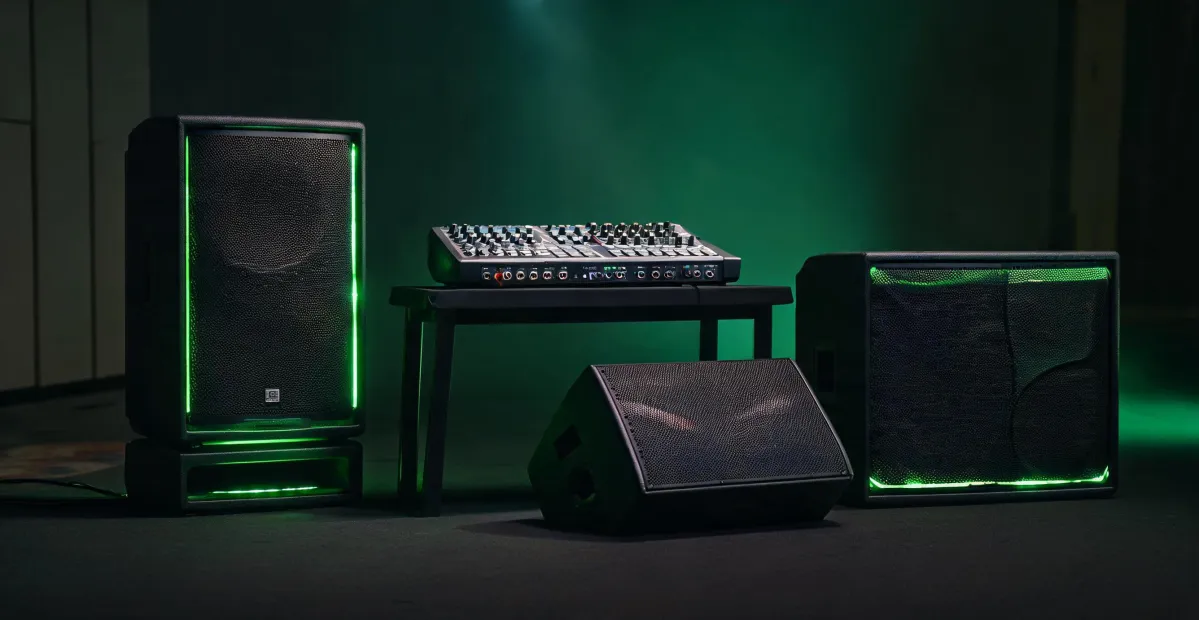
I've been handling sound orders for rental houses and small production companies for eight years. In that time I've personally made and documented eleven significant mistakes, totaling roughly $6,800 in wasted budget. Most of them were avoidable. So I built a checklist for my own team, and now I use it every time we deploy Mackie 12" powered speakers.
This checklist is for you if you're setting up a PA for a bar band, a conference room, a school gym, or a 300-capacity venue. It's not for a passive line-array install or a high-end hi-fi room. And if you're searching "Brodmann Vienna loudspeaker dealer Massachusetts" and landed here by accident, you're in the wrong aisle. That's a different market. But if you're running powered speakers and want fewer late-night repair calls, keep reading.
Most reviews of Mackie 12 powered speakers stop at "they sound good." This checklist is about what comes after the purchase.
The 5-Step Checklist I Use Now
Here's the whole thing before the details:
- Match the speaker to the room and the throw distance.
- Verify the specs on the specific model.
- Set the DSP and crossover before you hang anything.
- Gain stage from mixer to speaker.
- Build the audio mixer cabinet and transport routine.
Step 1: Match the speaker to the room and the throw
I once quoted a wedding in a 4,000-square-foot ballroom with 40-foot ceilings. I brought one pair of Mackie 12" powered speakers because I thought they'd be loud enough. They were not loud enough—or rather, they were loud enough right in front, but the back half of the room couldn't hear anything intelligible. That $890 mistake taught me to measure the room and the throw distance before picking the box.
For a small bar or a 100-person patio, a pair of Mackie 12" powered speakers is usually plenty. For anything bigger, you're probably going to need a sub, more tops, or both. Plus, check the mounting. If you're flying the speakers, 12" boxes are manageable. If you're on poles, make sure the stands are rated for the weight.
Checkpoint: distance from front to back, room height, and whether the event needs a sub.
Step 2: Verify the specs on the specific model
Marketing wattage is not the same as usable output. The Mackie Thump212 12" 1300W Powered Loudspeaker is a good example. That 1300W number is peak, not continuous. It's still a solid, budget-friendly PA speaker, but if you're comparing it to a passive speaker with a separate amp, you need to compare the whole amplified system, not just the number on the box.
According to Mackie's published specifications on mackie.com (accessed April 2025), the Thump212 has a built-in 1300W Class-D amplifier, a 12" woofer, and a 1.4" compression driver. That's enough for quiet acoustic sets and medium-volume band work. Just don't expect it to act like a subwoofer.
If you typed "Mackie Thrash212 12" 1300W powered loudspeaker" into a search bar, you probably meant the Thump212. Easy typo.
I don't have hard data on how often people buy the wrong speaker for a room, but based on our rental orders, my sense is it's at least a quarter of first-time rentals. If you're not sure, rent one for a day or A/B it against another cab. I wish I had tracked that more carefully in my first year. Would've saved us from buying a pair of speakers that were all mids and no low end.
Checkpoint: peak vs continuous power, frequency range, and whether the speaker has EQ presets you'll actually use.
Step 3: Set the DSP and crossover before you hang anything
This is the step that usually gets skipped. If you're pairing 12" tops with a sub, set the high-pass filter on the tops and the low-pass on the sub first. Otherwise, the tops waste their power trying to move air they were never designed to move.
I knew I should check the crossover after a system came back from another rental house, but I thought "what are the odds?" That was the one time it mattered. The previous tech had reset the DSP, the highs were harsh, and the mids were gone. We spent 20 minutes chasing a cable that wasn't the problem.
Also, if you're reading this because you're curious about the Magico A5 loudspeaker, this isn't the checklist for that. That's a high-end hi-fi loudspeaker, not a portable PA top. Both are fine at what they do, but they're not competing for the same job.
Checkpoint: high-pass, low-pass, EQ preset, and limiter set for the event type.
Step 4: Gain stage from mixer to speaker
I've had more distortion complaints from bad gain staging than from failing equipment—or rather, the equipment would have been fine if the input level wasn't slammed. Set the mixer master at unity. Get a good signal from the channel strip. Then let the speaker's input sensitivity do the rest.
If the speaker has a mic/line switch, set it correctly before you tell the band to play louder. On a $3,200 order in September 2022, we sent out two Mackie 12" powered speakers, a sub, and a full mixer setup. The client called 40 minutes before showtime saying:
the right speaker is vibrating.
It wasn't damaged. The input was set to line, the mixer send was just shy of clipping, and the speaker's limiter was working overtime. One setting fix, no repair trip. So glad I taught the client how to check that before I left—almost didn't.
Checkpoint: mixer master at unity, channel PFL around 0 dB, speaker input switch correct, and no red lights on sustained peaks.
Step 5: Build the audio mixer cabinet and transport routine
This step sounds boring, but it's the one that saves money. I once ordered eight items with labels that looked right on paper. Checked them myself, approved them, loaded them. We caught the issue at load-out—the audio mixer cabinet was full of cables from a different event. That mistake cost $450 in wasted tech time and a lot of embarrassment.
Now the rule is simple: if an audio mixer cabinet is packed with anything other than the audio mixer and its specific cables, it doesn't leave the shop. The cabinet gets a checklist taped to the lid, and it gets latched before it goes on the truck. Leaving it open "just for a minute" is how microphones disappear and cables get wrapped around a power supply. We also write the event name on the outside with a dry-erase marker. That sounds small, but it saves us a ton of time at load-out.
This worked for us because we're a mid-size operation with predictable gear. If you've got multiple crews or a different inventory system, your mileage may vary, but I'd still bet on a closed cabinet.
Checkpoint: audio mixer cabinet contents, power cords, spare XLR, latch, and label.
Notes and Mistakes I Keep Almost Making
Say what you mean
I said "standard setup" once. The venue heard "bring the speakers and leave." Result: no microphone stands, no cabling, and a client who didn't book us for three months. Use a simple running sheet and read it out loud.
Don't trust memory
The thing is, I'm not gonna claim I've got a perfect system. I still forget things. That's why the checklist is printed and taped to the lid of the audio mixer cabinet. We've caught 47 potential errors with it in the past 18 months. I don't have hard data on how many of those would've become failures, but my gut says at least a few would've been expensive.
Know your limits
This checklist is for portable powered PA systems in small to mid-size venues. If you're doing a stadium show, a flown line array, or a serious install, call someone who does that full-time. I can only speak to my context. And if you're actually looking for a Brodmann Vienna loudspeaker dealer Massachusetts, this post won't help. But I hope the internet finds you the right dealer anyway.
Bottom Line
Efficiency isn't just about faster setup. It's about not doing the same stupid repair twice. A solid checklist, a gain-staged console, and a latched audio mixer cabinet will save you more money than any speaker upgrade will.
If you're about to hit "buy" on a pair of Mackie 12 powered speakers or a Mackie Thump212 12" 1300W Powered Loudspeaker, save this list. Set the DSP before you hang the boxes, verify the specs, and for the love of live audio, close the cabinet before it goes in the truck.

Elise Marceau
Elise Marceau is an LED display and digital-signage systems analyst covering LED video walls, modular screens, transparent LED, control processors, and indoor or outdoor signage. She applies IEC 62368-1 safety principles while comparing pixel pitch, luminance, contrast, refresh rate, colour uniformity, viewing angle, ingress protection, power density, module serviceability, and signal redundancy. Her specification guides help integrators, venue operators, retailers, and procurement teams align viewing distance, ambient light, content format, installation access, electrical load, and lifecycle support.