Mackie Battery Speaker Review: 12 Weeks of Rentals and the Real Mackie Speakers Price
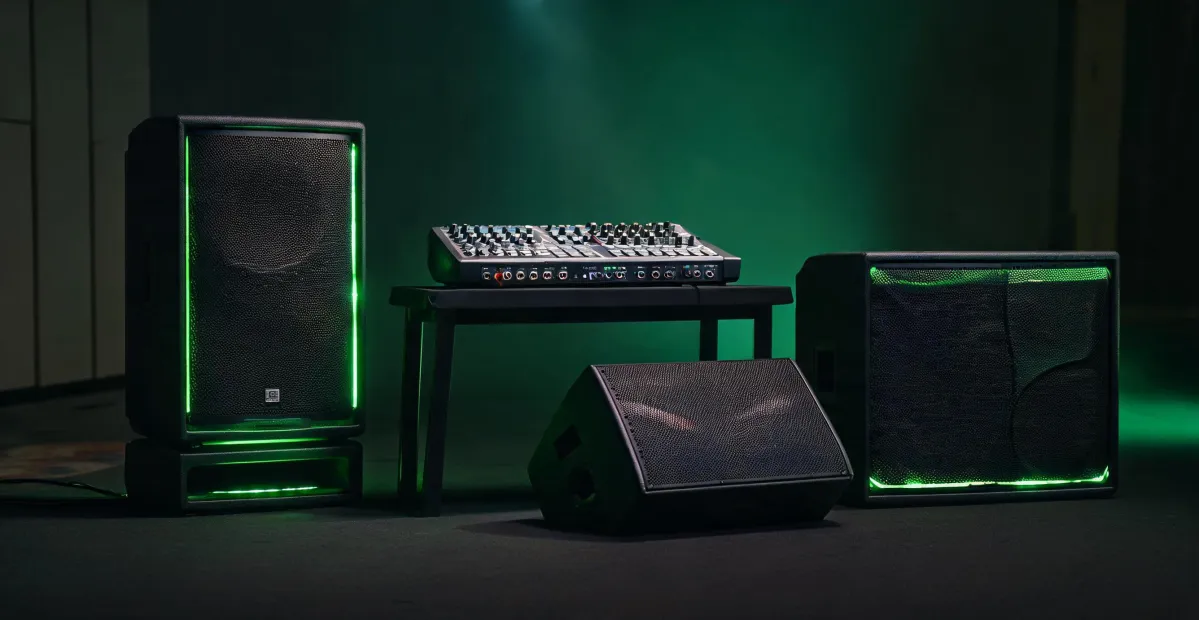
The first Saturday in April 2025, I stood in a muddy lot behind the county fairgrounds at 6:45 a.m. A Mackie Thump GO sat at my feet. The plan was simple: one battery-powered speaker, one microphone, 12 weeks of weekend farmers market announcements. No generator. No extension cords. That was the promise.
I'm the quality/compliance person for a regional AV rental company. I review every item before it goes out—roughly 200 unique pieces of gear a year. In Q1 2025, I rejected 8% of first deliveries because of battery or connector failures. I don't say that to sound impressive. I say it because it explains why I don't trust spec sheets until I've verified them myself.
How the whole thing started
In March 2025, our bookings manager flagged a request from a farmers market operator. They needed a portable PA for 12 consecutive Saturday markets. No power at the site. They wanted something a single staff member could carry and set up without a sound tech. My boss's first instinct was to grab the cheapest Mackie battery speaker and be done. But I've learned that "cheapest" is a trap.
It's tempting to think you can compare prices and specs side by side. But identical specs from different vendors can result in wildly different outcomes. The "always get three quotes" advice ignores the cost of downtime and repairs. I wanted to look at total cost over the season, not just the invoice.
The evaluation: Mackie, a German option, and the math
We looked at two types of systems. One was the Mackie Thump GO. The other quote came from a local rental house that stocks a German loudspeaker brand—I won't name it because I don't need another internet fight. I get why people love those boxes. Their midrange is beautiful, and the build quality is excellent. To be fair, in a quiet demo room, the German speaker sounded more "polished" than the Mackie. But the job was not a quiet demo room.
This market site had dust, damp grass, and a pickup truck that would carry the speaker for 20 minutes before every event. Replacement panels for the German brand were expensive, and the local dealer was two hours away. The Mackie had a simpler path: local distribution, competitive pricing, and battery power built in. So we ordered one Thump GO to test.
Before I get into the field results, let's talk about the working of loudspeaker systems because it matters for battery gear. A loudspeaker works by converting an electrical audio signal into mechanical motion: the amp pushes current through a voice coil, which moves the cone, which moves air. You can't get louder without more voltage swing. And when voltage drops, the amplifier runs out of headroom. That's not a "battery issue"—that's physics.
We also checked our own bench setup. In the shop, we use a 12V 30A power supply for car amplifier tests when we're confirming current draw on custom installs. It has nothing to do with the Mackie directly—the Thump GO doesn't take a DC input. But the habit of measuring actual current draw is exactly the habit you need with a battery speaker. The wattage number is marketing. The battery life at the level you actually run is the spec that matters.
The first event: the battery lesson
We didn't have a formal evaluation process. That's on me. The third time we ordered gear without a checklist is the third time I promised to fix it. This time, I made a simple test plan: run the Mackie at 70 dB average, then 80 dB, then measure how long before the low-battery LED blinked.
At the first Saturday market, we ran it at what the operator called "a little louder than background." The battery meter dropped from full to 50% in under three hours. By hour six, the speaker was still working, but it sounded thin. It didn't fail—it just ran out of dynamics. I hit "confirm" on the purchase order the week before and immediately thought: did I pick the wrong box?
Here's where the working of loudspeaker became practical. When the battery voltage sagged, the amp had less headroom. Voices still cut through, but music lost its low end and punch. The speaker wasn't broken. I was asking it to do too much for too long. We changed the operator's gain setting, added a second Thump GO as a stereo pair for the next event, and the issue didn't come back. Actually, a stereo pair let them run each speaker at lower output, which roughly doubled effective battery life.
Don't hold me to the exact doubling math—it depends on program material. But the principle is simple: give the amp less stress and the battery lasts longer.
What happened after 12 weeks
Twelve Saturdays, two markets canceled for rain. Ten events total. The Mackie Thump GO went through all of them. No repairs, no battery degradation that I could measure, no complaints from the operator. We bought two more for our rental stock. In August 2025, I inspected all three: the original unit was still within its advertised performance envelope.
Now, about Mackie speakers price: when I checked online dealer listings in March 2025, the Thump GO street price was around $499. That's not the cheapest battery speaker you can buy. But after ten events, the unit cost works out to about $50 per event—if you assume it only lasts one season. It won't. If it lasts three seasons, that's under $17 per event. The German-brand quote would have been about double the upfront cost, with higher replacement parts cost. The cheapest quote we saw had no battery warranty that I'd want to rely on.
This is the part I wish more rental companies understood: total cost is not the sticker price. Total cost includes repair downtime, spare units, staff training, and the cost of telling a client "sorry, we don't have power." I've been burned by that before. In 2023, a quality issue with a subwoofer cost us a $22,000 redo and delayed a launch. Since then, I calculate TCO before comparing any vendor quotes.
Lessons I'd repeat
If someone asks me about a Mackie battery speaker, here's what I tell them now.
- Check the actual runtime at the level you need, not the datasheet number. The datasheet is measured at low average output, not at your event.
- Plan for the working of loudspeaker limitations. Battery voltage affects amp headroom. Once you hear that "thin" sound, you're past the limit.
- Don't skip the process. Write a test checklist before you buy. It would have saved us one confusing weekend.
- Look at German loudspeaker brands if you want fit and finish. But ask what a replacement driver costs and how long the service bench takes. For a portable market PA, that answer was "longer than we could wait."
Granted, there are jobs where the German brand is the better call. This wasn't one of them. And granted, there are cheaper battery speakers than the Thump GO. But cheap only wins if it survives the season. We'll be running these units at weekend markets for at least two more years. That's the math that matters.
I'm not 100% sure the Thump GO is the right choice for every rental house. But for ours, after ten events, it's the one I stop worrying about. That's a quality win.

Elise Marceau
Elise Marceau is an LED display and digital-signage systems analyst covering LED video walls, modular screens, transparent LED, control processors, and indoor or outdoor signage. She applies IEC 62368-1 safety principles while comparing pixel pitch, luminance, contrast, refresh rate, colour uniformity, viewing angle, ingress protection, power density, module serviceability, and signal redundancy. Her specification guides help integrators, venue operators, retailers, and procurement teams align viewing distance, ambient light, content format, installation access, electrical load, and lifecycle support.