Why Your Venue's Audio Keeps Failing (And It's Probably Not the Speakers)
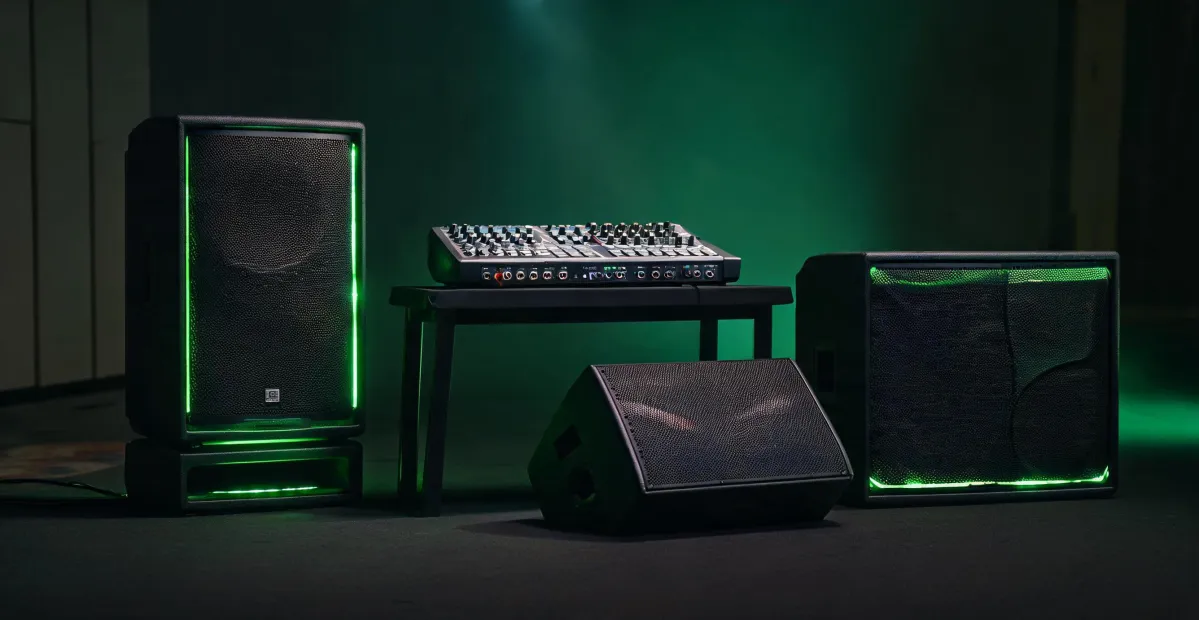
I Thought Price Was the Problem
Let's be honest—when I took over audio purchasing for our venue back in 2020, I thought I had it figured out. The board wanted to save money. The sound engineers wanted everything to sound 'professional.' So I figured, find a solid brand, get a decent price, make everyone happy. Simple, right?
Wrong. By the end of my first year, I'd been through three speaker setups for our main room. Each time, I blamed the gear: these speakers can't handle rock shows, that sub doesn't punch hard enough, this system distorts when you push it. And each time, I'd go back to sourcing—looking for a cheaper bundle, a 'better' spec sheet, maybe a different brand. It wasn't until I looked at the whole picture, from amplifier power modules to signal chain, that I saw what was really going on.
Surface Problem: 'Our Speakers Sound Bad'
If you're a venue owner or rental buyer, you've probably heard this complaint more times than you can count. The monitors buzz. The mains distort at moderate volume. The subwoofer sounds 'muddy.' The common response is to assume the speakers are the problem. We start Googling reviews, asking for recommendations, maybe leaning toward a brand like Mackie because it's reliable and well-priced. But that's just scratching the surface.
When I first started, I'd look at the line items on a quote and think: $800 per powered speaker? That's reasonable. Or $1,200 for a sub? That's about what we budgeted. I didn't realize that the individual component prices—amplifiers, driver modules, power supply units—mattered more than the sticker price of the cabinet. I was treating audio gear like office furniture: pick a model, buy it, move on. But audio isn't furniture.
The Component You Never Think About
Here's the thing nobody tells a purchasing admin: the amplifier power module is arguably the most important part of any powered speaker. It's not glamorous. It sits inside the cabinet, hidden behind a metal plate. But it's the engine. And if that module is underpowered, mismatched, or cheap, no amount of high-end woofer or tweeter will save you.
In 2022, I was sourcing replacements for a set of older passive speakers we were retiring. The quotes I got ranged widely: $1,400 for one brand's powered 12-inch versus $1,900 for another's. I almost went with the cheaper option until our lead engineer asked: 'What's the amplifier module rated at?' I had no idea. When I checked, the cheaper speaker had a 200W module; the more expensive one had a 450W module. Same-size cabinet. Same driver diameter. Completely different performance. That was my first 'aha' moment.
Deeper Cause: We're Not Matching Components to Application
The real problem isn't that speakers are bad. It's that we're buying gear without understanding the system. A siren loudspeaker designed for public address in a warehouse is never going to work for a live rock band. But even more subtle: a $1,500 subwoofer meant for a home theater (like, say, the KEF Kube 12 MIE) won't deliver for a dance floor. It's not that the KEF is bad—it's actually excellent for its purpose. But put it in a venue with 200 people and a DJ, and it'll bottom out before the night even gets going. It's the wrong tool.
When I consolidated our equipment budget in 2023, I realized we'd spent almost $4,000 on three different subwoofers over two years—none of which were suited for our space. A 300-seat room with a stage. Hard surfaces. We needed punch, not nuance. We needed a sub that could handle sustained low-frequency output, not one optimized for audiophile clarity at low volumes. But I didn't know to ask for that.
The Cost of Ignoring the System
Let me give you a concrete number: in 2022 alone, we spent over $1,200 on replacement drivers and repair labor for a set of speakers that were technically 'adequate' on paper. The amplifier power modules in those speakers were running at 90% capacity for every show—they were never designed for that duty cycle. The result? Blown drivers. Cracked solder joints. And a very unhappy sound engineer who had to cancel two shows because the PA was down.
That's the hidden cost of getting it wrong. It's not just the gear—it's the lost revenue from cancelled events, the overtime for your tech crew, the trust you lose with your clients. According to USPS (usps.com), a First-Class letter costs $0.73 as of January 2025. That's a fixed cost you can plan for. But an unreliable PA system? Its cost compounds unpredictably. And that's something accounting hates.
What I Wish I'd Know From Day One
I eventually found a solution, but it wasn't flashy. It wasn't about switching to a different brand entirely—though we did standardize on Mackie for most of our main PA needs. It was about changing how we thought about procurement.
- Spec sheets lie (or at least, they omit). The wattage number on a speaker isn't the whole story. What's the continuous power handling? What about the amplifier module's efficiency at different loads? I now request those specs in writing before I put any quote on a spreadsheet.
- Source components separately if you can. We don't always buy full speaker systems. Sometimes we order just amplifier power modules to upgrade older cabinets. It's cheaper and extends the life of the cabinet well beyond its expected timeframe.
- Match the subwoofer to the space. Don't buy a KEF Kube 12 MIE for a dance club. Buy it for a listening room. For live sound, look for subs with higher continuous output and lower distortion at high SPL. If unsure, call a rental house and ask what they use for rooms your size.
Even after we made these changes, I kept second-guessing. What if a different brand's powered speaker was actually better? What if I left money on the table? The three weeks between ordering the new Mackie SRM series tops and their delivery were stressful. I hit 'confirm' and immediately thought: 'Did I just overcommit to one vendor?' Didn't relax until our first show with the new system. The engineer gave me a thumbs-up and said, 'This is the best the room has sounded.'
Bottom Line
The problem with venue audio isn't usually the brand. It's the purchasing approach. We focus on headline prices and neglect the amplifier power module. We buy home subwoofers for commercial use. We assume compatibility where there's none. And every time we get burned, we blame the gear instead of the process.
To be fair, I get why people take the shortcut. Budgets are tight. Shows need to happen. But I've learned that spending 20% more upfront on properly matched components saves 50% in headaches later. That's not a marketing pitch. That's my actual expense report.

Elise Marceau
Elise Marceau is an LED display and digital-signage systems analyst covering LED video walls, modular screens, transparent LED, control processors, and indoor or outdoor signage. She applies IEC 62368-1 safety principles while comparing pixel pitch, luminance, contrast, refresh rate, colour uniformity, viewing angle, ingress protection, power density, module serviceability, and signal redundancy. Her specification guides help integrators, venue operators, retailers, and procurement teams align viewing distance, ambient light, content format, installation access, electrical load, and lifecycle support.