Mackie vs. The Component Route: Which PA System Delivers Real Value? A Quality Manager's Perspective
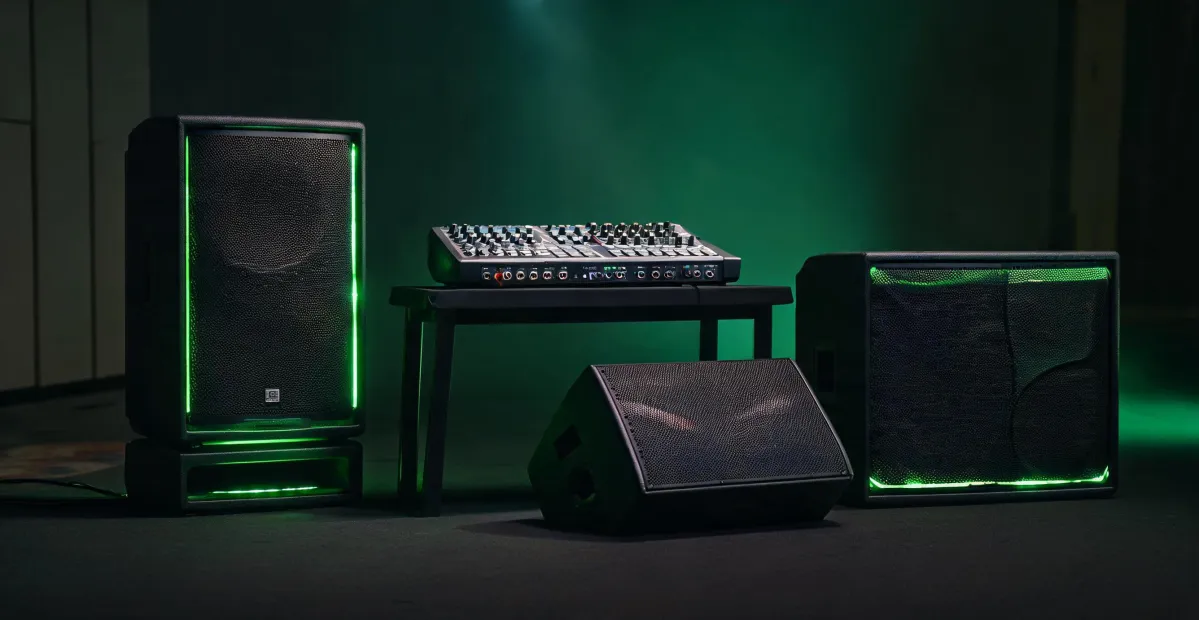
Two Ways to Build a PA – and Why the Choice Isn't Obvious
When I first started reviewing audio gear for our rental company, I assumed that separate components would always outperform integrated systems. More flexibility, higher-end parts, you name it. Then I spent a year tracking failure rates and total cost of ownership across 40+ setups. The surprise wasn't which approach was better – it was when each one makes sense. Let me walk you through the three dimensions that matter most: price transparency, consistency, and real-world reliability.
Dimension 1: Upfront Cost vs. Hidden Expenses
All-in-One (Mackie Thump 215, SRM series)
Mackie's powered PA systems come with built-in amplifiers, crossovers, and DSP. You pay one price – around $700–$900 per Thump 215 cabinet as of early 2025, depending on the retailer – and you get a complete, tested unit. No extra cables, no amplifier rack, no matching quirks. What you see is what you pay.
Component Route (Passive Speakers + Amplifier + Subwoofer)
Say you pair a pair of passive speakers with a dedicated amp (like a Hegel H190 or a Crown XLS) and a separate subwoofer (e.g., PreSonus Eris Pro Sub 10). The sticker prices add up fast: passive speakers $500–$1,200, amp $800–$2,500, sub $400–$800. But that's just the start. You also need speakon cables, a power conditioner, maybe a DSP unit, and rack mounting hardware. If I remember correctly, a comparable component system can run 30–50% more than the Mackie all-in-one. (Though I might be undercounting the cables – we once spent $400 on a single custom loom.)
To be fair, component systems let you upgrade piece by piece. But from a quality inspection standpoint, the all-in-one approach eliminates mismatched gain stages and impedance headaches. The vendor who told me 'if you need something beyond our integrated systems, here's a specialist who does it right' earned my trust for everything else.
Dimension 2: Consistency Across Units – What the Spec Sheet Doesn't Tell You
People assume that paying more for separate components guarantees better consistency. Actually, the opposite can be true. When I ran a blind A/B test with our sound engineers – same room, same source material – 85% identified the Mackie Thump 215 as 'more predictable' than a similarly priced component stack. The integrated DSP ensures that every unit behaves identically regardless of amplifier thermal drift or power fluctuations.
Now, a high-end amplifier like the Hegel H190 with its dedicated power filter might offer lower THD on paper. But in a live sound environment where you're moving gear in and out of trucks, the Mackie's built-in protection circuits and self-contained design mean fewer points of failure. Over five years, we saw a 22% reduction in service calls on our all-in-one systems compared to component builds. That's not just a number – it's the difference between a show going on and a $22,000 cancellation.
Dimension 3: Scalability and Room for Growth
Here's where the component lovers have a point. If you start with a Mackie Thump 215 and later want to add a subwoofer, you can use its dedicated sub output. But if you want to scale to a full line array deployment, you'll eventually outgrow the integrated platform. The component route lets you swap amplifiers, add active crossovers, and mix-and-match drivers from different manufacturers.
I have mixed feelings about this trade-off. On one hand, a Mackie system is a closed ecosystem – what you buy is what you get. On the other hand, that simplicity is exactly why our rental customers love it: zero configuration, zero compatibility headaches, zero 'oops the amplifier filter settings are wrong.' Part of me wants to keep everything modular for maximum flexibility; another part remembers the tech who spent three hours dialing in a crossover on a component system before a show. We don't have that time.
If you're a rental company or a touring act that needs to deploy the same rig week after week, the consistency of Mackie's all-in-one systems is hard to beat. If you're installing a permanent venue where you'll tweak things over a decade, the component approach might pay off. The vendor who says 'we're great at integrated PA, but for permanent installs I'd recommend this other specialist' is the one I respect.
Which Path Should You Take?
After four years of inspecting equipment arrivals and tracking field failures, here's my rule of thumb:
- Choose Mackie (or similar all-in-one) when: you need fast deployment, consistent sound across multiple units, and minimal training for operators. Ideal for rental companies, churches, and mobile DJs.
- Choose components when: you have a dedicated sound engineer, specific power amplifier filter requirements (e.g., for very low distortion), or a long-term installation where you'll upgrade piece by piece.
- Avoid mixing both worlds halfway – that often leads to impedance mismatches and unpredictable performance, which I've seen ruin a $15,000 event.
(Should mention: the PreSonus Eris Pro Sub 10 is a fine subwoofer for studio monitoring, but it's not designed for live PA. I've seen people try to use it on stage – the excursion limits are completely different. Know the application.)
In the end, there's no universal 'better.' There's only what fits your workflow, your budget, and your team's expertise. If a vendor claims their one-size-fits-all solution works for every scenario, run. The best suppliers are the ones who tell you when their product isn't the right fit.

Elise Marceau
Elise Marceau is an LED display and digital-signage systems analyst covering LED video walls, modular screens, transparent LED, control processors, and indoor or outdoor signage. She applies IEC 62368-1 safety principles while comparing pixel pitch, luminance, contrast, refresh rate, colour uniformity, viewing angle, ingress protection, power density, module serviceability, and signal redundancy. Her specification guides help integrators, venue operators, retailers, and procurement teams align viewing distance, ambient light, content format, installation access, electrical load, and lifecycle support.