Used Mackie CR6S-X Powered Subwoofer: Total Cost Is the Only Number That Matters
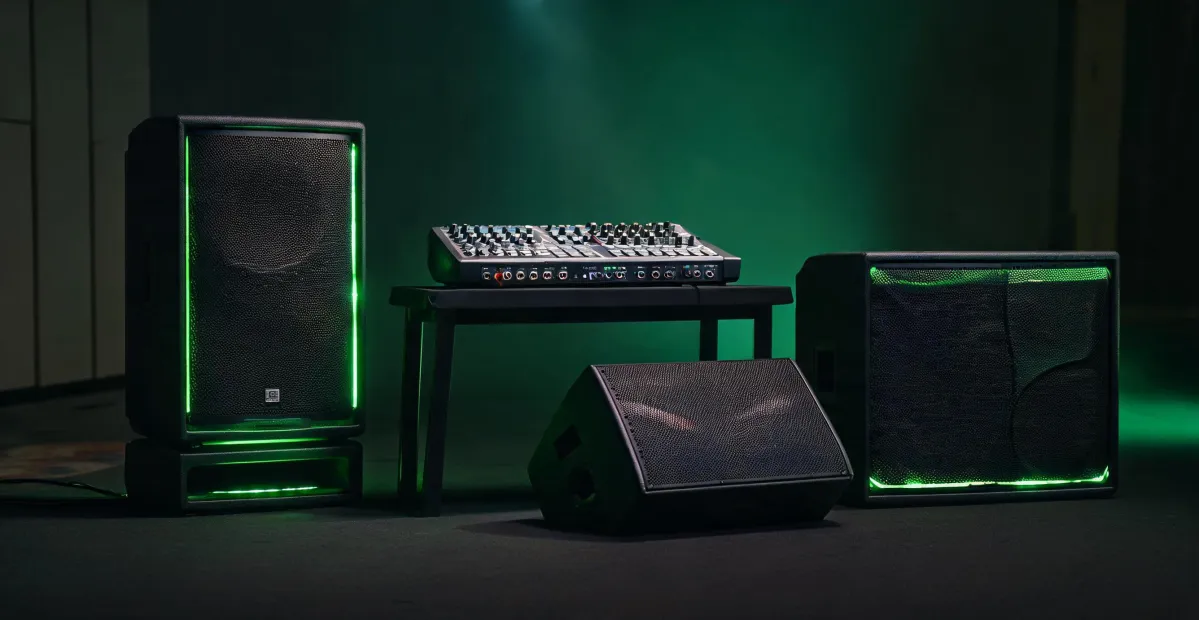
If You're Buying a Used Powered Sub, Read This First
If you're shopping for a used Mackie CR6S-X powered subwoofer (or any powered sub that smells like a deal), here's the conclusion: the price is the least useful number on the listing. I've personally made (and documented) 31 purchasing mistakes totaling roughly $7,900, and almost all of them started with me staring at a low price without calculating what the total project would really cost. After shipping, a bench check, a replacement driver or amp repair, and your own time, a $130 '2 ohms subwoofer' can easily turn into a $290 job. That doesn't mean it's a bad buy. It just means the number you should compare isn't the listing price.
Why I'm the One Asking Annoying Questions
I run a loudspeaker repair MN shop. That's not a flex; it's context. Since 2011, I've fixed powered subs, studio monitors, keyboard amps, and more soundbars than I expected to touch in one lifetime. I keep a checklist on my bench because of a $3,200 mistake that I approved in 2017 while rushing. The checklist is not about being overcautious. It's about not making the same stupid call twice.
In February 2023, I found a used Mackie powered sub for my desk. I knew I should open the cabinet and bench-test the amp before handing over cash, but I thought, 'what are the odds?' The odds caught up with me as soon as it arrived: cracked solder on the amp board, a blown trace, and a driver that had been replaced with the wrong impedance. It looked fine on top. It wasn't. That little project ended up costing $157 in parts and four hours of my Tuesday.
How to Calculate the Real Cost of a Used Sub
Let's define total cost of ownership (TCO), because it sounds like consultant language. Here's the version I actually use when deciding whether to buy a used powered subwoofer:
- Listing price, shipping, and any 'handling' fees
- Bench test or repair estimate
- Replacement parts that aren't available from the local parts house
- Your time to source, ship, and test
- The value of the gig or session that gets canceled if it fails
The last item is the one people ignore. Here's the thing: a sub that fails during a live show costs more than the whole sub. A sub that fails in a home studio costs less. Same speaker, different total cost. That distinction is what separates a reasonable used buy from a false economy.
For people who already have Mackie computer speakers (the CR series), adding the matching powered sub is a natural upgrade. I've installed a few, and the difference is real. But the used market is full of CR-series subs that were sold because the original owner didn't want to pay for a repair. If the seller won't send a video of the power LED, the amp, and a tone sweep, treat that as your answer. If they do, the TCO picture changes a lot.
Now, about '2 ohms subwoofer': that phrase gets misused. Impedance is not a quality rating. It's the load the amp sees. A 2-ohm load makes a plate amp work harder than a 4-ohm load, and the plate amp inside a powered sub was designed for a specific driver. If someone advertises a '2 ohms subwoofer' as if it's an upgrade, you're probably looking at a mismatched replacement driver. Match the original driver's impedance. A used Mackie CR6S-X powered subwoofer should have the driver specs printed on the frame, and the amp should be tested with that load, not a random car-audio sub.
What Budget Soundbar Reviews Actually Tell You
This is also the point where I have to mention the other half of my repair bench: budget audio. I've had customers read Zebronics Juke Bar 3920 wired subwoofer reviews while deciding whether to repair the one they already own. Those reviews tell you a lot about sound character and wiring length. They rarely tell you what driver is inside, whether the amp is separately replaceable, or if the sub will work with another soundbar a few years later. If you're choosing between a used Mackie sub and a new budget soundbar sub, the TCO comparison is different: new consumer gear has a warranty and fewer repair options; used pro gear is more repairable but unproven. Both are valid. Just don't compare them by price tag alone.
One FTC Thing You Should Know
One more reason to be skeptical: according to FTC business guidance (ftc.gov/business-guidance/advertising-marketing), advertising claims have to be truthful and substantiated when a business makes them. A private seller on a marketplace isn't writing a regulated ad, so 'like new' and 'works great' are personal claims, not legal ones. That means your due diligence is the only real protection. Real talk: if you can't test it or get a repair tech to test it, you're not buying a sub—you're buying a repair project. Looking back, I should have asked for a bench photo of the impedance reading before I bought that 2023 sub. At the time, I didn't want to look difficult. That stupid bit of politeness cost me $157.
When I'd Still Buy Used
When would I still buy a used Mackie powered sub? If the seller lets me test it, or agrees to let a repair shop bench-test it, that's the best scenario. If it's for a permanent install where failure is a hassle but not a disaster, then a cheaper project unit makes sense. If it's for a touring rig or rental inventory, I'd rather buy a new or factory-refurbished unit and know the failure risk is lower. There's something satisfying about opening a used CR6S-X and finding a clean original driver and a healthy amp. That does happen. It's just not guaranteed by a low listing price.
So, before you click 'buy it now,' total cost first. Add repair, shipping, time, and the cost of a failure. If the total number still makes sense, then go for it. If it doesn't, the next listing may be the one.

Elise Marceau
Elise Marceau is an LED display and digital-signage systems analyst covering LED video walls, modular screens, transparent LED, control processors, and indoor or outdoor signage. She applies IEC 62368-1 safety principles while comparing pixel pitch, luminance, contrast, refresh rate, colour uniformity, viewing angle, ingress protection, power density, module serviceability, and signal redundancy. Her specification guides help integrators, venue operators, retailers, and procurement teams align viewing distance, ambient light, content format, installation access, electrical load, and lifecycle support.