The $4,500 Mistake That Taught Me to Stop Buying Speakers on Specs Alone
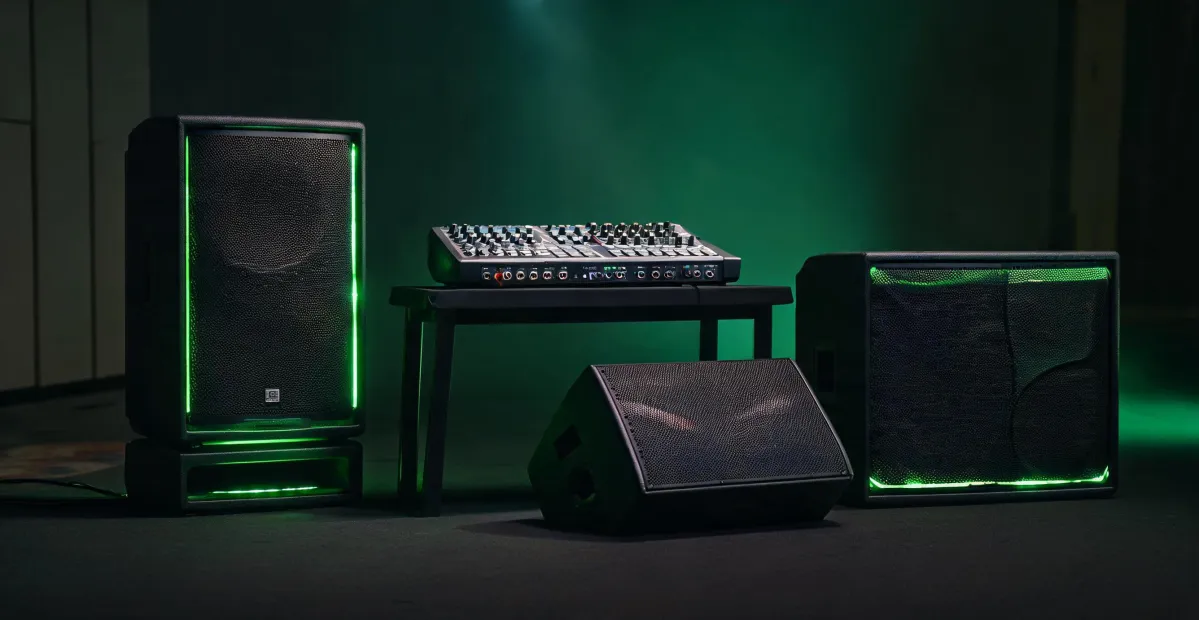
How I ended up with a rack of gear that didn't fit our setup
I'm the guy who signs off on audio equipment for a mid-sized rental company. Over the past six years, I've tracked roughly $180,000 in cumulative spending on PA systems, powered speakers, subwoofers, and all the cables nobody thinks about until they're missing. You'd think after that many invoices, I'd have a flawless process.
You'd be wrong.
Back in Q2 2023, we needed to refresh our inventory of powered loudspeakers for small-to-mid corporate events. I'd been hearing good things about the Mackie Thump212 12" powered loudspeaker — solid reviews, competitive pricing, and our existing Mackie SRM450 v2 units had been workhorses for years. So I figured: Mackie knows what they're doing. Let's buy based on the spec sheet.
That was my first mistake.
The spec sheet trap (and the question nobody asks)
Most buyers focus on SPL ratings and power output — the headline numbers. I'm guilty of this too. The Mackie Thump212 claims 1400W peak power and 122 dB SPL. The SRM450 v2 comes in at 800W and about 126 dB SPL. On paper, the Thump212 looks like a solid upgrade path: more power, newer series, lower price per unit.
But the question everyone asks is: "How loud does it get?" The question they should ask: "How does it integrate with what I already own?"
Here's where my cost-controller brain failed me. I ordered eight Thump212 units based on the numbers. What I didn't check — what I assumed — was that they'd pair seamlessly with our existing setup. We had four SRM450 v2s, a mix of Mackie and third-party subwoofers, and a digital mixer that I'd spec'd after months of vendor comparison. The loudspeaker components diagram looked clean in my head.
Reality was messier.
When I say 'compatible' and they hear 'plug and play'
The Thump212 arrived. We unboxed them, ran audio through them in our warehouse — they sounded fine on their own. Good, even. But when we tried to integrate them with the SRM450 v2 units in a multi-speaker configuration, we hit a wall.
The voicing was different. The crossover points didn't match neatly with our existing subwoofers. The EQ curve on the Thump212's DSP was optimized for a different sound profile — brighter, more aggressive — compared to the warmer tone of the SRM450 v2s. In a side-by-side A/B test, the difference was obvious. In a mixed setup at an actual event? It sounded disjointed. One client actually asked, "Did you change your speakers? Something sounds off."
That's when I realized: I said "compatible series" in my purchase justification. The procurement system heard "same brand, must work together." The reality? Same brand doesn't mean same acoustic signature. Especially not across different product generations.
The most frustrating part? I'd made exactly this mistake four years earlier with a different vendor — bought a "new generation" of powered speakers assuming backward compatibility, and ended up with gear that didn't match. You'd think I'd learn.
The $4,500 realization
I had to decide: either run the Thump212s as standalone units at smaller gigs (wasting the investment in multi-speaker capacity), or invest in additional DSP and crossover hardware to bridge the gap. Neither option was cheap. I calculated the total cost of making them work: roughly $4,500 in additional processing gear, cables, and labor for reconfiguration. That's not counting the time wasted debugging on the day of an event.
I ended up keeping the Thump212s for smaller-scale solo use cases — think DJ sets and solo speech events — and reserving the SRM450 v2s for our multi-speaker corporate setups. That's not a terrible outcome, but it's not the flexible inventory I'd planned. I'd created a segmentation I didn't want, based on a spec-sheet assumption that turned out to be incomplete.
To be fair, the Thump212 is a fine speaker for its price point — I've recommended it since for clients who need a portable, battery-powered option like the Thump Go for outdoor gigs. But for someone like me managing a rental inventory that needs to mix and match across events? The integration cost caught me.
What I check now before buying any loudspeaker
Since that Q2 2023 experiment, I've built a few rules into my procurement process. They're not complicated, but they're the kind of thing you only learn after you've been burned.
- Voicing comparison, not just specs. I now request a listening test with our existing gear before committing to a bulk order. If the vendor says "they're from the same brand, they'll match," I ask for demo units. If they can't provide them, I'm skeptical.
- Cross-generation caution. The SRM450 v2 and Thump212 might share a logo, but they were designed by different engineering teams, at different times, for different market segments. The v2 is a classic workhorse; the Thump series is a value-engineered line. Knowing where each sits in the product hierarchy matters.
- Total system cost, not unit price. The Thump212 unit price was attractive. But when adding DSP hardware, crossover adjustments, and the labor of reconfiguring our setup, the total cost of integration was 30% higher than expected. Now I calculate TCO including integration time, not just the line item.
- Fallback inventory planning. If the units don't integrate as expected, what's Plan B? I budget at least 15% flexibility for situations where a speaker isn't the perfect fit — whether that means using it in a solo role or selling it off and taking a small loss.
I'm not saying the Mackie Thump212 is a bad product. For a dragon professional speaker — someone who needs a portable, battery-powered PA for solo performances or outdoor events — it's a solid choice. The Pyle PTAU23 mini stereo power amplifier is a different category entirely, and I'd only recommend that for ultra-budget, low-power setups where audio quality isn't the priority. Different tools for different jobs.
But if you're managing an inventory of powered speakers for a rental company, a church, or a venue with multiple configurations? Don't take compatibility for granted. Test before you buy. And if you can't test, at least have a Plan B for the speakers that don't quite fit.
That's the lesson I paid $4,500 to learn. The vendor who says "this series might have a different voicing than your existing units — here's how to test it" earns my trust a lot faster than the one who says "they're both Mackie, they'll be fine."

Elise Marceau
Elise Marceau is an LED display and digital-signage systems analyst covering LED video walls, modular screens, transparent LED, control processors, and indoor or outdoor signage. She applies IEC 62368-1 safety principles while comparing pixel pitch, luminance, contrast, refresh rate, colour uniformity, viewing angle, ingress protection, power density, module serviceability, and signal redundancy. Her specification guides help integrators, venue operators, retailers, and procurement teams align viewing distance, ambient light, content format, installation access, electrical load, and lifecycle support.