How I Turned a 48-Hour Panic into a Flawless A/V Setup: The Night the Mackie SRM-Flex Saved a Conference
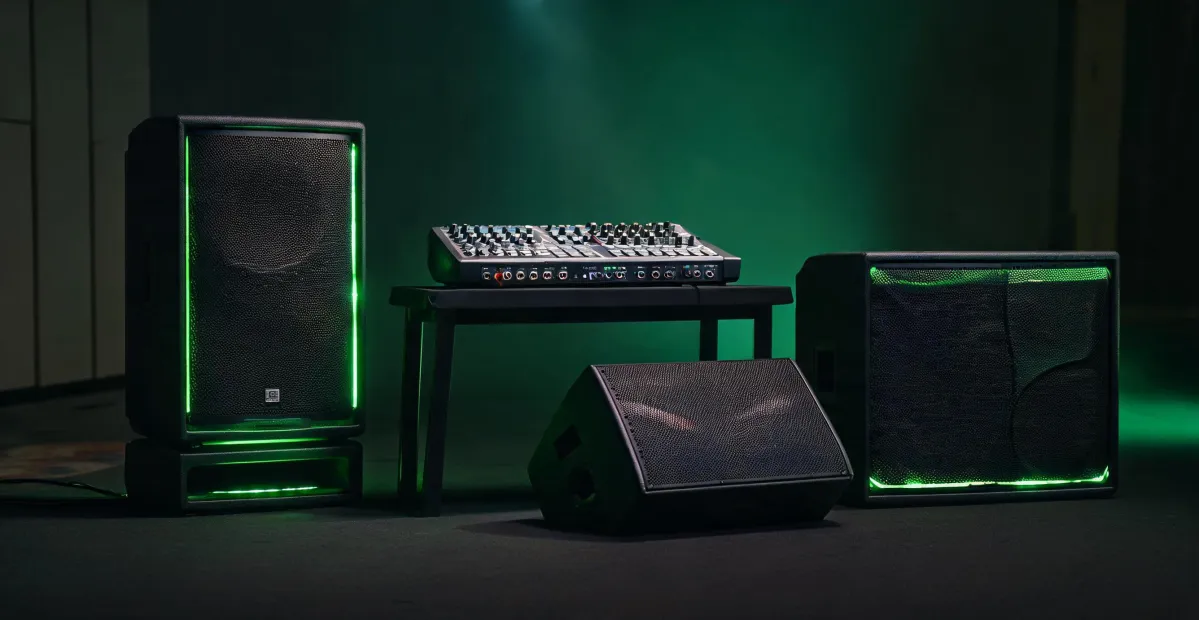
Ever have one of those calls where the silence on the other end is louder than a kick drum? I got one in late March 2024. A client – let's call him Derek – had been hired to do sound for a big corporate event in downtown Austin. Think keynote speeches, a live band, and a cocktail hour with background music. He promised a 'full, professional PA system' to the event planners.
Derek called me at 5:30 PM on a Thursday. The show was Saturday morning. His gear – a mishmash of passive speakers and an old, heavy amp rack – had just given up. The crossover on his main amp was fried. He had no backup. He was, to put it mildly, losing his mind.
The 5:30 PM Crisis Call
Derek had a typical problem: gear that looks okay on paper but isn't practical for a quick setup. He'd spent $3,200 on a passive system a few years back. Great for a permanent install, terrible for a rental. You don't want cables running across a ballroom floor or an amp rack that needs two people to lift.
He needed a powered system. Fast. His budget was around $1,500. He asked me, 'Can you get me anything that works in two days?'
My experience is based on about 400 rental and live-sound projects over the last six years. It's mostly corporate events, weddings, and small-venue shows. I can't speak to how this applies to massive festivals or touring – that's a different world. But for a single-room conference? I knew what we needed: a portable column PA.
Why We Didn't Go with Standard Speakers
Derek's first instinct was to grab a pair of standard powered speakers on stands. That's the old-school answer. But I didn't want to deal with speaker stands, power cables to each speaker, and the visual clutter. The event planner was very particular about the room looking clean. The standard route just introduces too many points of failure (ug).
Here's something vendors won't tell you: when you buy a '500W' speaker, that's often peak power. The continuous RMS rating – what matters for clean, unclipped sound – might be half that. I've seen buyers focus on the big number and completely miss the real world performance.
What most people don't realize is that 'standard loudspeaker measurements' are done in ideal lab conditions. A speaker that specs out at 127 dB SPL peak in a controlled environment might be 10 dB quieter in a room full of 200 people. The question everyone asks is, 'How many watts is it?'. The question they should ask is, 'What's the horizontal dispersion in the 2 kHz to 5 kHz range?'. That's where speech intelligibility lives.
According to industry practices (which follow AES standards for rated power), a continuous RMS rating is a more reliable indicator of performance than a peak number. A 500W peak speaker might only handle 250W continuous. This is a critical distinction that is often glossed over in marketing materials.
The Solution: The Mackie SRM-Flex – And Why It Worked
We needed something with a subwoofer for the band, clear mids for the speaker, and an all-in-one design. I'd seen the Mackie SRM-Flex portable column PA system at a trade show a few months earlier. It seemed perfect for this situation.
The system comes as a box that houses a powered sub (with wheels and a handle – thank goodness) and a column array that stores inside the sub. Setup takes one person about 60 seconds. No stands, no cables across the floor, just a power cable and an XLR from the mic.
In my role coordinating equipment for these kinds of rush orders, I've learned that flexibility is king. The SRM-Flex has three different configurations: integrated (pole built into the sub), vertical (column on top of sub), and monitor (laying the sub on its side with the column at an angle). We set it up in the vertical mode for the main room. It was tall enough to project over the audience but didn't block anyone's view.
For the cocktail hour, Derek needed background music in the foyer. Instead of renting a whole second system, we used the built-in Bluetooth on the SRM-Flex to stream from his laptop. He didn't have to buy an extra mixer or run long cables because the column has its own simple mixer built in. (I should add that this isn't ideal for a big band; it's more of a utility input for a microphone or a laptop, but it works perfectly for that scenario.)
The Subwoofer Lesson: 2025 F-150 or Not?
We chose the SRM-Flex because of the built-in 12-inch subwoofer. Derek's client wanted the band to have some punch. The sub delivers enough low-end for a small kick drum and bass without needing a second box. I've seen some people ask if you can wire this system into a car, specifically a 2025 F-150 subwoofer setup. (The answer is no – it's a 120V pro-audio box, not a 12V automotive one.) It's a silly question, but it shows that people get confused about what gear is for live sound.
Setup, Sound Check, and The Moment of Truth
Derek picked up the system at 10 AM on Friday. The only change was that we had to pay $75 for expedited shipping from the distributor (on top of the $1,400 base cost). Dodged a bullet? We were 35 minutes away from ordering a different system that would have taken 3 days to arrive, which would have meant missing the Saturday show completely.
He set it up in the ballroom by 2 PM. Sound check was at 3 PM. The keynote speaker's voice was clear and present. The band – a three-piece jazz combo – sounded tight. The subwoofer didn't muddy up the room. We adjusted the built-in EQ on the column (a simple bass, mid, treble control) to account for the hard tile floors. No external processing needed.
The event went off without a hitch. Derek got a standing ovation from the event planner (finally!).
Lessons Learned for the Audio Buyer
So, did we just get lucky? No. We followed a few principles that I've learned the hard way:
- Don't trust the peak wattage. Look for continuous RMS.
- Column arrays are real. They solve the problems of coverage and setup time that standard speakers can't fix.
- Rent or buy for the setup time. A speaker that takes 10 minutes to set up is better than a speaker that sounds 5% better but takes 45 minutes.
I'm a fan of the Mackie speakers powered line. I've used the Thump series for smaller gigs and the SRM series for larger rooms. They are reliable and they just work. If you are an AV installer or a rental house, the SRM-Flex is a no-brainer for small-to-medium corporate work.
An informed customer asks better questions and makes faster decisions. I'd rather spend 10 minutes explaining the difference between a column array and a standard speaker than deal with mismatched expectations later. That's how you get repeat business.
Next time you're staring down a deadline with a broken amp, remember: the solution isn't always the loudest or the cheapest. It's the one you can deploy the fastest.

Elise Marceau
Elise Marceau is an LED display and digital-signage systems analyst covering LED video walls, modular screens, transparent LED, control processors, and indoor or outdoor signage. She applies IEC 62368-1 safety principles while comparing pixel pitch, luminance, contrast, refresh rate, colour uniformity, viewing angle, ingress protection, power density, module serviceability, and signal redundancy. Her specification guides help integrators, venue operators, retailers, and procurement teams align viewing distance, ambient light, content format, installation access, electrical load, and lifecycle support.