The 36-Hour Fix: Why I Keep Mackie 12-Inch Powered Speakers in the Rental Van
It Started With a Silent Speaker
In March 2024, a client called at 7:13 on a Friday morning. Load-in was the next day. The festival had just realized they needed a second PA for a side stage, and the volunteer who said he'd bring speakers had backed out. Normal turnaround for a gig like this is at least two business days—well, two business days if you count the paperwork. We had 36 hours, a truck that wasn't scheduled until Monday, and one of our main cabinets sitting silent in the warehouse.
I've been in the rental game for a while. In my role coordinating audio gear for festivals and corporate events, I've handled 200-plus rush orders. That number isn't a flex; it's what happens when event planners discover on Tuesday that the event is on Friday. Missing a deadline has teeth. One delay cost a client their event placement. Another contract had a $50,000 penalty clause attached to it. So when I say I didn't panic, I mean I didn't panic out loud.
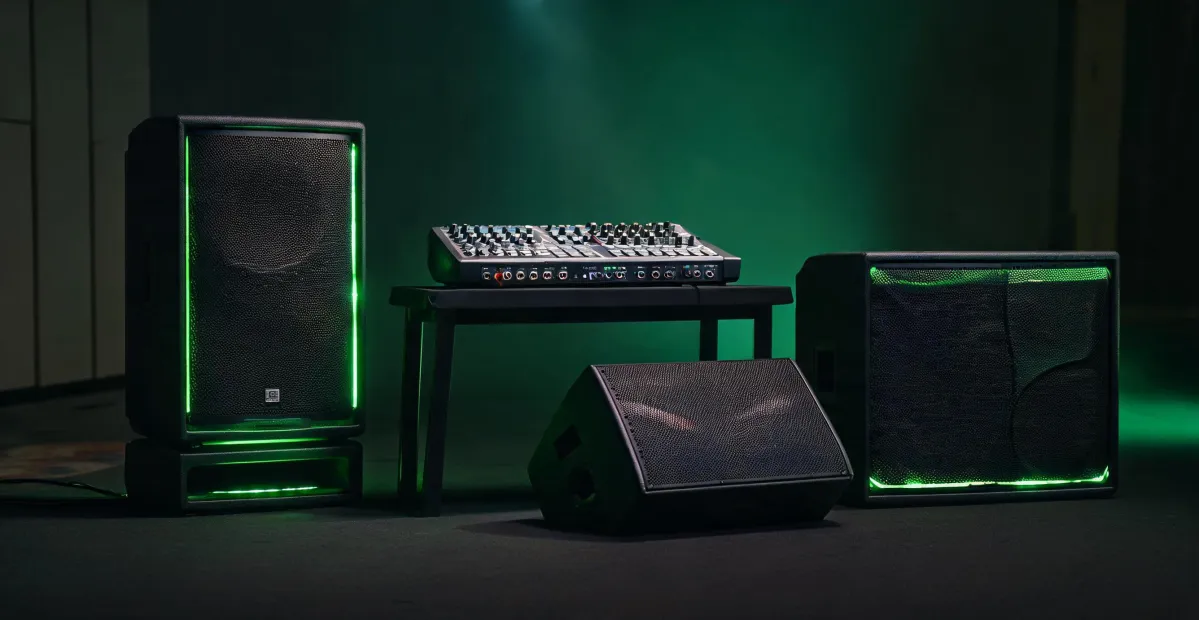
The silent cabinet was from a pair of Mackie HD1221 2-way powered loudspeakers. The other speaker in the pair was fine. There was another brand sitting next to it in the rack, but this wasn't that brand's fault. It's just a bad idea to mix and match a side stage when you can avoid it. Different voicing, different gain structure, different phase relationships—you don't want to discover that during a 20-minute soundcheck.
I swapped cables. I bypassed the mixer. I plugged the same cable into the working cabinet, and it passed signal. The power light on the dead one said it was alive, but the speaker wasn't doing anything. Nothing smelled hot. That narrowed it down to the amplifier module or the DSP board.
The Technical Parts, Minus the Marketing
The Mackie HD1221 2-way powered loudspeaker is a class-D powered cabinet with a switch-mode power supply. I know that because I've read the manual, and also because I've opened enough of them to appreciate a clean layout. A switch-mode supply handles voltage dips better than old linear supplies. That matters on generator power, long extension cables, and festival stages where three bands share one circuit.
Some product pages use phrases like constant power amplifier, and it sounds good in a bullet point. In practice, constant power amplifier behavior means the amp tries to maintain output as the load and supply voltage move around. It is not the same thing as RF power amplifier characterization, where engineers map power gain, linearity, and efficiency across frequency and load conditions. But both concepts point to the same lesson: the number on the box is a start, not the whole story. You have to know how a thing behaves under stress. Rental gear lives under stress.
I never found out exactly what killed that HD1221. The repair quote came back with PSU fault and a number that made me wince. Maybe I should have opened the switch-mode supply myself. But when you're 36 hours out from load-in, your priority isn't gaining knowledge. It's getting a working speaker in the van.
The Replacement Run
Here's where the story turns. The old approach would have been to drive around town, knock on shop doors, and hope somebody had a loaner. That local-is-always-faster idea comes from a time before courier tracking and phone cameras. Today, a well-organized dealer 90 miles away can beat a disorganized store across town.
I called a dealer in the next state. They had exactly one Mackie HD1221 2-way powered loudspeaker in stock, still in the box. I paid over the phone and arranged same-day courier delivery. I want to say the courier fee was $85, but don't quote me on that—it might have been $90. Either way, it was less than the side-stage rental I would have lost and a lot less than the client's confidence in us.
People often think rush orders cost more because the work is harder. That's sometimes true. But the real reason is unpredictability. A rush job interrupts the flow of other work, ties up a vehicle, forces someone to reschedule a normal day. The premium is for the option to break the plan. When the option costs $90 and the alternative is a failed event, you pay it without arguing.
Meanwhile, a Word About the Desktop Subwoofer
While I waited for the courier, one of the festival volunteers asked whether a Vivitar desktop subwoofer could help the side stage's kick drum. Someone had found it in an office. I tried not to laugh.
A Vivitar desktop subwoofer—or any desktop subwoofer—is designed for near-field listening in a small room. It is not designed to move air in front of an outdoor stage. It would have clipped in the first five minutes, added zero usable low end, and maybe damaged itself. That's not a knock on the product. It's a size and physics issue. If you need low end for a live band, you need a PA sub. The word subwoofer is doing a lot of work, and not all subwoofers do the same job.
It also reminded me why I keep Mackie 12-inch powered speakers in the core inventory. A 12-inch PA cabinet is the Goldilocks size for a lot of events: big enough to sit under a small band, small enough to roll on a cart, familiar enough that any technician can set it up. When a client needs something fast, a known quantity beats an interesting experiment every time.
Delivered, Barely, and That's the Point
The courier arrived at 4:20 p.m., which I found funny when I looked at the clock later. We checked the replacement, set levels, labeled the case, and loaded the van. The side stage sounded fine. The client never knew how close it came to being a disaster. That's okay. My job is to make emergencies boring.
After that weekend, I made two changes. First, I standardized more of the rental stock on Mackie 12-inch powered speakers. I'm not going to tell you no other brand makes good gear—that's obviously false. But for a small rental operation, having one consistent family of cabinets means spare parts, patch logistics, and paperwork are all the same. That's efficiency. It's not glamorous, but it cut our turnaround on most gigs from a full day to a few hours.
Second, I stopped pretending I would repair every speaker on the spot. That might sound obvious, but it's a trap. Years ago, I spent two hours with a multimeter trying to resurrect an amplifier on the morning of a wedding. I should have called for a replacement in the first five minutes. For emergencies, time is the product. Electronics repair is a workshop activity.
What I'd Do Differently
My experience is based on mid-size events: outdoor festivals, corporate kickoffs, the occasional wedding. Maybe 200 gigs over a decade. If you're running a flown line array in an arena, your inventory decisions are different. I can't speak to that world.
But if you're a rental company, a sound engineer, or an event person one speaker away from a panic attack, here's what I'd suggest:
Keep one spare 12-inch powered cabinet for every two that go out. Know which dealers and courier services will answer a Saturday-afternoon call before you need them. And when someone asks whether a desktop subwoofer will fill a field, answer kindly but firmly: no.
That last one is free.
I still don't know what killed that HD1221. I probably never will. But the replacement was a straight swap, the show happened, and the only scoreboard that matters in this business is whether the next event goes on without the audience noticing anything went wrong.

Elise Marceau
Elise Marceau is an LED display and digital-signage systems analyst covering LED video walls, modular screens, transparent LED, control processors, and indoor or outdoor signage. She applies IEC 62368-1 safety principles while comparing pixel pitch, luminance, contrast, refresh rate, colour uniformity, viewing angle, ingress protection, power density, module serviceability, and signal redundancy. Her specification guides help integrators, venue operators, retailers, and procurement teams align viewing distance, ambient light, content format, installation access, electrical load, and lifecycle support.