Mackie vs. Budget Audio Gear: How to Choose the Right Scenario for You
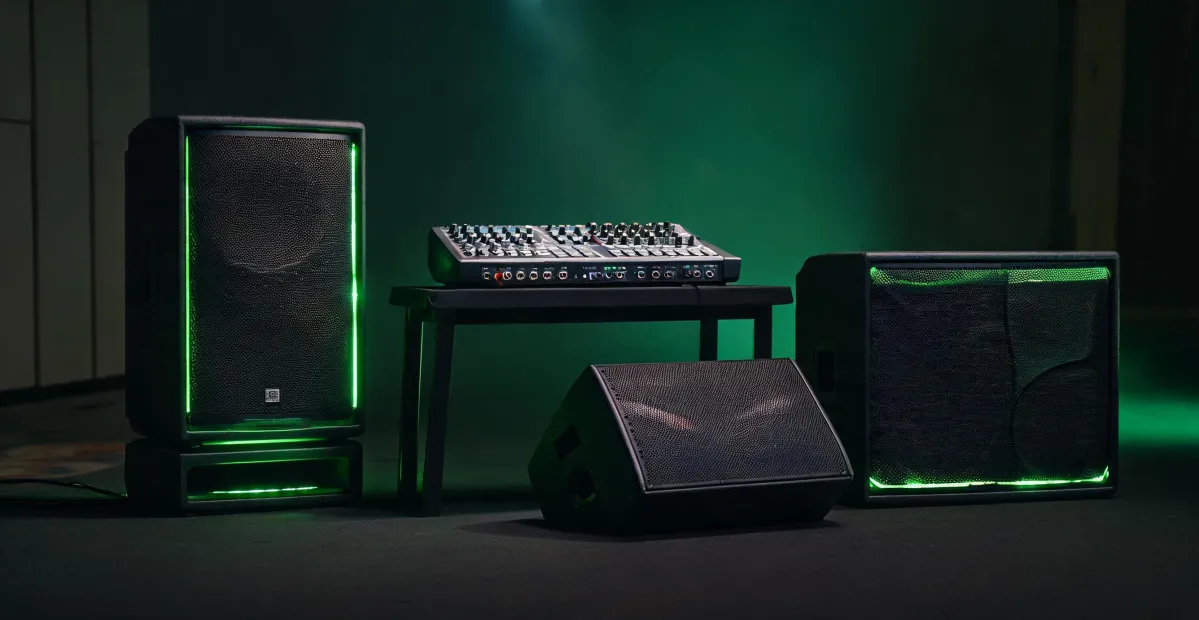
Search "mackie" and you'll find three different buyers hiding behind the same keyword. A songwriter compares small studio monitors. A mobile DJ prices Mackie 12 powered speakers. A home recordist types "audio interface or mixer for home studio" into a search bar at 11 pm, hoping to learn what to plug a microphone into. Those are not versions of the same question. They are separate scenarios and they deserve separate answers.
For reference: I am a quality and compliance manager at a regional pro-audio distributor. I unbox, test, and tag roughly 300 units a year—mixers, powered speakers, interfaces, studio monitors. In Q1 2024 about 6% of our inbound deliveries got flagged and sent back for something: loose jacks, cosmetic damage, intermittent power. I also see what survives multi-year rental abuse and what gets returned by someone who bought the wrong class of gear. The question "Mackie or the cheaper option?" lands on my desk weekly.
When I first took this job I assumed the recognizable brand was always the safer recommendation. A logo felt like insurance. Then a year of return reports changed my mind. A brand name matters only after the equipment matches the job it does every week. The lowest-priced option is the smart purchase in one scenario and the most expensive mistake in another. Not ideal for people who want a one-line answer, but that's the real world.
Scenario 1: The Home Studio and Podcast Rig
Let's start with the "Mackie studio speakers" search, because that one is usually from someone sitting at a desk with a microphone and a laptop. They want a compact pair of monitors so they don't have to mix on headphones forever. The CR-Series and MR-Series are the usual candidates. A compact pair of CR-Series monitors typically lands somewhere in the $100–$200 range in the U.S.; the MR-Series sits a step higher. Those were street-price references from January 2025—verify current pricing at mackie.com before ordering.
Then the second part of the question arrives: audio interface or mixer for home studio? The conventional answer is "buy an audio interface and mix inside the computer." That advice is right for a solo musician recording one or two sources at a time. The preamps in a small interface are quiet, the software is simple, and there is no temptation to EQ while recording.
It falls apart when three or more people need to talk into microphones at once, or when you have hardware synths and outboard effects that need routing. A USB mixer becomes a more useful centerpiece. Set a fader for each guest, send one USB feed to the computer, and keep physical control over headphone levels. This is a case where the popular "interface first" advice sends people in the wrong direction.
Mackie's ProFX mixers and the DLZ Creator sit on that side of the line. The ProFX models include a USB interface, so "mixer or interface" is not always an either/or. For a solo podcaster, a two-input interface is enough. For a table with four or five hosts, upgrade the number of microphone preamps before you upgrade anything else.
Where does budget gear fit? Honestly, the little "Depusheng audio mixer" listings for under $100 have their place. If you need a basic submixer for a classroom discussion system, fine. If you are earning money with the recording, do not treat a $70 consumer board as professional studio infrastructure. Low-cost mixers use PC-mount jacks and lower-headroom preamps; they are not designed for daily cable plugging and unplugging. You might not notice it at background-music level. Crank the gain for a voiceover or a live snippet and the noise floor shows up.
(Should mention: no monitor fixes a bad-sounding room. If your desk faces a bare wall in a tile-floor room, spend $100 on acoustic panels before shopping higher up the monitor range.)
Scenario 2: Bands, DJs, and Weekend Gigs
"Mackie 12 powered speakers" is usually typed by a musician who already figured out that one 12-inch speaker with an amplifier built in is the most practical building block in small live sound. Two of them on poles cover vocals, guitar, and keyboards for a bar crowd. Drums and bass still need subwoofer support. I see more returns from people who skip the sub than from people who buy a weak top. The box is not weak; it is being asked to do a four-way job with two inputs.
If that sounds like your band or DJ business, I would put Mackie's Thump 12 class or SRM 212 class products on the list. One more thing before you compare: download loudspeaker spec sheets from the manufacturer and look for maximum continuous SPL and weight. The speaker claiming the biggest peak wattage number is rarely the loudest in a real room. Amplifier marketing tells you very little about how the limiter behaves when someone pushes the mixer into the red.
Pricing for 12-inch powered speakers has moved around a lot. As of January 2025, U.S. street quotes for the Thump class sat somewhere in the $349–$449 area—verify current pricing. A cheaper box can look identical on paper, but the difference shows up in limiter behavior and in service support when something breaks. A limiter that lets a driver distort is one of the fastest ways to kill a voice coil.
Scenario 3: Venues, Schools, and Rental Inventories
If the gear sits on a cart or in a back room and gets operated by whoever is available that week, your buying criteria should change. That $70 saving per speaker disappears the first time you pay $150 in shipping and service to repair one unit two weeks before a booked event.
In the rental part of our business, consistency matters as much as sound quality. Our techs prefer gear that behaves the same way across multiple units, has available replacement drivers, and has a warranty process that does not require a lawyer. Mackie's broad range matters here too. If a mixer goes down, another Mackie unit on the shelf speaks the same layout language. That might sound minor, but for a crew setting up three stages on a Saturday morning, it saves real time.
Buying by lowest quote is how schools and small churches end up with equipment that works for one season and then cannot be repaired. A recognizable brand is not always the answer, but a supportable product usually is. Check whether replacement drivers, power supplies, and manuals are actually available before you commit.
Scenario 4: When Buying Budget Gear Is Genuinely Smarter
Now for the part that surprises people: there are situations where I would tell you not to buy Mackie.
If your rig gets used six times a year, stays in your house, and no paying audience depends on it, the cheap option is often the rational option. The value of a product is cost per working hour, not price at the register. A $70 mixer that lasts ten years at ten hours per year has delivered its money's worth. The same mixer on a forty-show annual schedule would be a poor value at any price because the downtime cost is bigger.
This is where those ultra-low-price listings actually make sense. For a family party, a classroom activity, or a first rehearsal space, buy the modest mixer, buy decent cables, and feel good about the money you saved. You are not a fool for skipping the professional brand in that situation. You are a sensible buyer who matched the tool to the duty cycle.
How to Tell Which Scenario You Are In
Here is the practical checklist I use with our own customers. Answer three questions honestly.
First, would a failure cancel a paid event? If yes, you are in Scenario 2 or 3, and budget gear is a gamble. Second, does the equipment stay in one room and never move? If yes, you are in Scenario 1, and your money should go into monitors, acoustics, and preamp quality rather than roadworthy construction. Third, is the gear handled by multiple people, including volunteers or weekend staff? If yes, buy the product with consistent controls, published specs, and real service support—that is Scenario 3.
If you answered no to all three, Scenario 4 is the honest recommendation. Spend less, keep the difference for your next upgrade, and do not let anyone shame you into buying ruggedness you do not need.
Mackie gear earns its price where consistency, serviceability, and reliability matter: a studio speaker that stays accurate at low volume for years, a 12-inch powered speaker that still has a available drivers after a long summer, a USB mixer whose preamps stay quiet when the gain is up. If that describes your situation, it is a fair use of your budget. If not, save the money. The correct answer was never just the logo on the box.

Elise Marceau
Elise Marceau is an LED display and digital-signage systems analyst covering LED video walls, modular screens, transparent LED, control processors, and indoor or outdoor signage. She applies IEC 62368-1 safety principles while comparing pixel pitch, luminance, contrast, refresh rate, colour uniformity, viewing angle, ingress protection, power density, module serviceability, and signal redundancy. Her specification guides help integrators, venue operators, retailers, and procurement teams align viewing distance, ambient light, content format, installation access, electrical load, and lifecycle support.