Mackie SRM-Flex Price and Thump212 Reviews: An Event-Rental FAQ
-
Is the Mackie SRM-Flex worth the price over the Thump212?
-
What do Mackie Thump212 powered loudspeaker reviews actually say?
-
When does a battery-powered speaker save an event?
-
Why do Tannoy Cheviot, DML, and Crown MA-9000i show up in Mackie searches?
-
Which Mackie speaker should a small rental company buy?
-
How much should you trust online Mackie prices in 2025?
I coordinate equipment for a regional production company. In six years, I've handled more than 40 rush orders—same-day turnarounds, 36-hour festival setups, one wedding where the band's amp died 90 minutes before the ceremony. This FAQ answers the questions I hear from rental clients and small-venue owners. No long intro. Here's the list.
- Is the Mackie SRM-Flex worth the price over the Thump212?
- What do Mackie Thump212 powered loudspeaker reviews actually say?
- When does a battery-powered speaker save an event?
- Why do Tannoy Cheviot, DML, and Crown MA-9000i show up in Mackie searches?
- Which Mackie speaker should a small rental company buy?
- How much should you trust online Mackie prices in 2025?
Is the Mackie SRM-Flex worth the price over the Thump212?
Yes, if you need the battery and the built-in mixer. No, if you already have power at every gig.
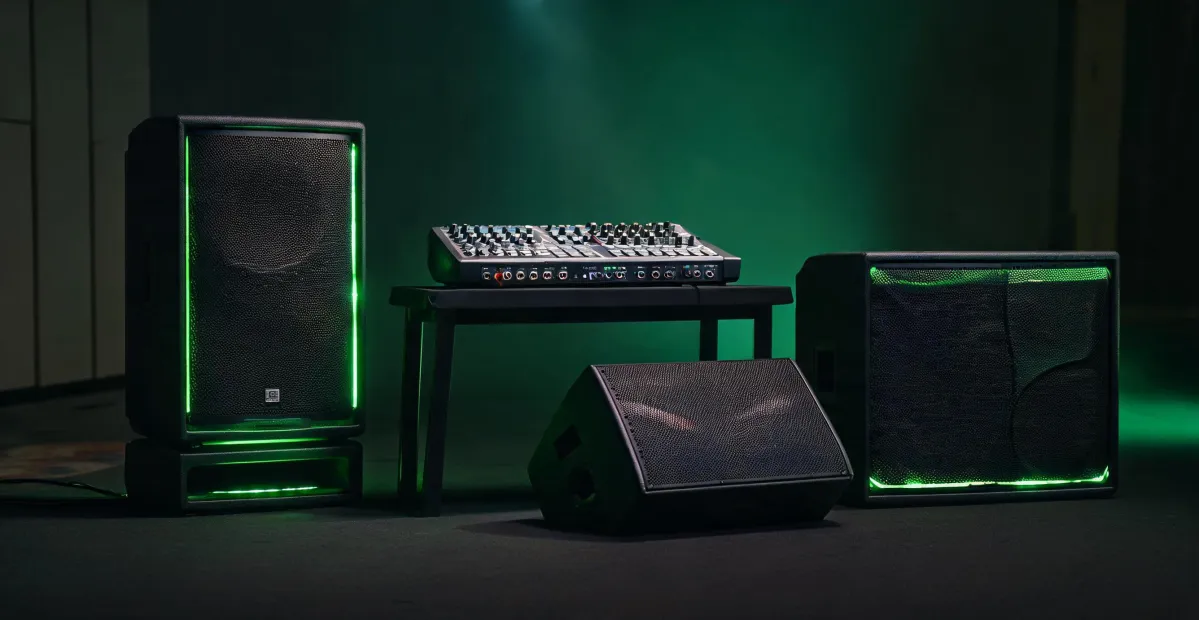
If you're searching for the Mackie SRM-Flex price specifically, the short answer is: around $1,300–$1,500 based on publicly listed prices at Sweetwater, Guitar Center, and B&H in April 2025. A Mackie Thump212 is closer to $400–$500 per speaker. That's a real jump. What you're paying for is a self-contained PA: the SRM-Flex has a battery, Bluetooth, a small mixer, and effects built into one box. It's not just a speaker; it's a small PA system with no power cable.
For a rental company like ours, that makes the difference between saying yes to a last-minute job and saying sorry, there's no power on site. I've had clients ask if they can run a Thump212 off a power bank. They can't, not reliably. The SRM-Flex can. At least, that's been my experience with battery-powered PA in the field.
What do Mackie Thump212 powered loudspeaker reviews actually say?
The Thump212 isn't a studio monitor, and it's not trying to be. In reviews I read and in the 30+ Thump-series units we've rented out, the same patterns show up.
What owners like: It's loud enough for a small club, a school gym, or a coffeehouse. It's lighter than a lot of 12-inch powered speakers. And it's priced so that a small rental house can keep spares without going broke.
What reviewers complain about: The highs can get harsh when you push it hard. The cabinet feels more budget than premium. And the peak wattage number tells you less about clean headroom than you'd hope. That's not a Mackie flaw; it's the trade-off at this price tier.
Last quarter we sent out 18 Thump212s for business events and acoustic gigs. I heard exactly two complaints, both from a band that ran them past the point where I'd normally put them on a sub. So my answer to 'are they reliable?' is: yes, if you understand what they're built for. They're workhorses, not exotic racehorses.
When does a battery-powered speaker save an event?
From the outside, a powered speaker looks like a box with a handle. The reality is the battery changes the whole job site. It saved ours in March 2024. A client called at 9 PM, 36 hours before a street festival. Their original sound provider had canceled, and they needed sound for a small stage in a park where the only power was a food truck genny that was already overloaded.
We showed up with an SRM-Flex on a pole, a wireless mic, and a laptop. Setup took about 15 minutes. The 'stage' was a flatbed trailer. No generator, no extension cable, no ground loop. The event started on time. If we had sent a Thump212, we would have needed to find a generator or a power drop, and at that hour, neither was happening.
So glad we had the SRM-Flex in the van. We were one phone call away from telling the client it couldn't be done. We also learned this the hard way: in 2023, we sent two Thump212s to a theater lobby event, and the only outlet was behind the bar. We spent 40 minutes with an extension cord disaster. That's when we started asking 'where's the power?' before any quote.
Why do Tannoy Cheviot, DML, and Crown MA-9000i show up in Mackie searches?
I get asked this a lot. Searches for 'loudspeaker' are messy because there are several completely different product categories under the same word.
- Tannoy Cheviot loudspeaker is a vintage passive hi-fi speaker from the 1970s. I want to say it first appeared around 1976, but don't quote me on the exact year. It's a different universe from a modern powered PA speaker.
- DML loudspeaker stands for distributed mode loudspeaker. Instead of a cone moving like a piston, a flat panel radiates sound through distributed resonances. It's an interesting technology for hidden or architectural audio, but it is not designed for high-SPL live events.
- Crown MA-9000i power amplifier is a high-powered rack amplifier from Crown's professional line. It's used to drive passive loudspeaker systems. It solves a different problem than a self-contained powered speaker. If you're comparing a Crown amp plus passive speakers to a Mackie SRM-Flex, you're comparing two different rigs.
So if your search started with 'Mackie' and these names popped up, you can ignore them for a portable PA decision. And if you're looking for a Tannoy Cheviot or a Crown MA-9000i, you are in a completely different shopping category.
Which Mackie speaker should a small rental company buy?
If you can only buy one model, I'd start with the Thump212. It gives you a powered speaker that works with an analog mixer, takes up less budget, and returns faster on rental income. For most small events, two Thump212s plus a used subwoofer cover a lot of gigs.
Add an SRM-Flex when events are outdoor, multi-location, or power-unknown. The battery is not a gimmick; it changes how you plan a site visit. I'd rather spend 10 minutes explaining battery limits to a client than watch them set up a powered speaker next to a wet generator.
Based on our internal data from 40+ rush orders, the most common late-night request is 'can it work without power?' The second most common is 'how fast can you get it here?' The SRM-Flex handles the first. A good relationship with a local courier handles the second.
How much should you trust online Mackie prices in 2025?
Public online prices are a starting point, not a promise. Mackie dealer pricing uses MAP (minimum advertised price), so legitimate dealers tend to land within the same range. In April 2025, I checked SRM-Flex listings at top US retailers and saw consistent street prices around $1,300–$1,500. The Thump212 was around $400–$500. Those numbers match what I'd expect to pay before tax and shipping.
The bigger question is what happens after you buy. If a unit fails the night before a paid gig, does the vendor answer the phone? I've paid $80 more for gear from a dealer who would loan us a demo unit in a pinch. That is not a Mackie warranty issue; it's a relationship question. In my role coordinating gear for events, that support is worth more than the $80.
If a price seems too low, ask whether the seller is an authorized dealer. If I remember correctly, Mackie's warranty doesn't automatically cover gray-market imports, but don't quote me on that. Verify before you click.

Elise Marceau
Elise Marceau is an LED display and digital-signage systems analyst covering LED video walls, modular screens, transparent LED, control processors, and indoor or outdoor signage. She applies IEC 62368-1 safety principles while comparing pixel pitch, luminance, contrast, refresh rate, colour uniformity, viewing angle, ingress protection, power density, module serviceability, and signal redundancy. Her specification guides help integrators, venue operators, retailers, and procurement teams align viewing distance, ambient light, content format, installation access, electrical load, and lifecycle support.