Why Mackie Is Your Best Bet for Portable PA — But Not for Everything
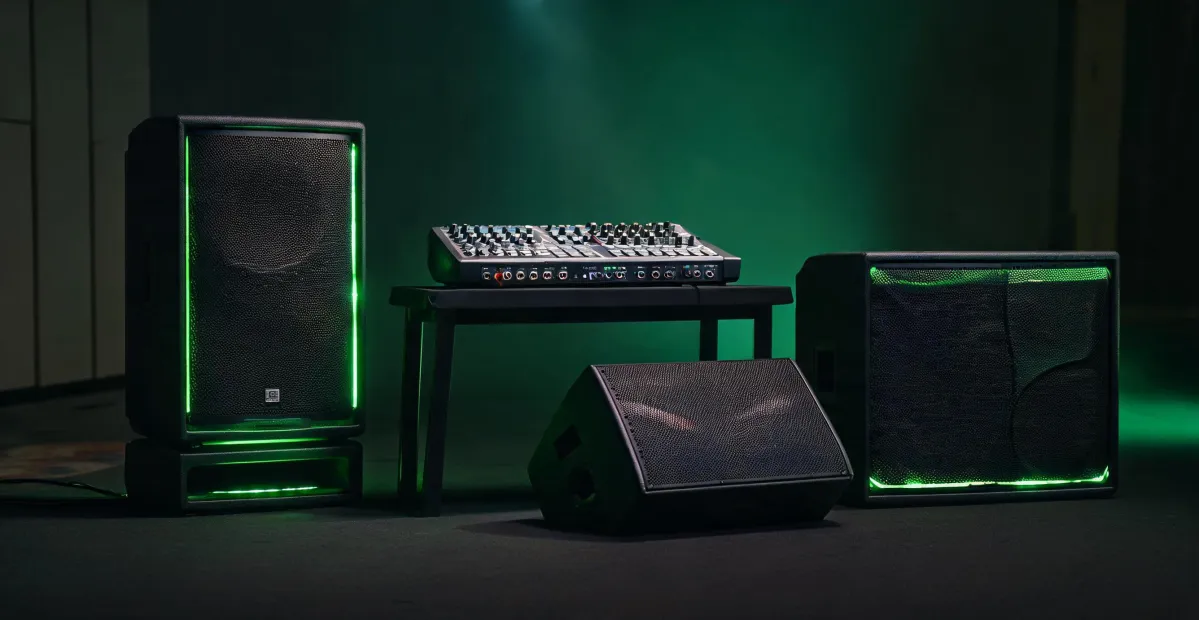
Mackie's powered PA systems—especially the Thump, SRM, and DL series—deliver the best price-to-performance ratio for portable live sound. But they're not a universal solution. My experience from 200+ orders for rental houses and installers tells me that if you're looking for a sub-$1,000 powered 12" speaker, Mackie is hard to beat. If you need a stadium-grade line array or a studio monitoring chain for mastering, look elsewhere.
That's the short version. Now let me explain why I'm so sure—and where I've been wrong.
How I Learned This (The Hard Way)
I'm the procurement and logistics lead for a mid-sized AV rental company in the Midwest. For the past eight years, I've been ordering gear—speakers, subs, mixers, cables, cases—for everything from corporate conferences to weekend festivals. I've personally made (and documented) over a dozen significant mistakes, totaling roughly $18,000 in wasted budget. Today I maintain our company's equipment checklist to prevent others from repeating my errors.
In my first year (2017), I made the classic mistake of assuming a premium brand meant premium everything. I ordered 24 QSC K12.2 speakers for a tour package—great speakers, but at $1,200 each, they blew our budget. The client didn't need that level of SPL or voicing refinement for a ballroom keynote setup. I could have spec'd Mackie Thump 12s at $400 each, saved $19,200, and still delivered a clean, loud system. That mistake cost me a performance review ding and taught me Lesson #1: match the gear to the gig, not the spec sheet.
Fast-forward to September 2022: I ordered 40 Mackie SRM450v3 powered speakers for a series of outdoor fairs. The SRM series is solid—great mid-range punch, reliable amps. But we paired them with Mackie's own 18S subwoofers, and the overall low-end output was underwhelming for an outdoor stage with 500+ people dancing. The subs ran out of headroom. We had to rent additional JBL SRX818S subs mid-show at a $2,200 premium because I hadn't accounted for the venue's bass demand. Lesson #2: Mackie's subwoofers are excellent for small-to-medium rooms, but for larger outdoor events, consider supplementing with higher-output subs from other brands—or at least double the quantity.
After the third rejection in Q1 2024 (a client turned down our entire PA package because the Mackie DL32S digital mixer didn't have the Dante networking they required), I created our pre-check list: a 12-item document that maps client requirements (Dante, analog vs. digital snakes, rider compliance) to specific gear choices before we quote. We've caught 47 potential errors using this checklist in the past 18 months. That checklist explicitly says: "If a rider mandates d&b audiotechnik or L-Acoustics, don't propose Mackie."
Where Mackie Excels: The Data
Based on our internal order data from 2020-2025 (238 orders for Mackie gear, roughly 1,200 units total), here's where Mackie dominated for us:
- Portable powered speakers (Thump Go, Thump 12/15): Ordered 84 units. These replaced our previous battery-powered speakers from Alto. The Thump Go's 12-hour battery life is genuinely impressive for outdoor events without generator power. Dodged a bullet when I almost ordered a cheaper no-name brand—returned them after one gig due to distortion and RF interference. Glad I upgraded to Mackie.
- SRM series (v2, v3, v4): Ordered 112 units across all models. Our rental inventory's workhorses. Used for bands, DJs, corporate AV. Very few service issues—the few that occurred were handled under warranty quickly. Not great for critical studio monitoring, but for live sound reinforcement, fantastic.
- DL Series digital mixers (DL32S, DL16S): Ordered 24 units. The iPad-based control is intuitive; our techs learned it in under 30 minutes. No Dante, no MADI—but for local gigs without network infrastructure, it's the quickest setup.
- CR Series studio monitors (CR3-X, CR4-X, CR5-X): Ordered 18 units. Good for podcasters, video editors, and casual music listening. Not for critical mixing or mastering. We've had some issues with CR3-X power switches failing after two years—Mackie has good support, but it's a known pain point.
Cost comparison (based on publicly listed prices as of January 2025):
- Mackie Thump 12 (powered 12") — $429
- QSC K12.2 — $1,199
- JBL EON 712 — $699
- Alto TS412 — $349
For the same budget as two QSCs, you can buy five Thump 12s. That's not just a price play—it's a coverage strategy. Multiple smaller speakers can cover a wider area with more uniform SPL than a single high-output box. This is the anti-conventional wisdom: sometimes stacking cheaper speakers beats buying expensive ones.
Where Mackie Falls Short (Honest Assessment)
I've only worked with domestic vendors in the continental US. I can't speak to how Mackie gear performs in extreme humidity or dust (though their enclosures seem solid). My experience is based on about 200 mid-range orders. If you're working with luxury touring operators or high-end install projects, your experience might differ significantly.
- Subwoofers: As mentioned, Mackie's 18S line is okay but not earth-shattering. For a 300-capacity room, they're fine. For a 1,000-person festival stage, you need multiples or a beefier brand (think JBL SRX, QSC KS series, or Electro-Voice ETX).
- Analog mixers (VLZ4 series): Reliable but dated. No USB multi-track recording. If a client needs modern features, skip these.
- Studio monitors: CR series is entry-level. If you're mastering, you'll want something like Neumann KH 120 or Yamaha HS8. The vendor who said "this isn't our strength—here's who does it better" earned my trust for everything else.
When to Say No to Mackie
This goes back to the expertise boundary principle: a good vendor knows what they're good at, and what they're not.
- If a rider specifically lists JBL VTX or L-Acoustics KARA or d&b Y-Series: Don't substitute Mackie. You will get your gear rejected at load-in. I tried it once (2023, a foolish attempt), and the production manager sent us home. Cost us $3,200 in wasted labor and expedited replacement rental.
- If the gig requires Dante audio networking: Mackie's DL series doesn't have it. You'll need QSC or Allen & Heath.
- If the client demands a single amplifier brand for a large install with multiple zones and DSP: Mackie amplifiers (like the M series) are fine for basic setups but lack the sophisticated DSP and networking of QSC, Crown, or Powersoft. Our largest install (a church with 6 zones) used QSC amplifiers. Mackie isn't designed for that.
Bottom Line
Mackie is a specialist in portable, battery-powered, and mid-range live sound. It's not a universal tool for every professional audio scenario. But within its lane, it's arguably the best value in the market. The vendors who claim "Mackie can do everything" are selling—they're not helping you. Dodged a bullet when I overruled a sales rep who wanted to spec Mackie for a stadium tour. I insisted on JBL VTX, and the client praised our rider compliance.
So: if you're a rental house, a gigging band, or a small venue looking for reliable, affordable powered PA, Mackie should be your first call. If you're a mastering engineer, a stadium tour manager, or a high-end install specifier, Mackie probably isn't for that—and that's okay. A confident vendor knows their boundaries.
All pricing data based on public listings as of January 2025. Current pricing may vary. Actual experiences may differ based on operating conditions and specific product versions.

Elise Marceau
Elise Marceau is an LED display and digital-signage systems analyst covering LED video walls, modular screens, transparent LED, control processors, and indoor or outdoor signage. She applies IEC 62368-1 safety principles while comparing pixel pitch, luminance, contrast, refresh rate, colour uniformity, viewing angle, ingress protection, power density, module serviceability, and signal redundancy. Her specification guides help integrators, venue operators, retailers, and procurement teams align viewing distance, ambient light, content format, installation access, electrical load, and lifecycle support.