Thump GO vs. Traditional PA: Which Mackie Rig Saves Your Event (and Your Sanity)?
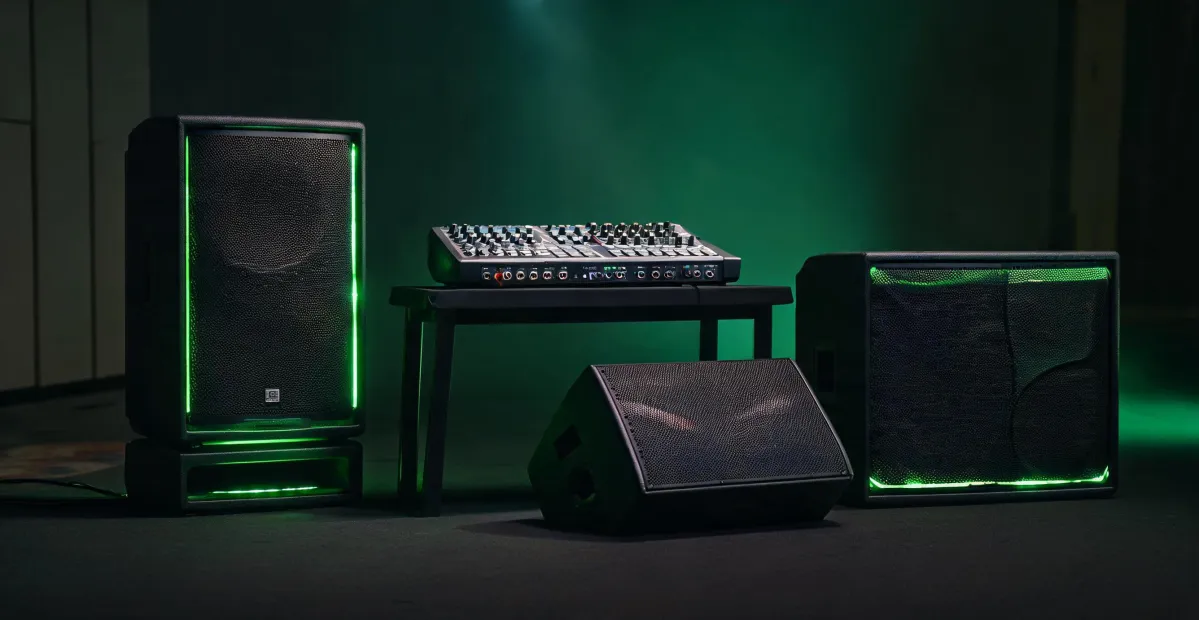
I'm the guy who coordinates the gear for live events—everything from a 50-person corporate mixer to a 2,000-capacity outdoor concert. In my role, the question I get most isn't about specs. It's: “Can we get this done in time?”
The comparison everyone wants is Mackie Thump vs. SRM, or Mackie vs. JBL. But the real fork in the road I see with clients—especially the smaller operators, the rental companies, the AV installers—is this: portable battery-powered PA versus a traditional powered setup with a subwoofer. It's the difference between a Thump GO and a Thump 212 plus a 15-inch subwoofer. Does that mean they're the same? No. And the choice affects your timeline, your sanity, and your bottom line.
Here's what I've learned from triaging about 200+ event setups in the last four years—including a few that went sideways.
The Core Comparison: Portable vs. Traditional
Let's set the framework. On one side: a battery-powered PA like the Mackie Thump GO (8-inch driver, 100W, no mains cable needed). On the other: a traditional powered PA like a Mackie Thump 212 (12-inch driver, 1400W) paired with a dedicated 15-inch subwoofer (like the Mackie Thump 115S). Both systems can fill a room. But they fill very different rooms in very different ways.
Portability & Setup Time
This is where the Thump GO wins hands-down—and it's not even close. I had a client call me in March 2024, 36 hours before their outdoor cocktail hour for 80 people. Normal turnaround for a full PA setup is about a week. They'd booked a venue with no power near the stage area—just a wall outlet 50 feet away. Their alternative was ugly: cancel the outdoor portion or run extension cords across a walkway (trip hazard, inspection risk).
We found a Thump GO at a local rental house, paid $80 extra in rush fees (on top of a $120 base cost), and delivered. The client's alternative was a $1,500 penalty for the venue cancellation. The Thump GO didn't just save the event—it saved the client's reputation.
The oversimplification trap: It's tempting to think you can just compare wattage or SPL. But a system that takes 5 minutes to set up versus 25 minutes—including running cables, tuning, and risk assessment—is a different product entirely.
Low-End Performance & Room Coverage
Here's where the traditional setup punches back. The Thump GO is impressive for its size—I've used it for wedding ceremonies, panel discussions, and corporate lobby music. But for anything with dance music, a live band with a kick drum, or a room larger than about 2,000 square feet, you need the 15-inch subwoofer.
Most buyers focus on the tops (the speakers) and completely miss what the subwoofer does for the overall system. The Mackie 115S subwoofer (15-inch, up to 127 dB SPL) isn't just for “feeling the bass.” It relieves the main speakers from reproducing low frequencies, which means the Thump 212s run cleaner, with less distortion, at higher volumes. The total system SPL increases because each component is working in its sweet spot.
I've kicked myself for downgrading subwoofers to save time. At a 500-person outdoor event in July 2024, I skipped the 15-inch sub for a smaller 12-inch to cut truck space. The result? The bass sounded “thin” (client's words), and the main speakers started clipping at 75% volume. I learned: never compromise the subwoofer for convenience if the event demands low-end.
Total Cost of Ownership (TCO) & Flexibility
This is the dimension where the answer flips depending on your use case. Let's compare two scenarios:
Scenario 1: The mobile performer or small venue owner
If you're doing solo acoustic gigs, speaking events, or background music in a café or small bar, the Thump GO makes the most sense. The cost (as of April 2025, roughly $599 for the Thump GO) is lower than buying a Thump 212 ($499) and a 115S sub ($649) separately—about $1,150 total. Plus, no power cable management, no extra trips to the van, no generator rental for outdoor events. The “small doesn't mean unimportant” philosophy applies: a smaller user who does ten gigs a month for $300 each is still a professional who needs reliable gear.
Scenario 2: The rental company or band that needs to fill a medium-sized room
Here, the traditional setup wins. The flexibility of being able to run a stereo pair of Thump 212s (or even a single), and then add the subwoofer for larger events, is huge. The Thump 212 itself is a workhorse—$499 for a 1400W powered 12-inch with built-in mixer eq. I've seen rental houses make back their investment in 10 rentals. The TCO includes setup time, storage, and transport. The traditional system takes more space, but it's the right tool for a different job.
Beyond the Core Comparison: The Mixer Question
A side question I get often is about the audio mixer. People see the Mackie Thump line and ask: “Do I need an external mixer?” The Thump GO and Thump 212 both have built-in mixers—two channels with eq, Bluetooth, and effects. For a single performer with one mic and one instrument, that's enough.
But if you're running a full band, or need more than two inputs, the built-in mixer isn't enough. This is where you need a dedicated audio mixer—and the Elgato Wave XLR is a great example for streamers and podcasters, but for live sound, you're looking at something like a Mackie ProFX or DL series. The point? Don't confuse an integrated input with a full mixing solution.
When the Subwoofer Matters Most: A Specific Example
I had a client in 2024 who insisted on using a pair of KEF LSX II powered bookshelf speakers for a small corporate event. KEFs are great for a studio or home listening room, but they're not designed for live event coverage. Adding a subwoofer for KEF LSX II (like the KEF KC62 or an entry-level subwoofer like an Audio Ace) can extend their range, but it still doesn't solve the dispersion issue in a large room.
The blind spot: Most buyers focus on “will it sound good?” and completely miss “will everyone hear it?” A subwoofer isn't magic. It adds low-end, but coverage is about speaker size, array, and placement.
How to Decide: A Rough Guide
Based on my experience, here's how I think about it:
- Choose the Thump GO when: you need extreme portability, you're running small events under 100 people, and setup time is tight. It's also great for outdoor gigs where power is unreliable or unavailable. The cost of the Thump GO is around $599 (priced as of April 2025—verify at your local dealer).
- Choose a Thump 212 + 15-inch subwoofer when: you need punchy low-end, you're covering a room of 150–400 people, or you want flexibility to scale up (buy two tops, one sub now, upgrade later). The Thump 212 is about $499, the 115S sub is about $649—total around $1,148 (prices as of April 2025).
- Consider a hybrid approach: start with a Thump GO for small gigs, then rent a 15-inch subwoofer for larger events. That's what I see many small rental companies do.
Final Thought: The Real Value
The value of a Mackie system—whether the Thump GO or a traditional Thump 212 with subwoofer—isn't just the specs. It's the certainty. Knowing your event will be heard clearly, knowing you can pack up in 15 minutes, knowing you can handle a last-minute call for a 50-person cocktail hour. For a smaller operator starting out, gear that works every time is worth more than the absolute lowest price. And for the rental company, a consistent product line means you can cross-rent gear without compatibility headaches.
Missing a deadline—or worse, a performance—because you chose the wrong system is a mistake you only make once. That's the bottom line.

Elise Marceau
Elise Marceau is an LED display and digital-signage systems analyst covering LED video walls, modular screens, transparent LED, control processors, and indoor or outdoor signage. She applies IEC 62368-1 safety principles while comparing pixel pitch, luminance, contrast, refresh rate, colour uniformity, viewing angle, ingress protection, power density, module serviceability, and signal redundancy. Her specification guides help integrators, venue operators, retailers, and procurement teams align viewing distance, ambient light, content format, installation access, electrical load, and lifecycle support.