The $340 "Deal" That Cost Us $2,400: What Nobody Tells You About Buying PA Systems
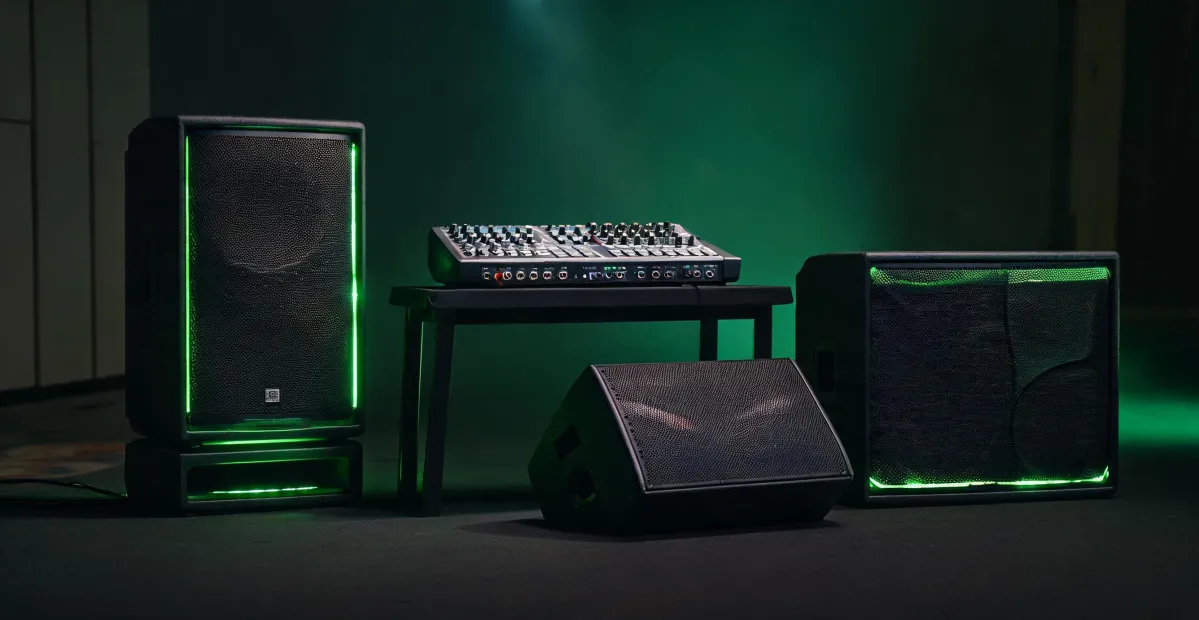
September 2022. Corporate event, roughly 300 people, outdoor venue. Everything locked in six weeks out. Forty minutes before showtime, our main PA goes silent.
Not protection mode. Not a cable. Just gone.
I'm standing about 60 feet back trying to do the math: replacement time, backup options, how loud the client is going to be when we tell them.
We ate $2,400 in rush solutions that night. The speaker that failed? It was $340 cheaper than the one we almost bought.
Three weeks of spreadsheet comparison. Three weeks of "the specs are almost identical." All to save a number that turned out to be a rounding error against the real cost.
I've been buying PA equipment for a small rental company for about six years. In that time, I've made 11 significant purchasing mistakes I actually wrote down — the kind that cost money and make you look stupid in front of clients. Total damage: roughly $14,000. If I trace 80% of that back to one root cause, it's this: I kept comparing the wrong numbers.
The Comparison Everyone Is Actually Making
If you're shopping for a powered loudspeaker or a portable column PA system right now, I already know what you're doing. I've done it. You've got six tabs open. One has a Mackie SRM Flex portable column PA system. One has an Alto Professional TS410 powered loudspeaker. Maybe you're cross-shopping an industrial PA speaker listed at $299 on some site you've never ordered from before, or a professional goose speaker from a brand with great photos and zero reviews. Maybe you opened another tab to check the Mackie DL1608 price because you're also rethinking the mixer side of the rig.
You're bouncing between spec sheets and price tags, trying to find the sweet spot. That's normal. That's reasonable. It's also exactly how I ended up standing in a parking lot at 6:20 PM doing emergency math.
What the Quote Sheet Doesn't Show
Unit price is a nice number because it's comparable. It fits in a spreadsheet cell. It's black and white.
Here's what doesn't fit in that cell:
Integration friction. What happens when that portable column system doesn't play nicely with your existing mixer? What if the wireless link between the DL1608 and your tablet drops every time the venue's Wi-Fi gets crowded? The speaker still works. The mixer still works. The combination doesn't. (Ask me how I found that out in front of 180 paying guests.)
Downtime cost. A PA that goes down in a Tuesday afternoon warehouse test costs you nothing but time. The same PA failing at 8:55 PM with 200 people already seated costs you the emergency rental, the rush courier, the client's trust, and possibly the next referral. You don't see that number on the invoice until you're writing it.
The small-failure pattern. This is the one nobody warns you about. Cheap gear rarely dies heroically. It glitches. Thermal protection cuts in at the worst moment. A channel drops for no reason. The amp gets hot and starts sounding thin. Intermittent problems are worse than total failures because you can't prove them to anyone, including your own crew. And you can't return a speaker for "sometimes it crackles."
Resale reality. That stack of off-brand industrial PA speakers in the back of your storage unit? Nobody wants them. When you try to sell, you find out the market only pays for names it recognizes. The "savings" you banked at purchase time get subtracted back out when you liquidate.
Support velocity. Not "does a warranty exist" — how fast does the brand or dealer answer when it matters? The cheap option usually has a support portal and a five-day email response time. The option that cost $340 more has a phone number and next-day replacement stock at a regional warehouse. Different product. Same spec sheet.
The Real Problem Isn't the Price Tag
Here's the part that took me four years and about $9,000 to understand: I wasn't choosing between expensive and cheap. I was choosing between two different risk profiles and pretending they were the same product.
A $1,200 Mackie SRM Flex and a $850 off-brand column system are not "the same thing at different prices." They are two different bets on what happens when things go wrong at 8:55 PM. The price difference is the visible part. The risk difference is the actual decision.
The cheap speaker's spec sheet says the same things: watts, driver size, frequency response, weight. What it doesn't say is how the DSP handles feedback, whether the wireless module holds a stable connection in a crowded RF environment, or whether the company will still be selling that model in three years when you need a replacement unit for your matching pair.
I didn't fully understand this until that September 2022 event. The failed speaker wasn't bad on paper. The spec sheet was fine. What failed was everything around the spec sheet. No local stock. No fast replacement path. No dealer relationship to lean on at 6:20 PM on a Friday.
The Cost of Getting This Wrong
That single event cost us $2,400 in direct rush costs. But the number I care about more is the referral we didn't get from that client. The booking manager had referred us twice before. After that show, she stopped calling.
Two other examples from the mistake log:
In March 2021, I bought eight cheap powered loudspeakers for a multi-room install at a fitness studio. Three of them developed intermittent channel dropout within four months. The brand's support wanted us to ship each unit back at our cost for "evaluation." We ended up replacing them out of pocket. Total loss: about $3,100 after refunds, shipping, and labor.
In 2023, I sold off a batch of no-name subs we'd bought in a hurry two years earlier. They worked fine. Nobody wanted them. Resale value was roughly 15% of purchase price. The comparable Mackie gear we sold the same year went for about 60-65% of what we paid.
None of those numbers were visible at purchase time. That's the problem.
What I Actually Do Now
Three questions, in this order. The answers decide the shortlist before I ever look at price.
1. What's the downtime cost if this fails on a show night? If the number is over $1,000 per incident, the cheaper option needs to have a genuinely comparable support and replacement path — not just comparable specs. If it doesn't, it's off the list no matter the price.
2. Does it integrate cleanly with what we already run? Same wireless ecosystem, same mixer compatibility, same rigging hardware. Every adapter, workaround, or "we'll figure it out" is a future failure point. And workarounds cost labor every single event, not just once.
3. What's the 5-year total? Purchase price, plus expected support interactions, plus realistic resale value. A $499 industrial PA speaker with zero resale and slow support is often more expensive than an $899 speaker that holds value and ships replacements in 48 hours.
I'm not 100% sure this framework scales cleanly to every category — line arrays and large-format touring systems have their own economics. My experience is based on roughly 200 mid-scale rentals and small-to-medium installs. If you're doing fixed installs at scale or touring at a different tier, your weighting will shift. Don't hold me to the exact ratios.
But the core principle holds: the number on the price tag is the smallest number in the deal. Everything that costs you real money happens after the invoice is paid.
Pricing context: as of early 2025, a Mackie DL1608 typically lists in the $450–550 range depending on dealer, an Alto Professional TS410 powered loudspeaker sits around $300, and Mackie SRM Flex portable column PA systems run in the $1,100–1,400 range for a full setup. These figures move — verify current pricing before building a budget on them.
The $340 I "saved" in 2022 is the most expensive money I never actually kept.

Rina Matsuda
Rina Matsuda is a garment-production machinery analyst covering industrial lockstitch, overlock, coverstitch, buttonhole, pattern-sewing, and multihead embroidery machines with feeding and thread-management systems. She applies ISO 10821 safety requirements while examining stitch length, stitch density, thread tension, seam balance, presser-foot pressure, needle system, sewing speed, trim cycle, hoop registration, changeover time, and defect rate. Her technical guides help apparel factories, embroidery businesses, and production engineers match machine configuration, automation level, material behavior, operator workflow, and line-capacity targets.