Mackie SRM150 vs Thump 15A: A Pitfall-Focused PA Buying Comparison
-
Why I Compare These Two Mackie Options First
-
Dimension 1: Coverage and SPL — SRM150 vs Thump 15A
-
Dimension 2: Setup Efficiency and Channels
-
Dimension 3: Low-End Strategy — B2 Mini Subwoofer, 600W Car Loudspeaker, and Bluetooth 2.1 Power Amplifier
-
Dimension 4: Price and Hidden Costs — Thump 15A Price vs SRM150
-
Dimension 5: Portability and Install
-
Which One Should You Buy?
Why I Compare These Two Mackie Options First
I have been handling AV rental and install orders for 9 years. I have personally made (and documented) 14 significant mistakes, totaling roughly $18,000 in wasted budget. Now I maintain our team's checklist to prevent others from repeating my errors.
So when someone asks about a mackie srm150 compact active pa system versus a mackie thump 15a price quote, I do not start with brand loyalty. I start with the job. The wrong box is expensive even when the price looks good.
Here is the comparison framework I use: coverage and SPL, setup efficiency, low-end strategy, price and hidden costs, and portability. I will also cover the tempting low-cost path: a b2 mini subwoofer, a loudspeaker car 600w, and a power amplifier bluetooth 2 1. That path has burned me before.
Dimension 1: Coverage and SPL — SRM150 vs Thump 15A
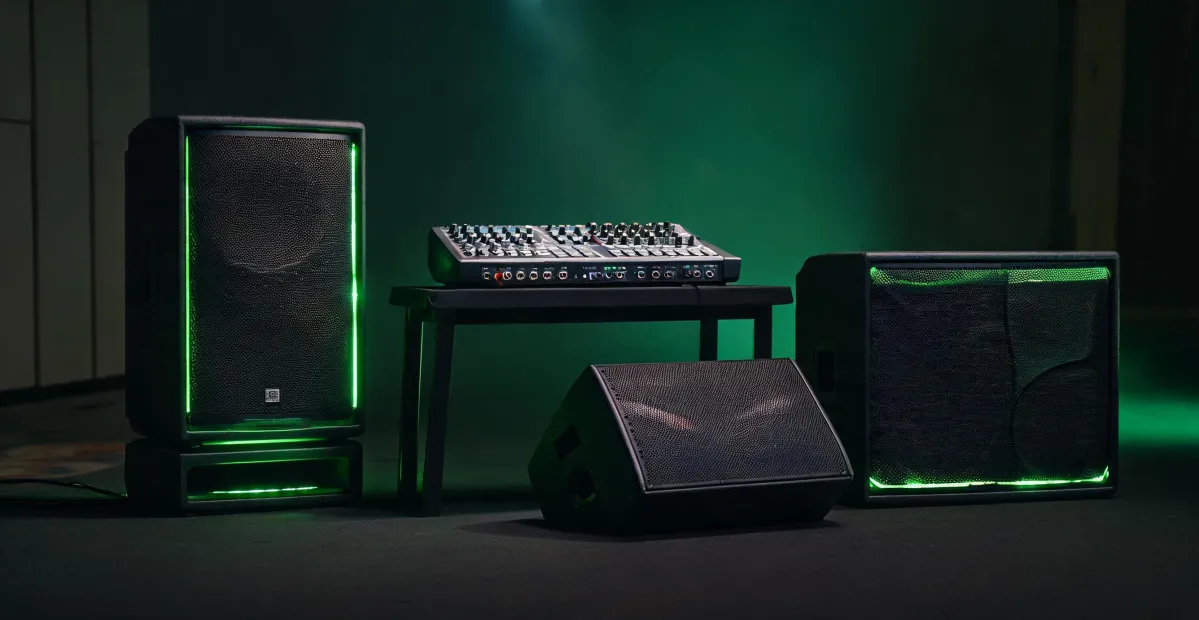
The Mackie SRM150 compact active PA system is a small-room tool. It works for speech, conference breakout rooms, acoustic duos, worship overflow, and stage monitoring. Mackie lists it as a compact active PA with a built-in mixer, which is why it shows up in installs where a full mixer is overkill.
The Mackie Thump 15A is a different animal. It is a 15-inch powered loudspeaker designed for DJs, bands, and rooms where you need more output and wider coverage. If you are comparing them only by price, you are comparing a city car to a pickup truck.
People think a bigger speaker always sounds better. Actually, a bigger speaker can create worse coverage in a small room because it beams too much energy at the people in front. The room causes the problem, not the speaker size. For a 40-person meeting, an SRM150 can be cleaner and easier than a Thump 15A. For a 150-person outdoor party, the SRM150 will run out of gas.
In my first year (2017), I made the classic mistake of using a compact PA for an outdoor event. It looked fine on paper. The result came back as complaints from the back rows. That day taught me to match speaker coverage to audience size, not to my budget hope.
Dimension 2: Setup Efficiency and Channels
Efficiency is competitiveness. The faster you can set up and tear down, the more jobs you can handle without adding labor. The SRM150 wins on speed for small gigs because it is one box with a built-in mixer. Fewer cables, fewer stands, fewer things to forget.
The Thump 15A is still efficient for a full-size top, but it usually wants stands, a mixer, and often a subwoofer. That is not a flaw. It is a system choice. The problem starts when people buy a Thump 15A and expect it to behave like a complete PA in one box.
I said 'compact PA' to a venue contact in September 2022. They heard 'small DJ speaker.' Result: we arrived with an SRM150 for a dance party that needed a Thump 15A and a sub. We fixed it with a rental, but the margin on that job disappeared.
Then again, I have also over-specified jobs. I once brought two Thump 15A boxes and a sub to a panel discussion. Setup took longer, the room sounded boomy, and the client asked why we needed so much gear. The lesson cuts both ways: efficiency is not about the biggest or smallest rig. It is about the right rig.
Dimension 3: Low-End Strategy — B2 Mini Subwoofer, 600W Car Loudspeaker, and Bluetooth 2.1 Power Amplifier
This is where I see the most expensive mistakes. People try to save money by adding a b2 mini subwoofer, a loudspeaker car 600w, or a cheap power amplifier bluetooth 2 1 to a powered top. It looks smart until the system is pushed.
A car loudspeaker is not a PA loudspeaker. A 600W car speaker may handle power in a car door or trunk, but it is not designed for wide coverage in a room. Impedance, sensitivity, and enclosure matter. A Bluetooth 2.1 power amplifier may be fine for background music, but it is not a substitute for a pro power stage with proper protection and crossover.
Saved $80 by skipping a proper PA subwoofer. Ended up spending $400 on a rush replacement when the mini sub could not keep up with the Thump 15A. Net loss: $400 plus a very unhappy client. That is the penny-wise, pound-foolish pattern I keep seeing.
If you need low end, use a subwoofer designed for the system. A B2 mini subwoofer can work in a tiny setup, but do not expect it to turn a Thump 15A into a club rig. If you only need speech and light music, you may not need a sub at all. The SRM150 does not pretend to be a bass machine, and that honesty is useful.
People think adding a subwoofer creates bass. Actually, the room, placement, crossover, and sub design create bass. The subwoofer is only one part of that chain.
Dimension 4: Price and Hidden Costs — Thump 15A Price vs SRM150
The mackie thump 15a price is not a fixed number. As of April 2025, US dealer listings moved with promotions, stock, and bundles. I do not quote it from memory anymore. I pull a current quote because a stale price makes the whole comparison useless. Verify current pricing at Mackie's official product page or an authorized dealer.
The SRM150 usually costs less than a Thump 15A, but the sticker price is not the full story. Add stands, cables, cases, a mixer if needed, and labor. Add the cost of a subwoofer if the job needs low end. Add the cost of your time when the wrong box forces a second trip.
I once ordered a $3,200 package with the wrong assumption about subwoofer compatibility. The mistake affected 6 speakers and a pile of accessories. We caught it during pre-delivery check, but only because we had started using a checklist. That checklist has caught 47 potential errors in the past 18 months. It is boring. It saves money.
Also, define what you mean by 'power.' A loudspeaker car 600w label and a PA speaker rating are not the same measurement. A power amplifier bluetooth 2 1 may claim big watts, but the real question is whether it can deliver clean power for hours without thermal shutdown.
Dimension 5: Portability and Install
The SRM150 is easy to carry and mount. For installers, that means faster wall or stand placement, less structural concern, and simpler cable runs. For rental companies, it means one person can handle more small jobs.
The Thump 15A is heavier and bulkier. It is still portable for a 15-inch powered speaker, but it is not a one-hand carry for most people. If your job involves stairs, tight load-ins, or quick turnarounds, that weight matters.
A B2 mini subwoofer is compact, which is why people like it. But compact does not always mean easy. If it cannot keep up, you end up carrying it plus a replacement sub. That is worse than carrying one correct sub from the start.
Switching to a pre-checked powered speaker package cut our small-event turnaround from 5 days to 2 days. Not because the gear was magic, but because we stopped guessing and started using a checklist. The automated part was simple: confirm room size, audience, program type, power, and output needs before quoting.
Which One Should You Buy?
Choose the Mackie SRM150 compact active PA system if you need speech, acoustic music, conference audio, stage monitoring, or a small installed system. It is the efficient choice when one box and a couple of inputs solve the job.
Choose the Mackie Thump 15A if you need higher output for DJs, bands, larger rooms, or events where people will dance. Budget for stands, a mixer, and possibly a proper subwoofer. Check the current mackie thump 15a price with a dealer before you commit.
Do not buy a b2 mini subwoofer, a loudspeaker car 600w, or a power amplifier bluetooth 2 1 as the foundation of a professional PA unless the job is casual background music. If you use them, treat them as accessories, not as the system. Match impedance, check thermal limits, and test before the event.
Bottom line: the SRM150 and Thump 15A are both Mackie tools, but they solve different problems. Buy for the job, not for the spec sheet. And if you are like me, write down the mistake before it becomes a habit.

Elise Marceau
Elise Marceau is an LED display and digital-signage systems analyst covering LED video walls, modular screens, transparent LED, control processors, and indoor or outdoor signage. She applies IEC 62368-1 safety principles while comparing pixel pitch, luminance, contrast, refresh rate, colour uniformity, viewing angle, ingress protection, power density, module serviceability, and signal redundancy. Her specification guides help integrators, venue operators, retailers, and procurement teams align viewing distance, ambient light, content format, installation access, electrical load, and lifecycle support.